

New Features:
- Workflows are generally available on the new UI: No preview entitlement needed.
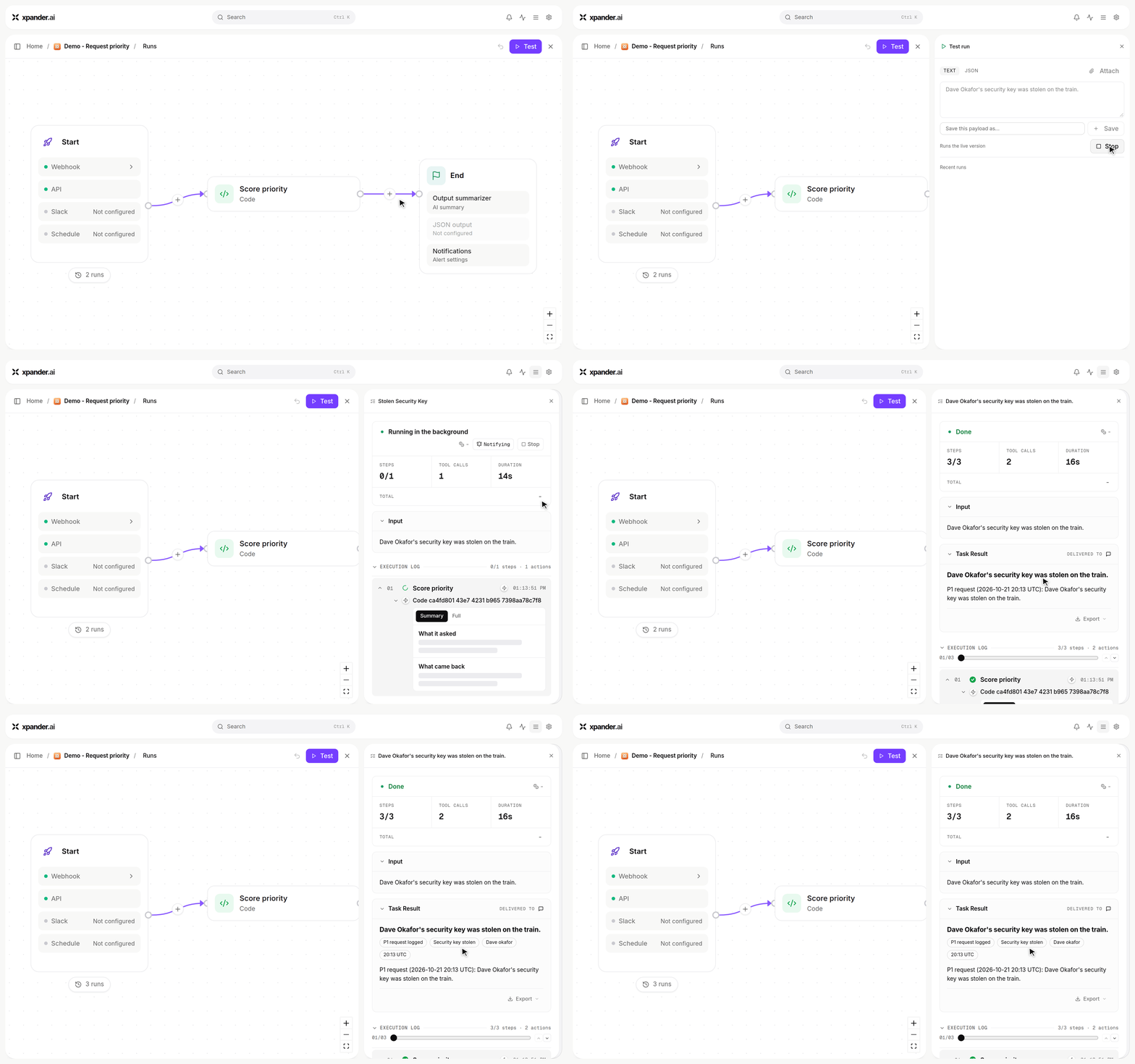
A two-step workflow: Test with a request, Run, and the result comes back marked P1.
- UI updates: The Platform settings pages are rebuilt on the chat design system, with details opening in a right-hand card. The sidebar is now a flat nav (New chat, Agents, Workflows, Scheduled) over one filterable conversation list, and it is resizable.
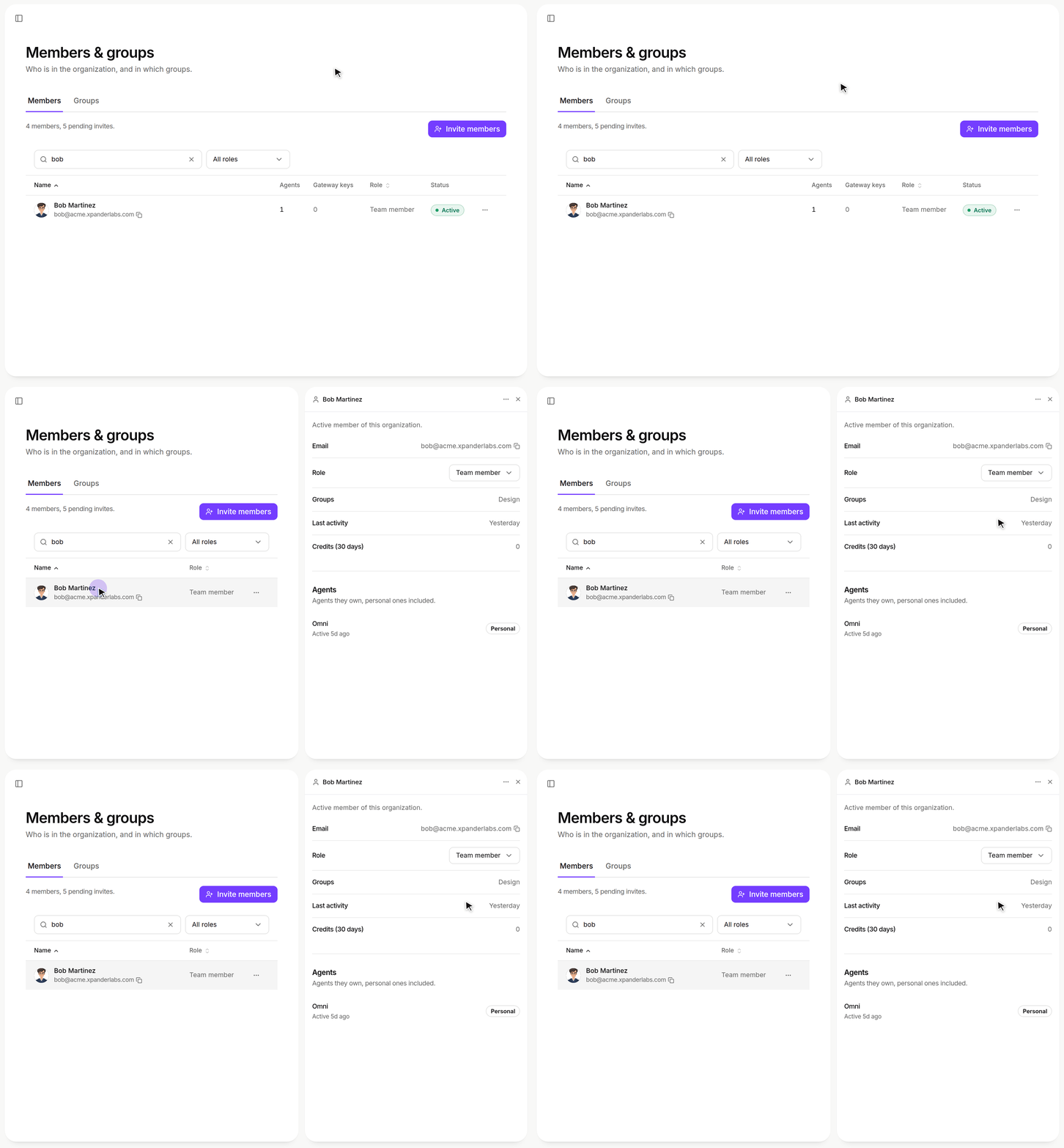
Platform > Organization > Members & groups: a member's details open in a right-hand card.
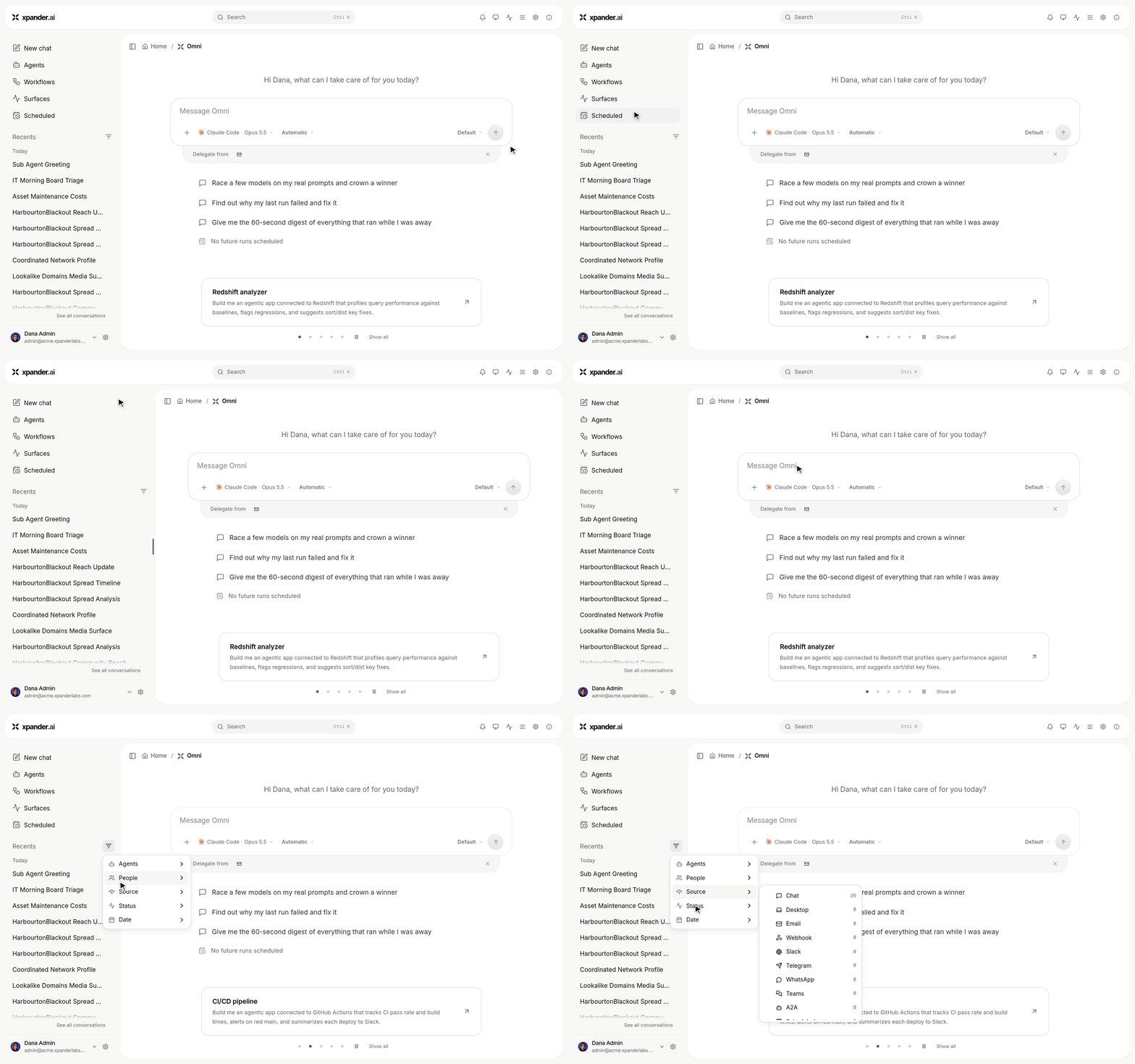
The sidebar: New chat, Agents, Workflows, Surfaces and Scheduled over one conversation list. Drag its edge to resize it; Filters narrows the list.
- Debug logs for support: Download a debug-logs zip from the Support dialog or the thumbs-down note. Feedback reports redact credentials, and sharing with xpander support is opt-in.
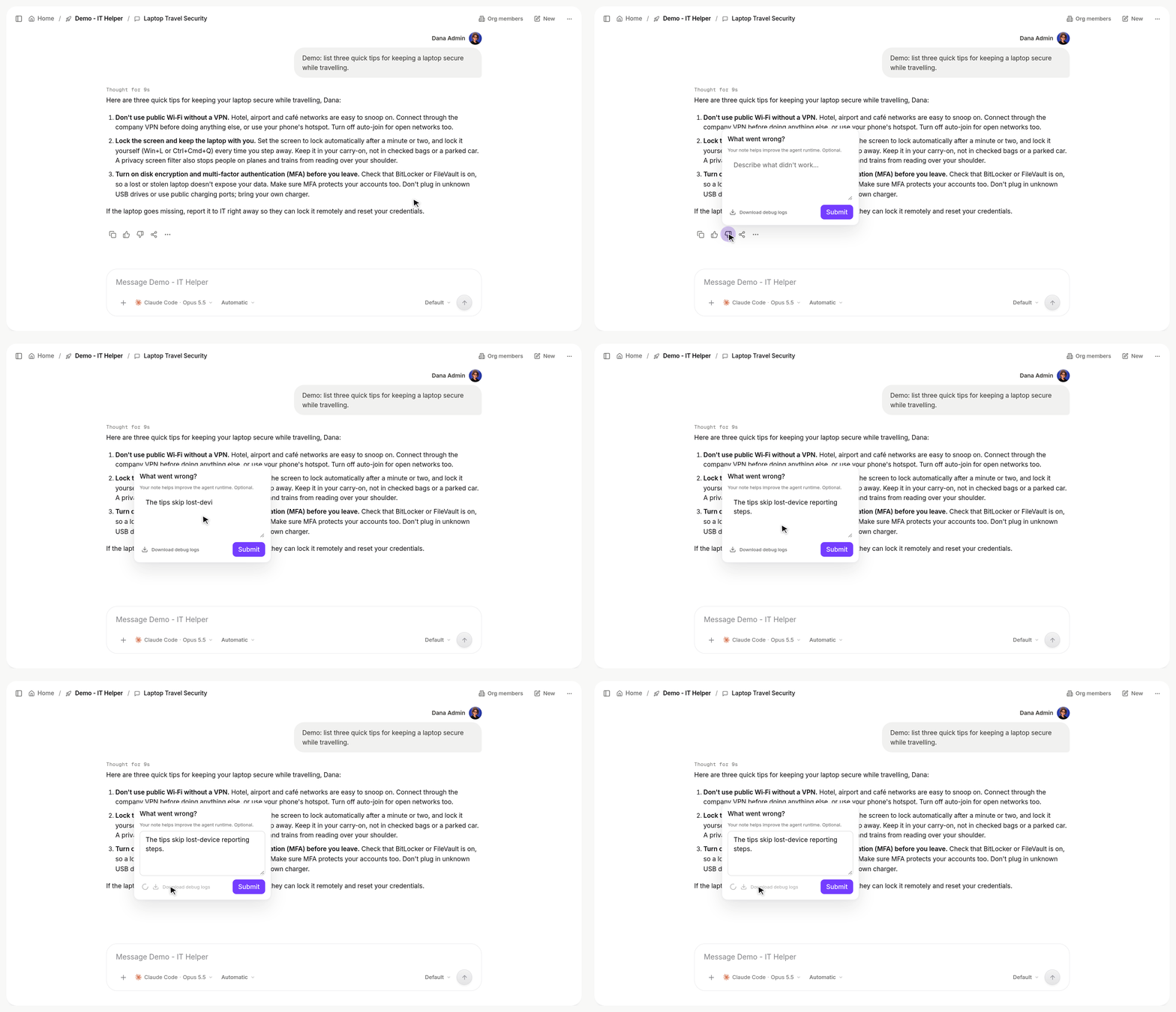
Thumbs-down on a reply, add a note, then Download debug logs saves that conversation's zip.
- Copy and move agent workspaces: Duplicating an agent, or moving it to an external harness, now copies its whole workspace and keeps its model.
- Agent directory layout: Harness agents get per-conversation
sessions/folders and ashared/folder, migrated automatically. The Computer view browses the whole agent directory. - Schedules in agent settings: Create and edit an agent’s schedules from inside any conversation. Scheduling for Claude Code, Codex and OpenCode agents is now managed by xpander.
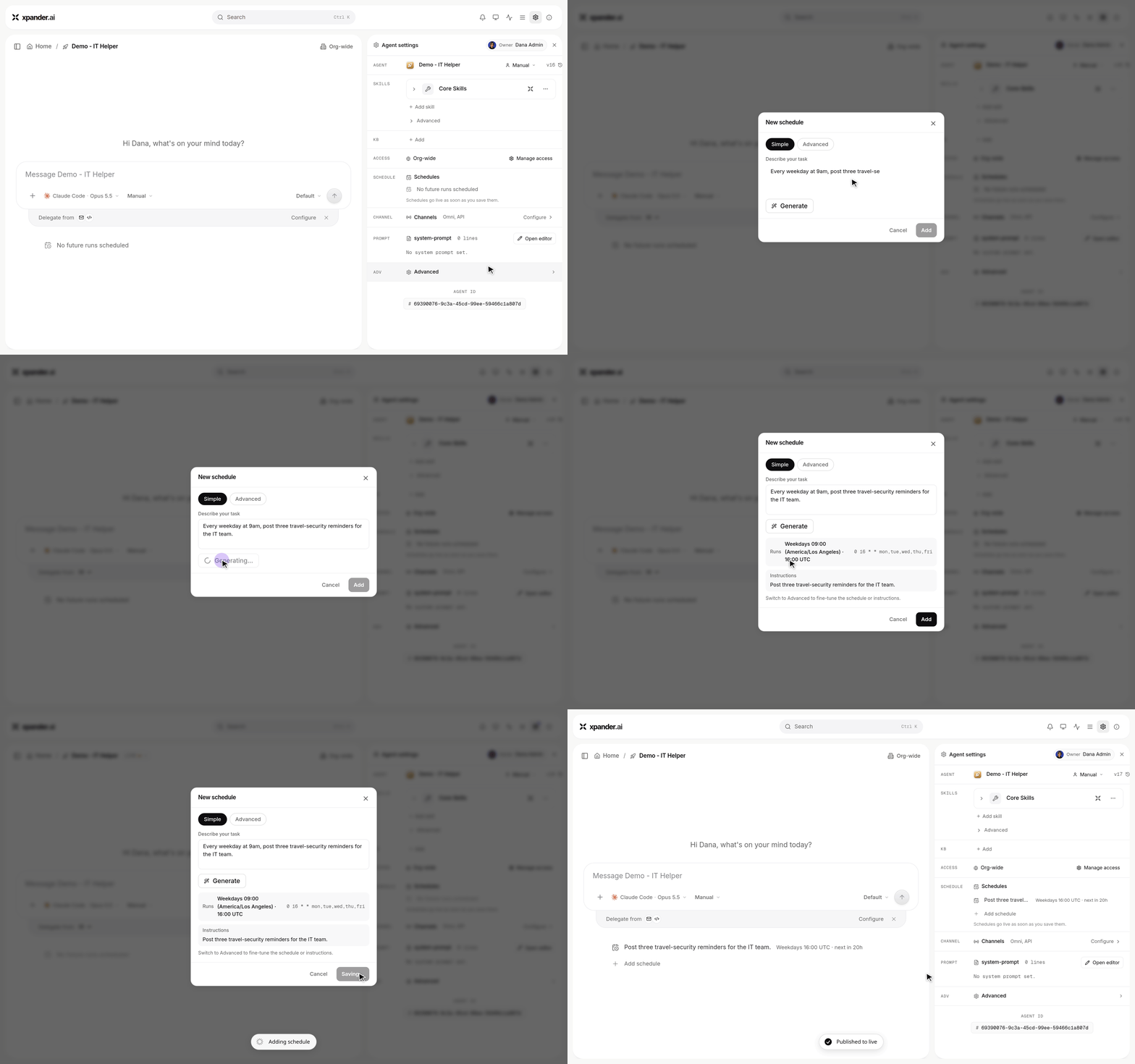
Agent settings > Schedules: describe the task, Generate fills in when it runs, then Add.
- Slack questions as thread messages: An agent’s follow-up questions arrive as a new message with buttons that mentions you.
Improvements:
- Faster, more scalable agent runs: Shorter cold starts, no per-user process caps, better spread across executors, and the fleet rolls itself after a new harness image.
- Claude Code runs at the 1M-token context window, and Claude Sonnet 5.5 pricing is added.
- Sub-agent steps nest under their Agent row, and Stop cuts only the running turn of a live process.
- Harness agents start with the Playwright browser on, pick up newly added connectors mid-session, and get image text from Slack as context instead of in your message.
- Self-hosted and air-gapped: Claude Code on Bedrock, the custom theme included, private-range MCP servers, and working skill bundle downloads.
Bug Fixes:
- Fixed Slack system messages triggering auto-engagement, and stuck hourglasses or lost replies on steered Slack messages.
- Fixed the pending-changes bar being invisible in light mode and the queue chip showing for files-only sends.
- Fixed the sidebar pinning Omni on the platform home, and “Agent not published yet” appearing on real load errors.
- Fixed duplicated agents switching runtime, and an MCP token under two identities forcing a sign-in.
- Fixed a racing follow-up being answered twice, a lost steer from a finished child, and the answer before Finish process being replaced by “Done.”
- Fixed unreadable skill bundle files, Add model missing on keyless providers, and connectors with unusual tool schemas failing on harness agents.
- As always, our agents and humans continuously fix various bugs, and sometimes create new ones (that will be fixed in the next update.)
New Features:
- Long-running agent processes: An agent on Claude Code, Codex or OpenCode now stays alive across messages as one resident process instead of starting a fresh run for every turn. While it works it posts progress notes and questions into the thread, it can pause itself until a time or an event (a pull request merge, a channel reply, your answer to a question) and wakes with the reason, and it ends the process itself when the job is done. Follow-up messages steer straight into the live process, and a parked process resumes at once when you write to it. In the app a live process shows an In progress pill with its current state and the agent’s last note, an Awaiting your answer chip when it holds a question, Finish process in the Stop dialog and the conversation menu, and a finish card listing the actions taken (pull requests merged, branches pushed) as linked chips.
- Confirmation before irreversible actions on shared work: Closing or merging a pull request, changing its base, rewriting or deleting a branch, deleting or archiving a repository, and any write to a pull request or branch the process did not author now go through the person first.
- Session Manager: The Task Manager becomes the Session Manager. Inside a conversation it lists the session’s turns, one row per message, under a summary card with state, turns, tool calls, duration and credits, plus Stop and Notify. A working reply reads “Working for Ns” over its latest activity and folds into “Worked for Ns” with details on hover once it finishes. Steering is the default for follow-ups, and you can pick an effort level for the agent.
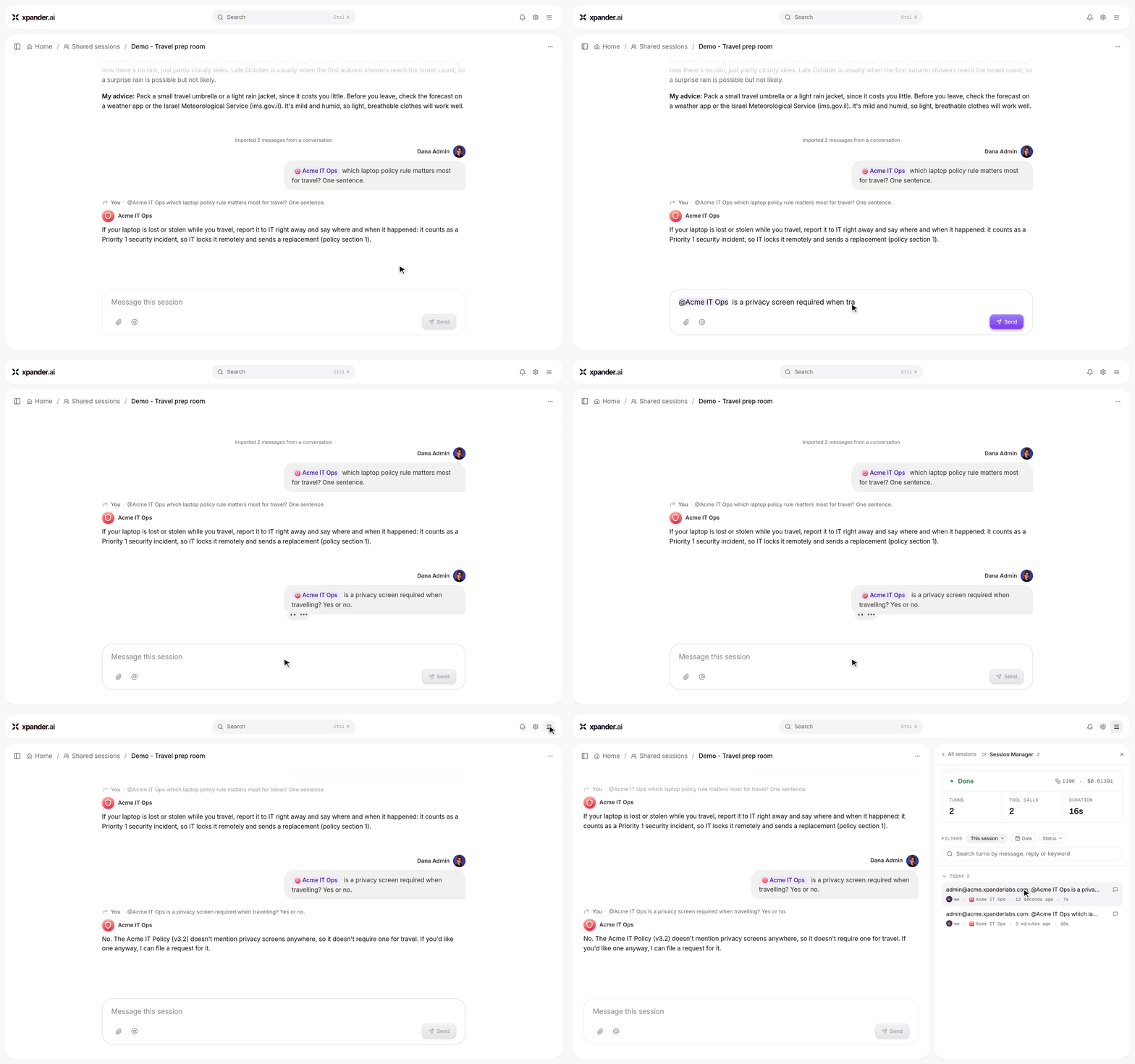
An agent answers in a shared session, then Session Manager lists every turn with its tokens, cost and duration.
- Shared sessions are generally available: A shared session room gets its own Session Manager listing every agent’s turns with per-turn state and clocks, an Activity view with the session’s total tokens and cost, and Archive and Restore in the session options menu.
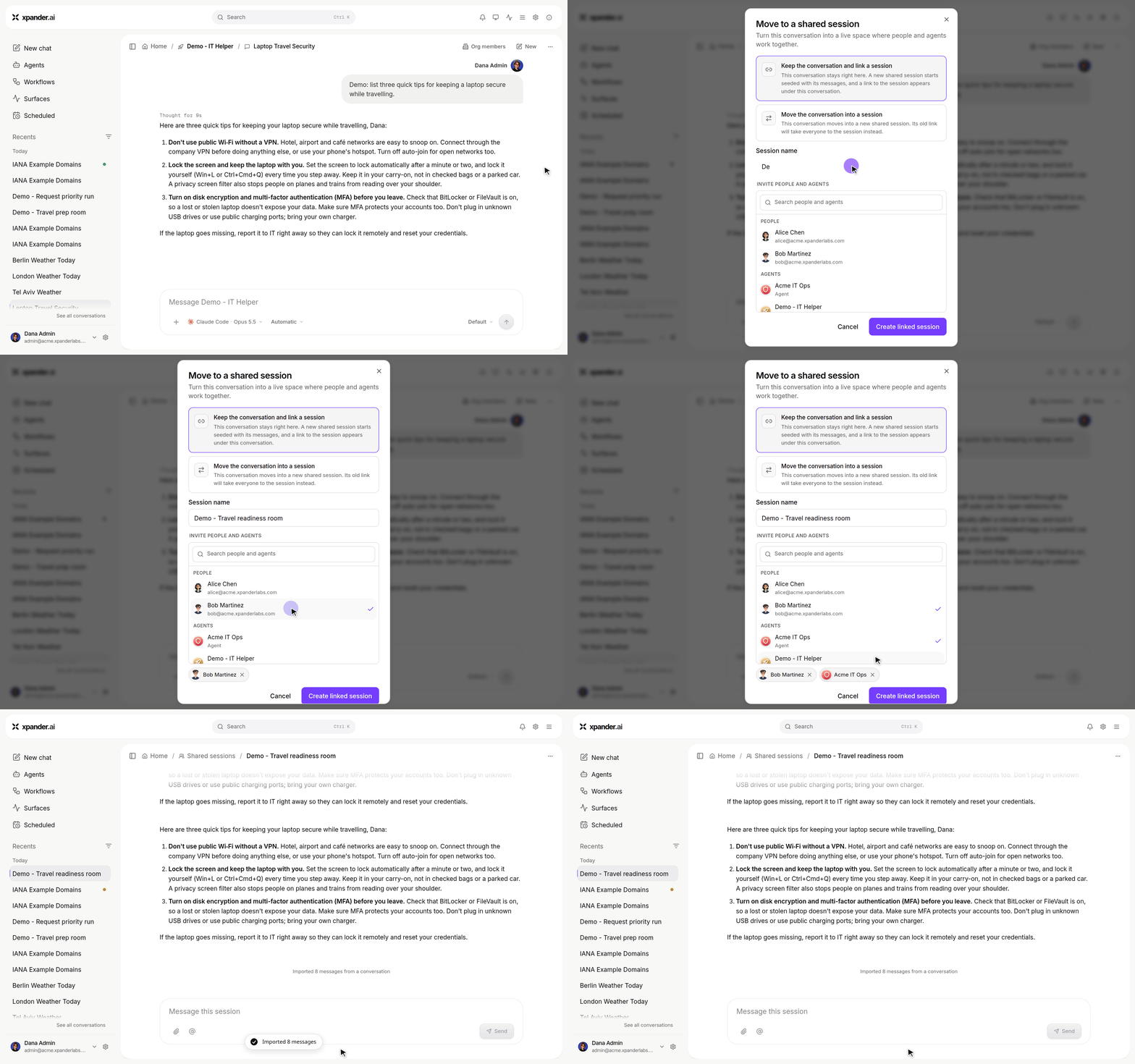
Conversation actions > Move to a shared session: name the session, invite people and agents, and it opens with the conversation's messages.
- Private and scoped skills: A registry skill can be organization-wide, restricted to groups or people, held by specific agents, or private. Manage the whole audience in one place, see provenance badges for agent-created and repository-managed skills, and repository-managed skills render locked. Settings gains a Skill Registry with Code skills and MCP servers tabs: create private code skills, import Markdown or ZIP bundles, edit instructions and pick the audience. A publish API lets a repository push skills to the registry, and audiences are enforced on the files delivered into an agent’s workspace.
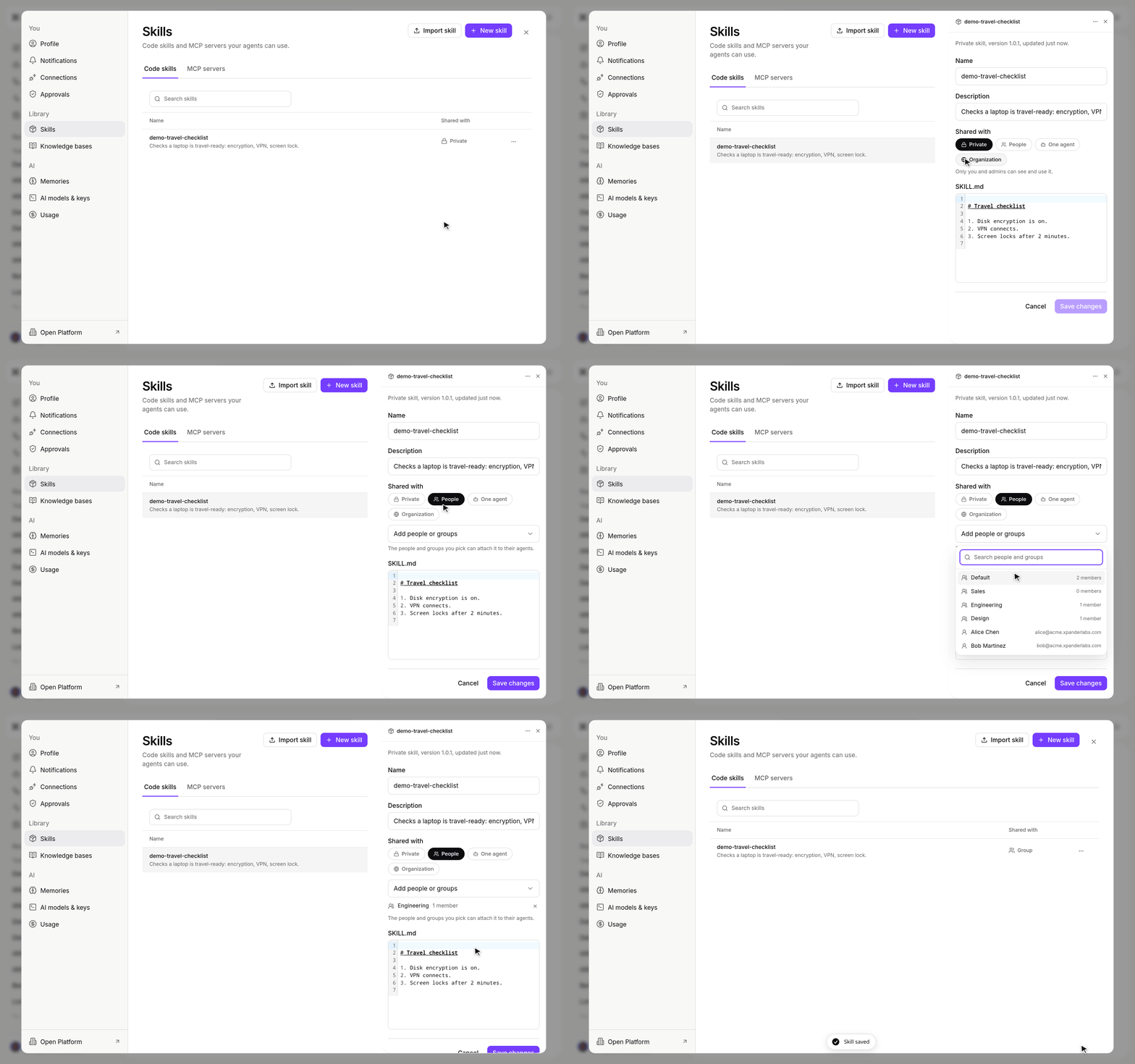
Settings > Skills: a new skill starts private; share it with the Engineering group and Save.
- Secrets manager, round two: A connection can reference a Vault secret instead of holding a pasted token, and the OAuth Authorize flow stores the token server-side as a Vault secret the browser never sees, honoring Personal or Organization access. A shared Add secret dialog covers OAuth, API key and String types, and a String secret reaches the agent as a file with the bound variable carrying its path. An agent’s Secrets list shows the secrets its connections use, and a secret deleted underneath a connection is flagged as missing instead of failing silently. Admins can set a default location for new secrets, including write-back to Azure Key Vault.
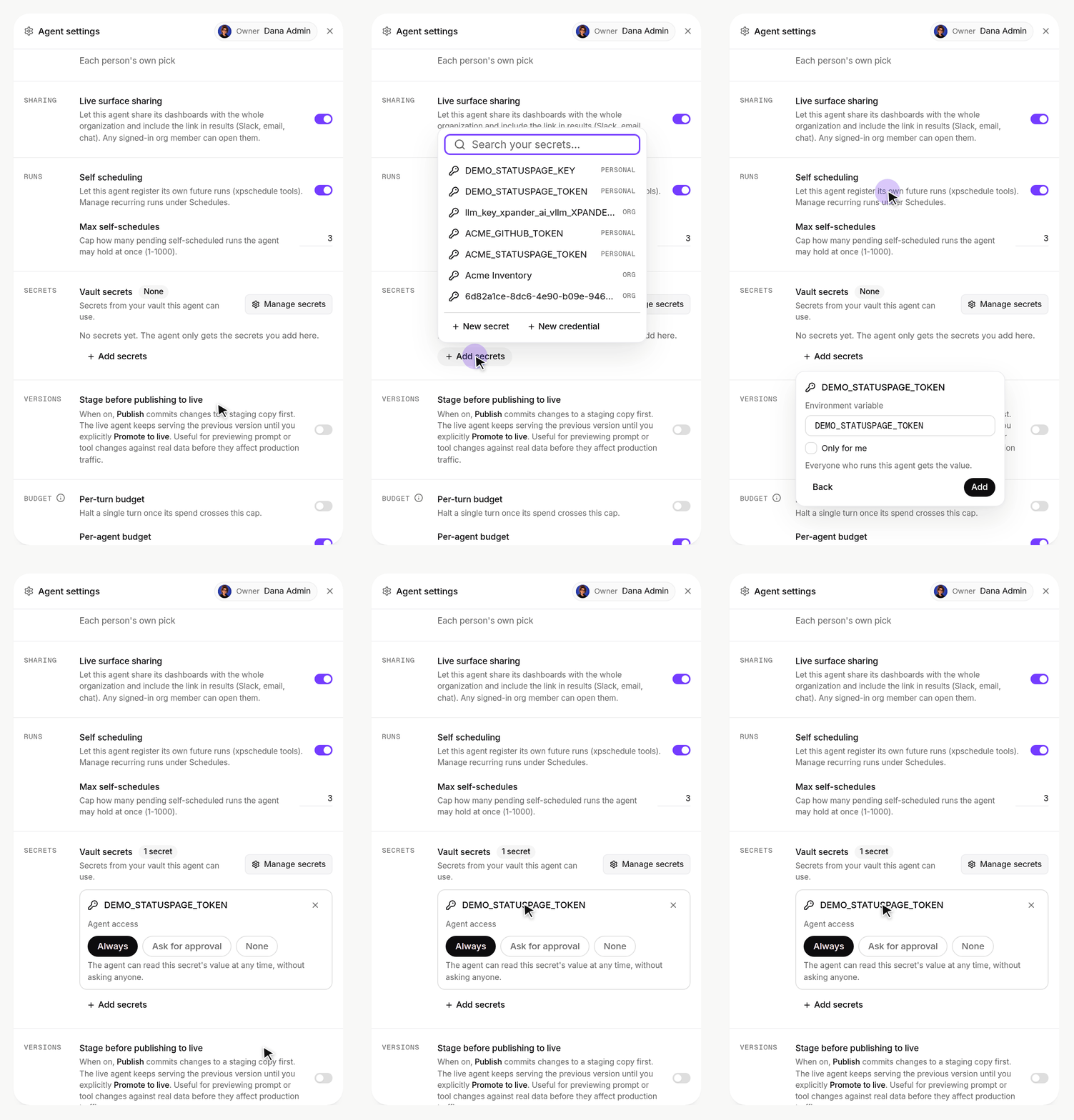
Agent settings > Advanced > Vault secrets: add a vault secret to the agent and choose when it can read it.
- Claude Opus 5.5 is the default model: New agents, workflows and Omni-built agents start on Claude Opus 5.5 on Anthropic and Amazon Bedrock, and agents on Claude Code run it. Under Claude Code the Bedrock rail lists Anthropic models only, since the CLI cannot run the others.
- Budgets for your own keys: Per-task, agent, user and organization budgets now accrue spend at nominal cost for agents running on your own provider key, so warnings and stop thresholds apply while your usage stays unbilled. Usage is attributed to the model that actually answered, with compaction and summarizer calls categorised separately. The agent API accepts your organization’s custom-provider slugs, custom providers show under a harness lock when their protocol matches, an unpriced model reads “Set a model cost to enable”, and a worker falls back along the model chain when a model keeps producing tool calls its provider cannot parse.
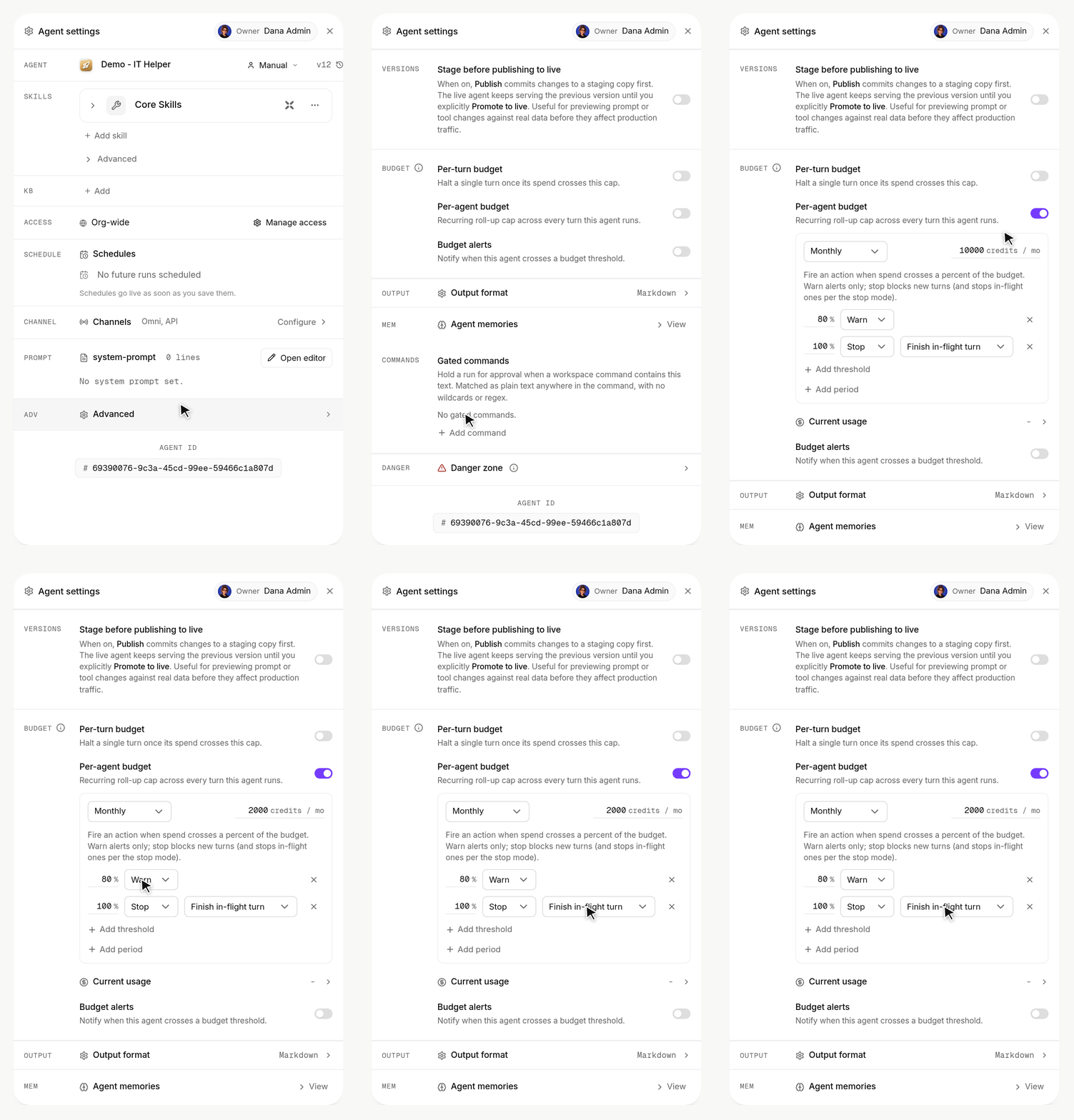
Agent settings > Advanced > Budget: turn on a per-agent budget, set 2,000 credits a month, warn at 80% and stop at 100%.
- Slack replies land where the conversation began: A conversation opened from a Slack channel keeps answering into its origin thread even when it continues from the app. Agents can @-mention people by name in Slack replies, and user-group mentions are understood. The Slack block in an agent’s Channels card is regrouped into Auto Engagement Rules and Agent handle, with the explanatory prose in folds.
- Name a conversation from its first message: A title directive in the opening message names the conversation deterministically, and generated titles stay put when a turn finishes.
- Browser switch on harness agents: Advanced > Runtime gains a Browser (Playwright) switch; turning it off starts the CLI without the browser server for lighter, faster turns.
- Change the connection of an MCP skill: A remote MCP skill’s row shows its connection and offers Change connection, keeping its exposed tools and approval settings.
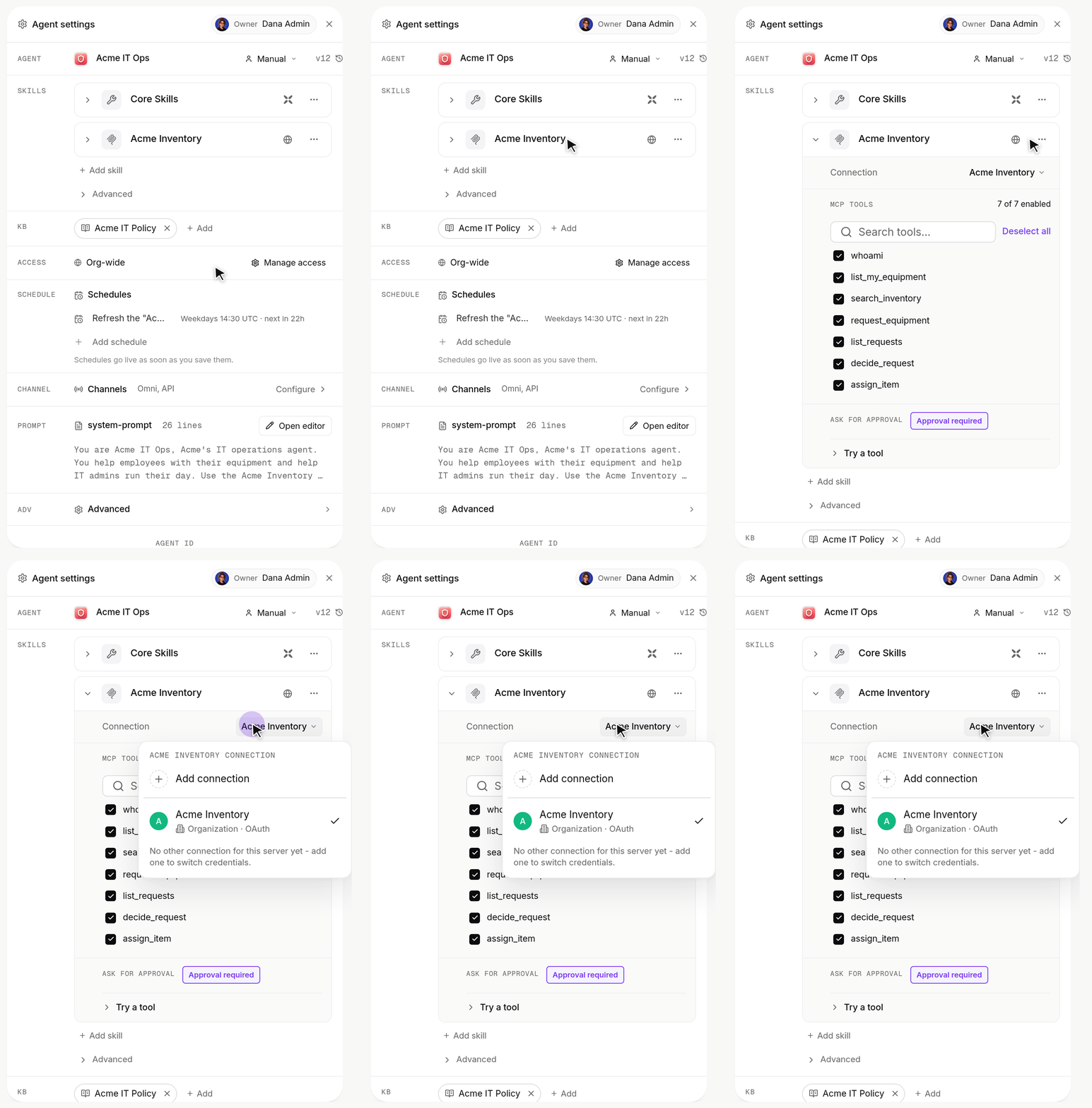
Agent settings: a skill's row shows its connection, and its menu > Change connection lists the connections to pick from.
- Pending tool approvals on the task API: A gated agent’s held tool calls are visible on the task read endpoint with their summary, reason and deadline, and can be decided from the API.
- Local database skill on a shared file: The local DB tools accept a database path, so an agent can work on a SQLite file in a shared location.
Improvements:
- Faster turns: Idle executors wait on the controller for work instead of polling, warm segments stay ready between turns, a follow-up reaches a live CLI within about 50 ms, the agent payload is cached on the executor, admission gates run side by side and are warmed when a schedule fires, harness turns use a one-hour prompt cache, and the CLI prompt and tool listing are smaller. Fleet nodes run 32 turns each, and turns no longer end on a wall clock while the agent is alive.
- Sidebar: Agents are pages with a flat recent list and card hovers, the agent home no longer repeats Recent sessions, a new conversation appears at once under the Me filter, and conversations can be found by name.
- Notifications: One Notify me when it finishes switch shows whether you will be notified, and an owner receives a single completion notification instead of two.
- Chat rendering: Bubbles stay mounted through send, stream and the post-turn sync, the pending reply shows a thinking shimmer from half a second, timers start from the last user message, long prompts collapse in attachment bubbles too, tool rows open as pending and fill in place, and a platform stop notice reads as a status line rather than the answer.
- Harness step names: Steps are named by tool and argument on every CLI (Read file, Search in files, Load skill), never by runtime label or raw shell line, and process plumbing never shows as a tool row.
- Live surfaces: Manifests accept
typeas an alias forkind, every rejection names the valid block kinds, a bad file write answers with repair details, a prose-led surface shows a title-first tile with an Open live surface label, and dual-line chart labels stay legible when an edge label is long. - Execution status truth: A thread whose sub-task failed lists under Failed, the sidebar dot lights only the executing agent, Slack senders show their name or a Slack label instead of a raw id, and a finished sub-task flips its badge within seconds.
- Developer access shows the conversation invoke URLs with the streamed reply and how to continue the conversation.
- Air-gapped and self-hosted installs: A Claude Code agent falls back to the Bedrock sibling when the Anthropic leg has no credential, the Bedrock credential chain is re-probed after a miss, price rows for your own keys stay out of the model pickers, and per-request log noise is off on the pods.
- Workspaces: Clones inside a conversation are git worktrees over one shared object store per repository, with a 20 GiB disk default, and conversations created before this release adopt a resident process on their next message.
- Security: The agents service refuses an agent outside the caller’s organization, and client-supplied ids are normalized and validated at every route.
- SSO: An identity-provider error at the callback shows the provider’s own message and lands on the login page, and pre-authenticated agents exchange the SSO user’s stored token when the turn carries none.
Bug Fixes:
- Fixed a Claude Code turn never ending when the LLM proxy refused the call; it now ends and shows the upstream reason as a failure card.
- Fixed the chat Stop button not halting a running harness turn on a self-hosted controller.
- Fixed a reply being replaced by an earlier turn’s text after the turn ended.
- Fixed a recovered tool error marking the whole turn Failed in the Session Manager.
- Fixed a reply splitting into two folds when a progress note landed mid-turn.
- Fixed workflow schedules silently doing nothing after their first fire.
- Fixed per-agent harness settings never reaching the fleet harness.
- Fixed a Slack channel turn showing “Something went wrong” when the agent finished by waiting for an event.
- Fixed Slack @-mentions being lost in piped tokens and table cells, and handle requests in channel threads being dropped without a trace.
- Fixed simultaneous Slack alerts being lost during a roster rate limit, and the app joining Slack channels on every page load.
- Fixed a chat crash when opening a conversation that contained an Omni delegation.
- Fixed saving an agent resurrecting a connection that had been removed, and a connector without a spec breaking every call to the agent.
- Fixed a rejected organization LLM key adding a round trip to every call; it is parked and the platform key serves at once.
- Fixed a message sent with no user being attributed to the logged-in user.
- Fixed API connector enrichment failing under OpenAI strict structured outputs.
- Fixed the MCP OAuth consent redirect pointing at the API host when the app URL was empty.
- Fixed the pending counter starting at the idle gap and a finished reply re-typing itself.
- Fixed A2A message/send hanging on harness agents, and webhooks answering before the agent replied.
- Fixed a greeting being titled “New Task”.
- As always, our agents and humans continuously fix various bugs, and sometimes create new ones (that will be fixed in the next update.)
New Features:
- Faster replies: Your message goes straight to the agent and the reply starts as soon as its model answers. The Task Manager shows one row per conversation, with every message as a turn on it, from every channel: Xpander Chat, the REST API, Slack, Teams, WhatsApp, Telegram, email, webhooks, A2A, MCP clients and schedules.
- Text streams token by token: An agent’s reply streams as it is written, including for agents on Claude Code, Codex and OpenCode. A dropped stream resumes where it left off.
- Skill calls inline in the thread: A turn reads like a plain chat: your bubble, the agent’s text as paragraphs, and each skill call as a collapsed row with Summary (what it asked, what came back) and Full views. No task card in the thread.
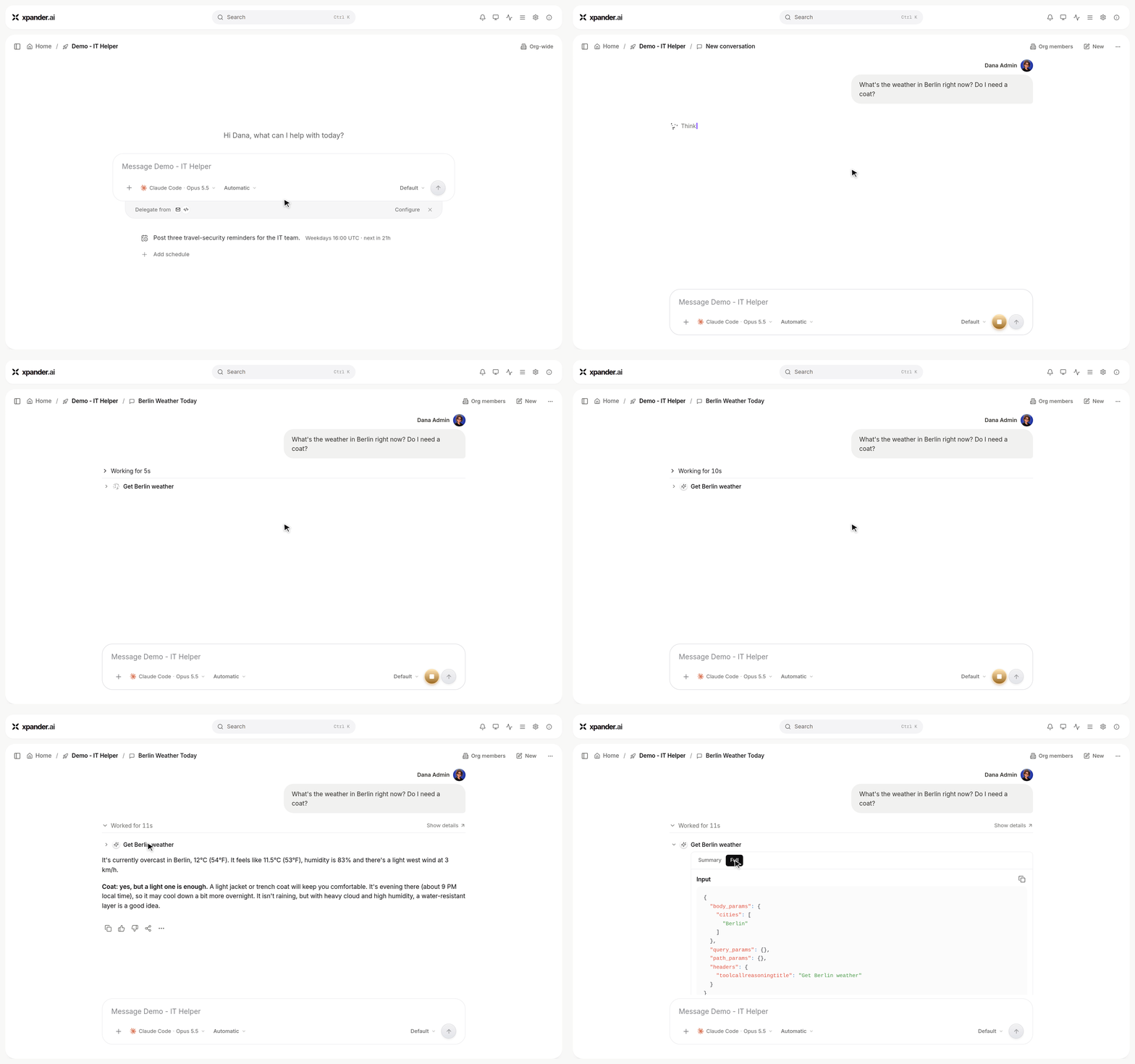
The reply streams in, the skill call is a collapsed row, and opening it shows Summary and Full.
- Conversation API: Send messages to an agent, stream replies, queue or steer follow-ups, stop a turn and read the thread back under
/v1/agents/{agent_id}/conversations/....GET /v1/tasks/{task_id}and the SDK exposeconversation_idandconversation_kind. See the Conversations overview. - Omni is an agent: Omni is an agent like any other, with its own skills. The
@Omnimention in a chat and the Omni MCP connector for your own clients work as before.
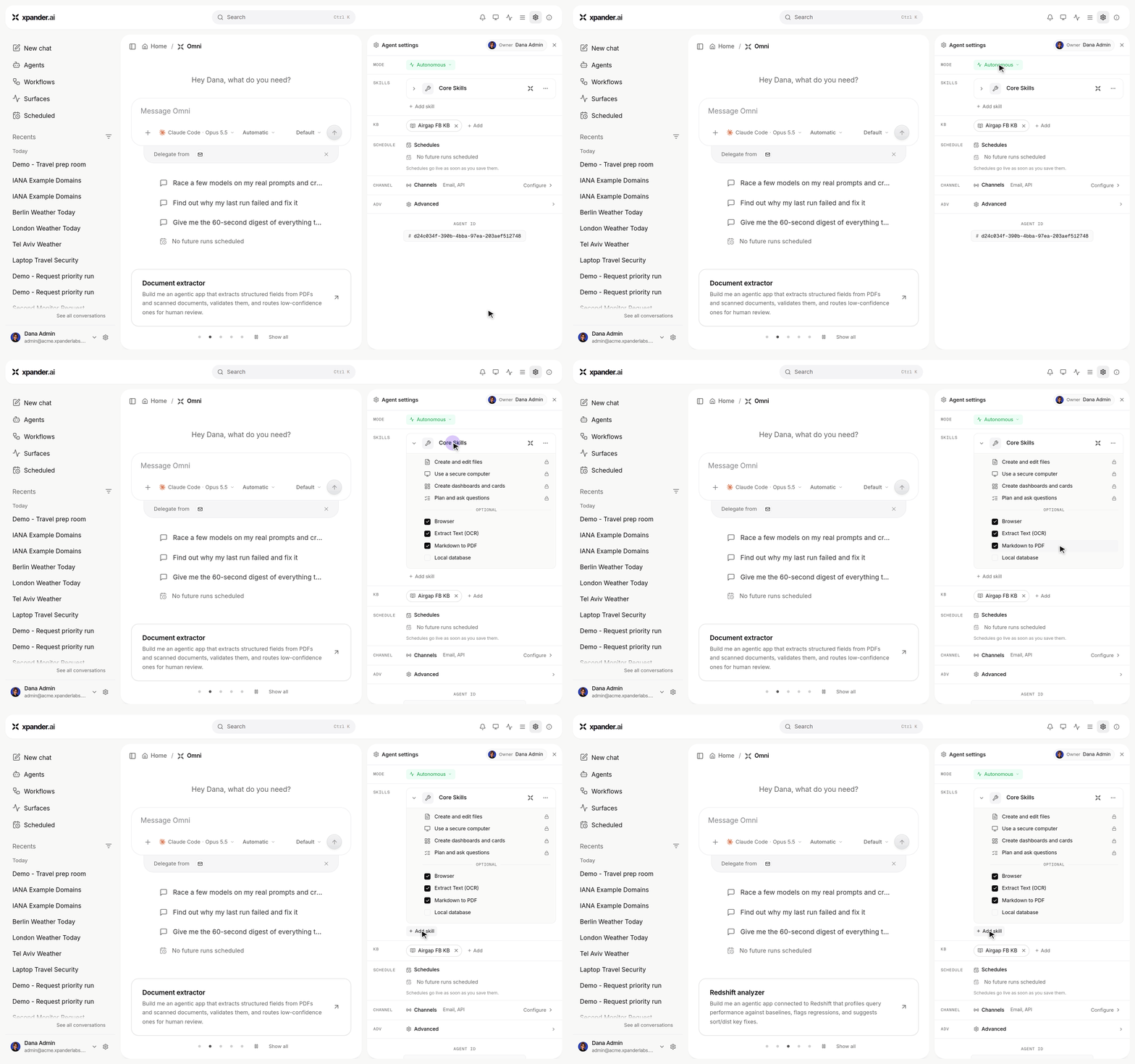
Omni's Agent settings: its own mode, skills, schedules and channels, like any other agent.
Improvements:
- Structured output on request only: A task’s
output_schemais honoured as-is, including on scheduled runs; without one the agent answers in its configured format. - Credits: Every message is one invocation credit plus the model usage and skill calls it makes.
- Weather, past conversations, inbox, channel history and result delivery are built-in skills on every agent that has the matching channel.
Bug Fixes:
- Fixed a scheduled run’s
output_schemabeing ignored. - Fixed a conversation on Claude Code, Codex or OpenCode losing its session between messages.
New Features:
-
Secrets and credentials manager: A new Secrets section on the agent declares which credentials it needs and shows their status. Personal credentials live in My connections, with a guided vendor wizard and validation. Vaults support typed secret kinds with metadata and
.envbulk import. Secrets resolve on every turn, including personal credentials and a git credential helper inside the agent’s workspace. - Share skills with control: Skills carry visibility scopes and per-agent grants, provenance badges, and locked repository-managed skills. A public publish API publishes a skill to the registry programmatically.
- Archive conversations and tasks: Conversations and tasks can be archived and unarchived, with an archived filter in history and matching public API routes.
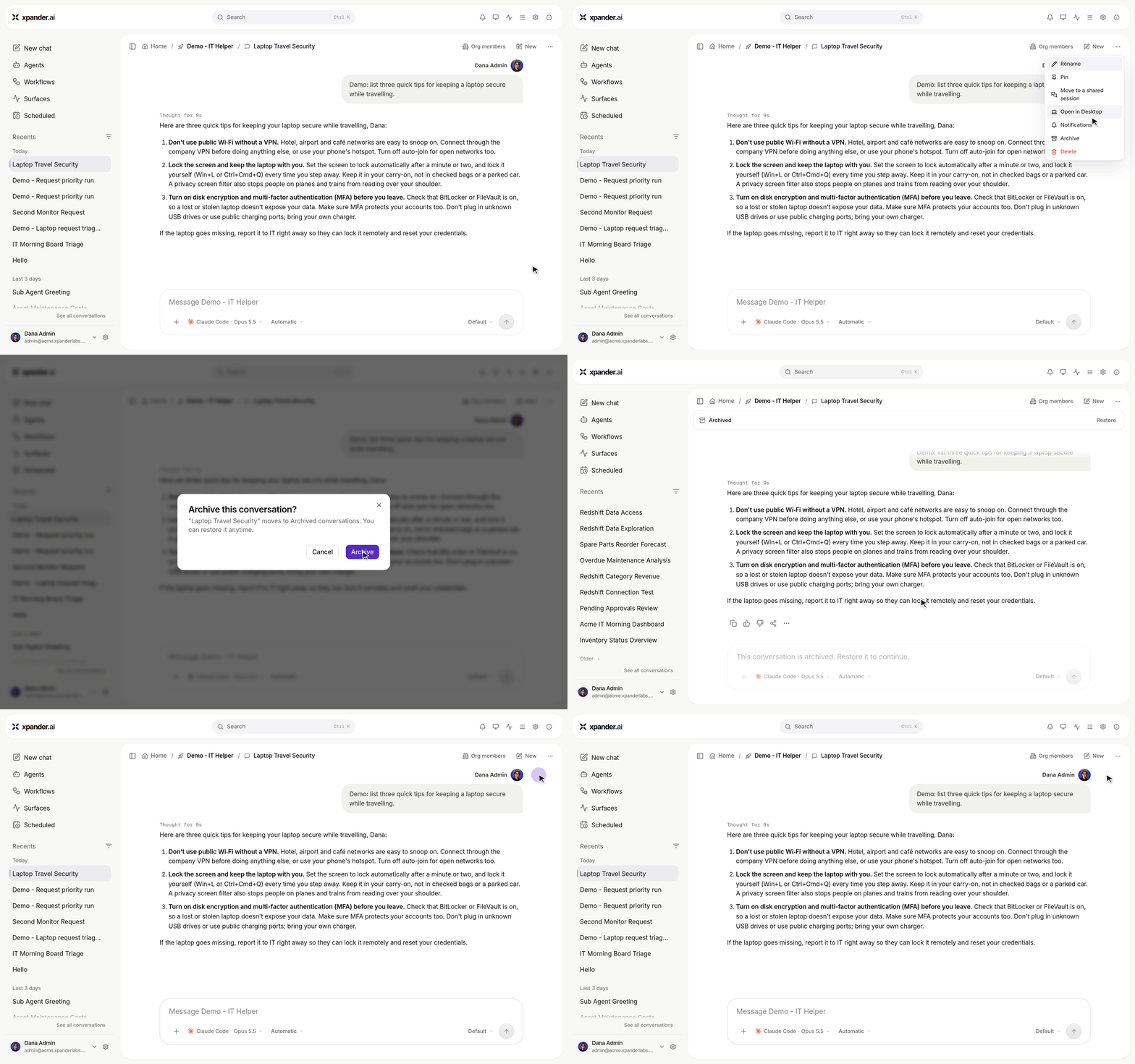
Conversation actions > Archive: the conversation leaves the list and is read-only until Restore.
- Reasoning tab in the execution log: The agent’s thoughts are collected on a dedicated Reasoning tab next to the execution log.
- Reports from Markdown: An agent can publish a Live Surface report from a title and Markdown; xpander builds and validates the layout.
- Gated web access: Gated mode now holds the harness’s web-fetch and web-search calls for approval, and the gated commands editor is available on agents running on Claude Code, Codex or OpenCode.
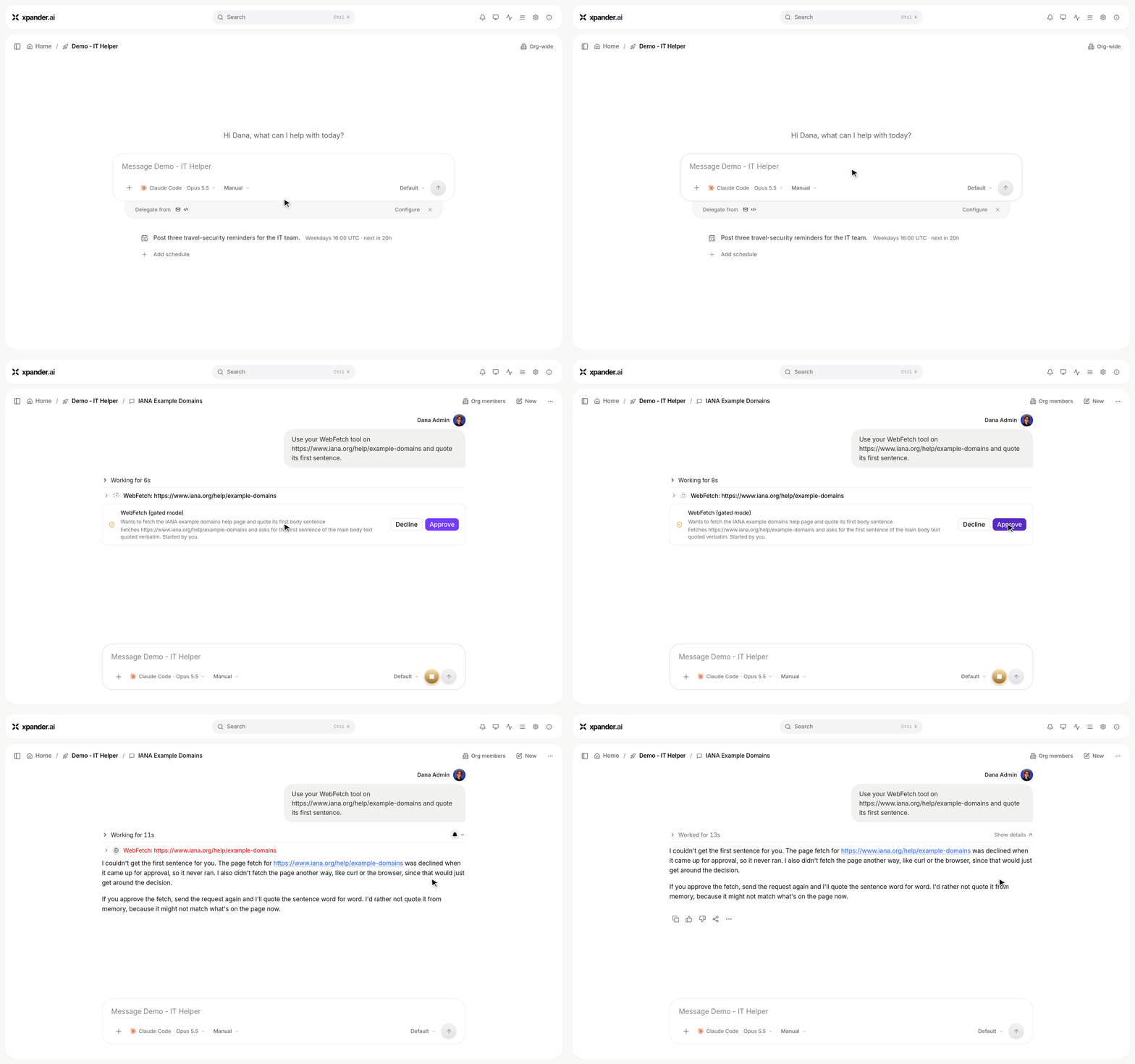
With Manual approval, the agent's web fetch waits for Approve or Decline; after a decline it does not go around it.
- Conversations move between harnesses without losing context: A handoff digest carries a conversation’s context when it switches between Claude Code, Codex and OpenCode.
Improvements:
- Scheduled runs in the thread: An agent’s scheduled runs read as regular thread lines with a next-run bar, and the thread stays live as runs land.
- Model picking: The LLM settings model picker is searchable and scrollable, and creating an agent without picking a model follows the organization’s default LLM.
- Workspace persistence:
pipinstalls persist across turns, and plan files live in the conversation’s working directory. - Step names: Skill steps served over MCP are named by the call they made, and action steps show the workspace root correctly.
Bug Fixes:
- Fixed scheduled-run Slack replies being lost when a run produced an empty result.
- Fixed legacy MCP OAuth callback URLs breaking after a registry migration.
- Fixed creating an agent wiping all pending self-scheduled jobs.
- Fixed thread scroll jumps and a background refetch storm in long conversations.
- Fixed message content being clipped while resizing the chat window or a panel.
- Fixed the conversation breadcrumb running under the share badge in a narrow chat column.
- Fixed Slack auto-engagement rules not being evaluated for user mentions; the Slack channel now shows on task list rows next to its agent.
- Fixed an organization switch reloading the old organization’s URL instead of landing on home, and stale user caches surviving the switch.
- Fixed deleting an agent not stopping its in-flight turns.
- Fixed attachments and the shared local database not being accessible to agents on Claude Code, Codex or OpenCode; the local database skill works there now.
- Fixed a task being misrouted to the wrong runtime and reported as successful when an agent’s metadata could not be resolved.
- As always, our agents and humans continuously fix various bugs, and sometimes create new ones (that will be fixed in the next update.)
New Features:
- Send a Slack agent’s replies to another channel: A channel routed to an agent can now answer into other channels as well as, or instead of, the one it was asked in - an alerts channel, a leadership channel, or both. Pick Where on the channel row: This channel (the default, unchanged), This channel and more, or Somewhere else, then add up to 10 destinations. The workspace app posts the copy under the agent’s own name and avatar, so no per-agent Slack connection is needed, and a relayed answer carries a Relayed from #channel line so readers can see where the question was asked. The same destinations are the agent’s own permission list while it works. Only completed answers are relayed; errors, progress updates and direct @mentions stay put. See Slack.
Improvements:
- Channel turns show one updating status line by default, replacing the detailed skill list introduced in the May 3 Slack update.
- Show detailed tool activity opts into readable, deduplicated skill steps with a twelve-row cap. Native Slack details may remain visible after completion.
- Existing silent preferences remain silent, and raw shell commands are hidden from channel progress.
New Features:
- Run your agents on Claude Code, Codex, or OpenCode: Agents can now run on Claude Code, Codex, or OpenCode inside xpander, chosen from a harness picker. The chat composer gains a combined CLI, model, and permission-mode picker, a slash-command menu, and held clarifying questions, and you can switch CLIs mid-conversation while keeping the full conversation history. Harness agents get skills sync, connected MCP servers, workspace secrets, dynamic tools, output format and schema support, their plans surfaced in the activity view, and human-in-the-loop approval for the CLI’s own tools, and new conversation agents are now created on the harness by default.
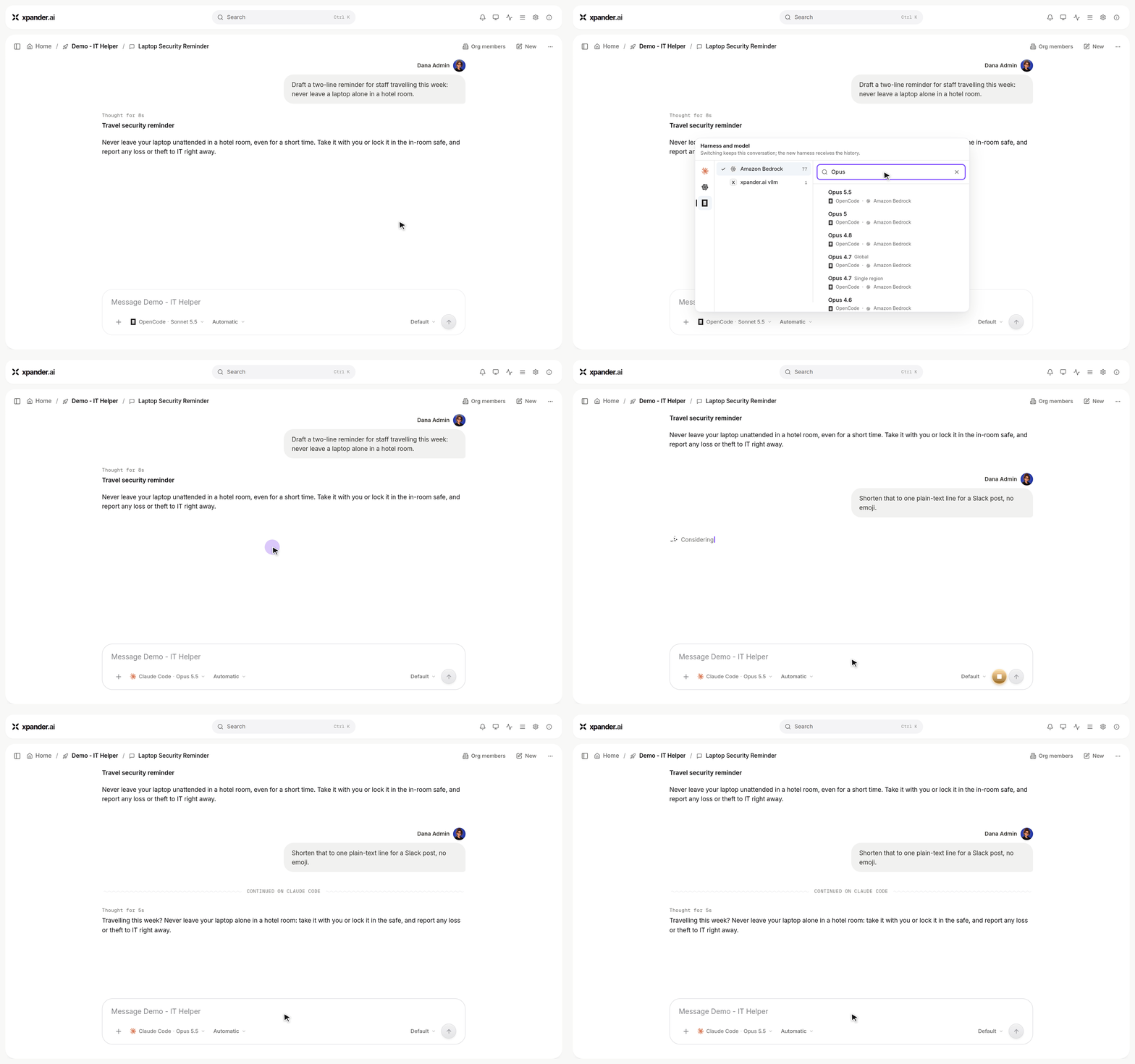
Switching a conversation from OpenCode to Claude Code: the agent keeps the history and shortens its earlier answer.
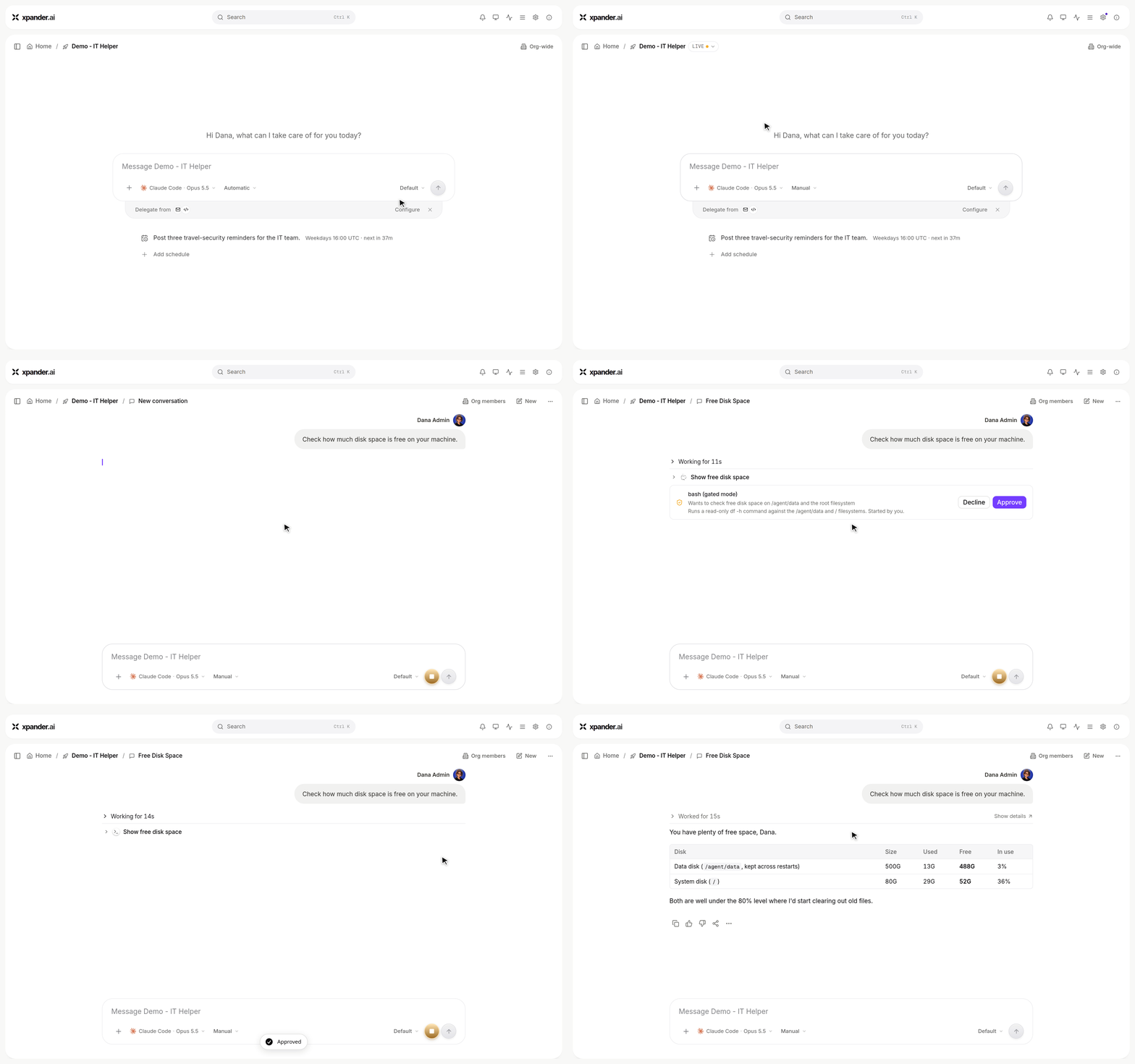
Manually approve: the agent's shell command waits on an approval card, runs once approved, and the answer follows.
- Executor fleet runtime: Harness agents run on a shared, autoscaling executor fleet, a new agent is available instantly with no container to wait for, every turn runs in its own hardened sandbox with strict memory limits, agent workspaces persist on fleet volumes with quotas and cleanup, and compute usage is metered. The fleet scales on queue depth, and rolling updates drain executors without ever killing a running turn.
- Runtime Environments: Define a reusable runtime environment once and attach it to agents from a new settings tab with a full editor. Its configuration files land in the agent’s home directory (for example
~/.awsand~/.kube), and its context reaches the agent’s prompts automatically. Agent-level memory files are also remembered across conversations now.
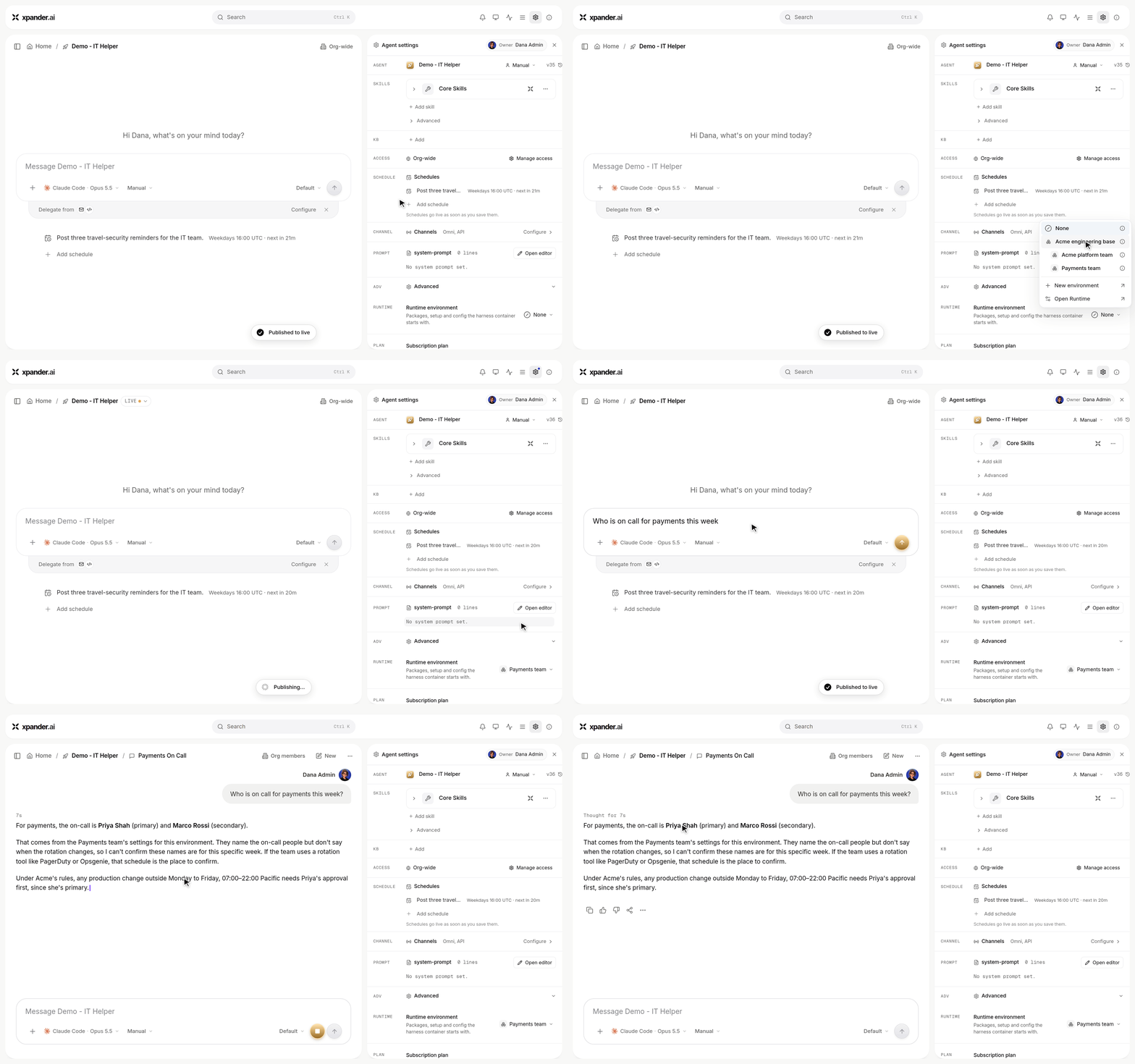
Attaching the Payments team environment to an agent: its answer now uses the on-call context the environment carries.
- Native Slack handles for agents: Give an agent its own Slack handle, provisioned and routed natively, configurable per agent or workspace-wide, with admin authorization from workspace settings and clear setup and recovery guidance.
- GPT-6 Astra and Claude Code on Amazon Bedrock: GPT-6 Astra joins the model catalog with the full reasoning-effort range available in agent, workflow, and default LLM settings, and new Claude Code agents in xpander cloud now start on Amazon Bedrock with Claude Fable 5.1 as the default model.
- Live Surface PDF export: Export a Live Surface to a PDF natively, including on air-gapped installs, along with a round of rendering fixes.
- Richer Live Surface documents: Live Surfaces now accept rich text documents with in-page navigation and brand callouts, and full-page documents received layout polish.
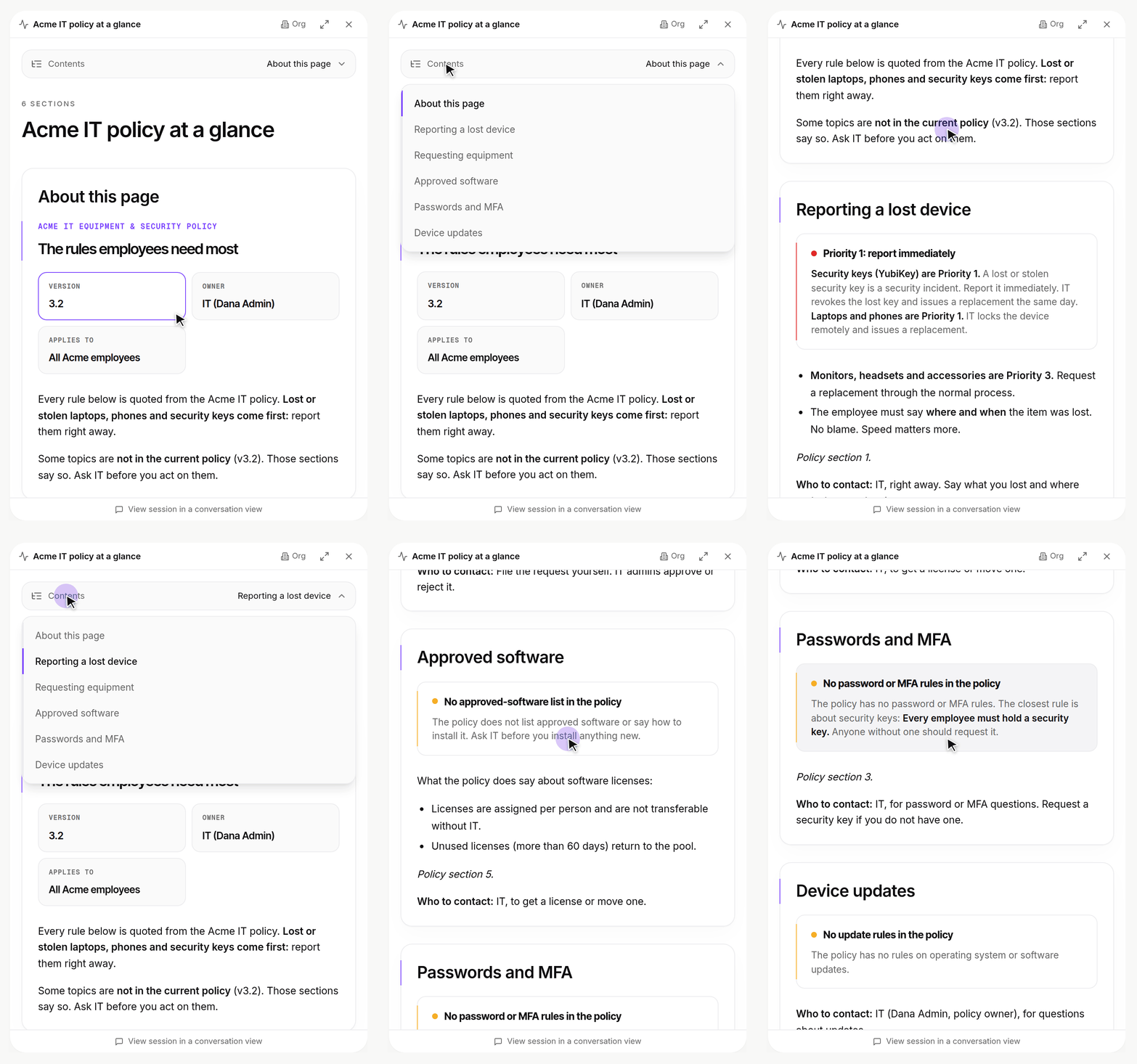
A rich text surface: Contents jumps between sections, and callouts flag the rules that matter.
- Custom theme on public share pages: An organization’s custom theme now applies to logged-out viewers of public share links, and the custom CSS theme editor moved to a full code editor with syntax highlighting.
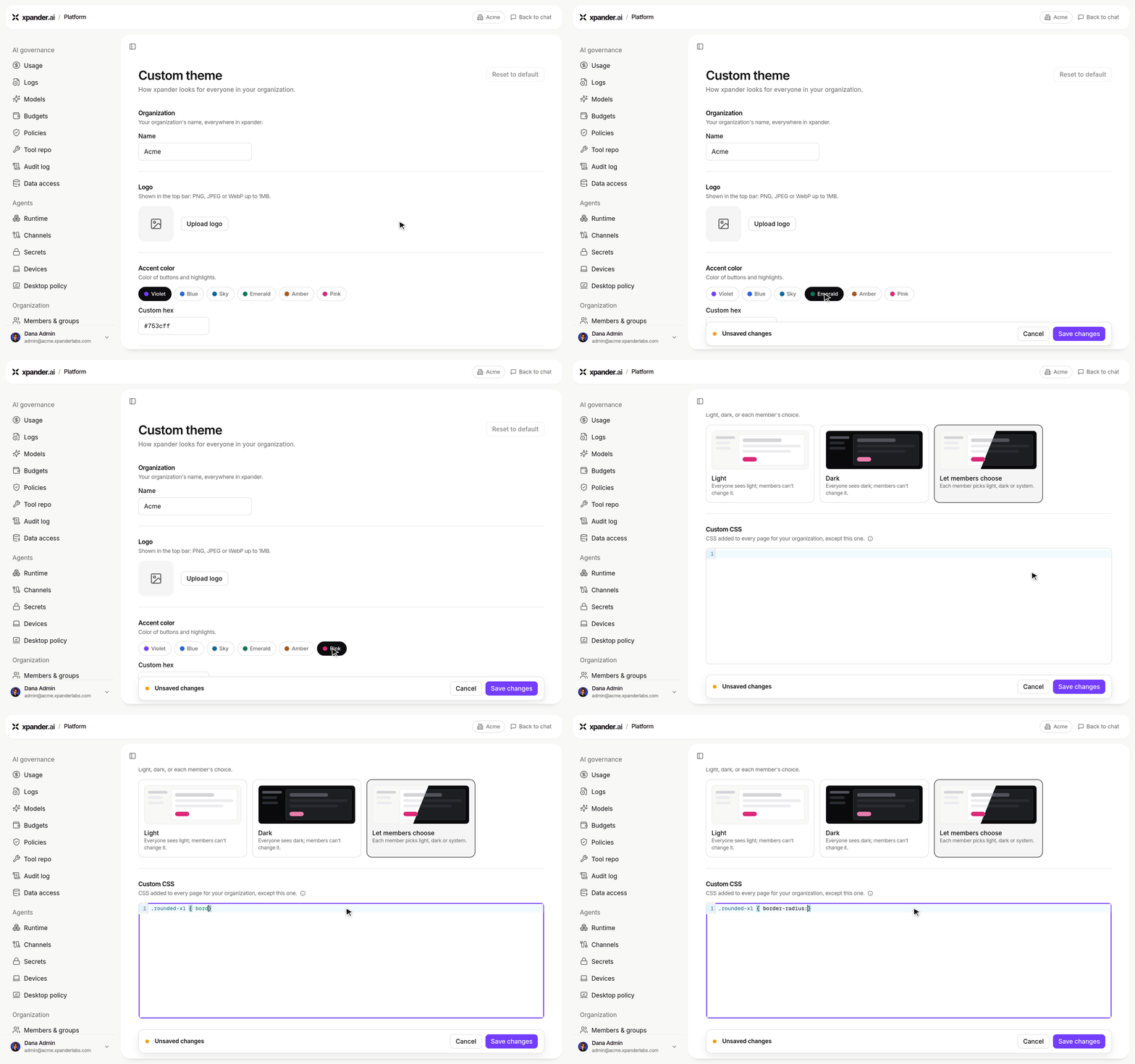
Platform > Organization > Custom theme: pick an accent color and write CSS in the code editor.
- Background users for integrations: Configure a default background user and per-integration credential overrides, with channel credentials resolved securely from the vault at runtime.
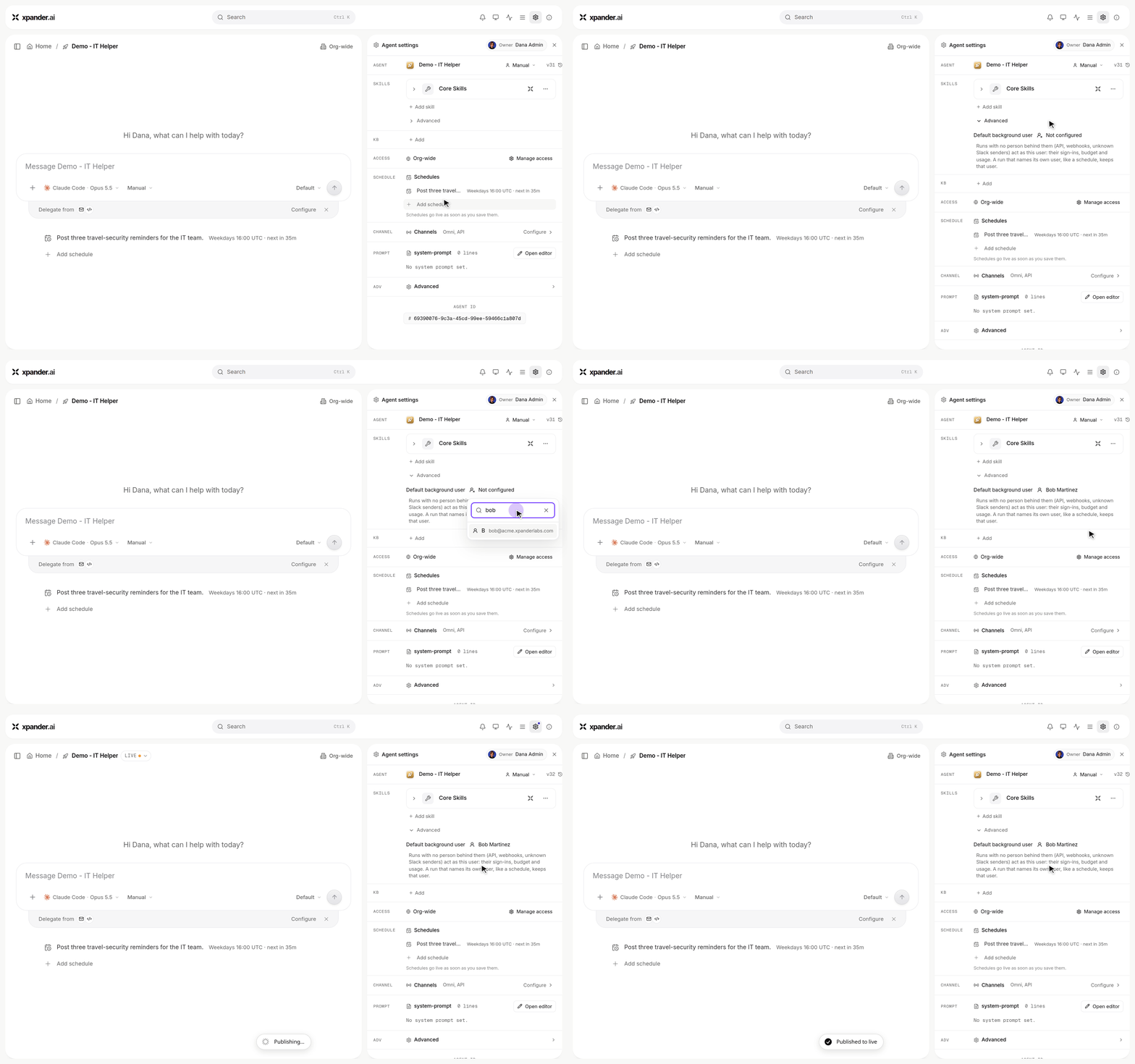
Agent settings > Skills > Advanced: setting the agent's default background user.
- Sealed licensing for self-hosted installs: Licenses are issued as sealed install and activation artifacts, agent and seat caps are enforced, and admins see a license-expiry banner in the navigation.
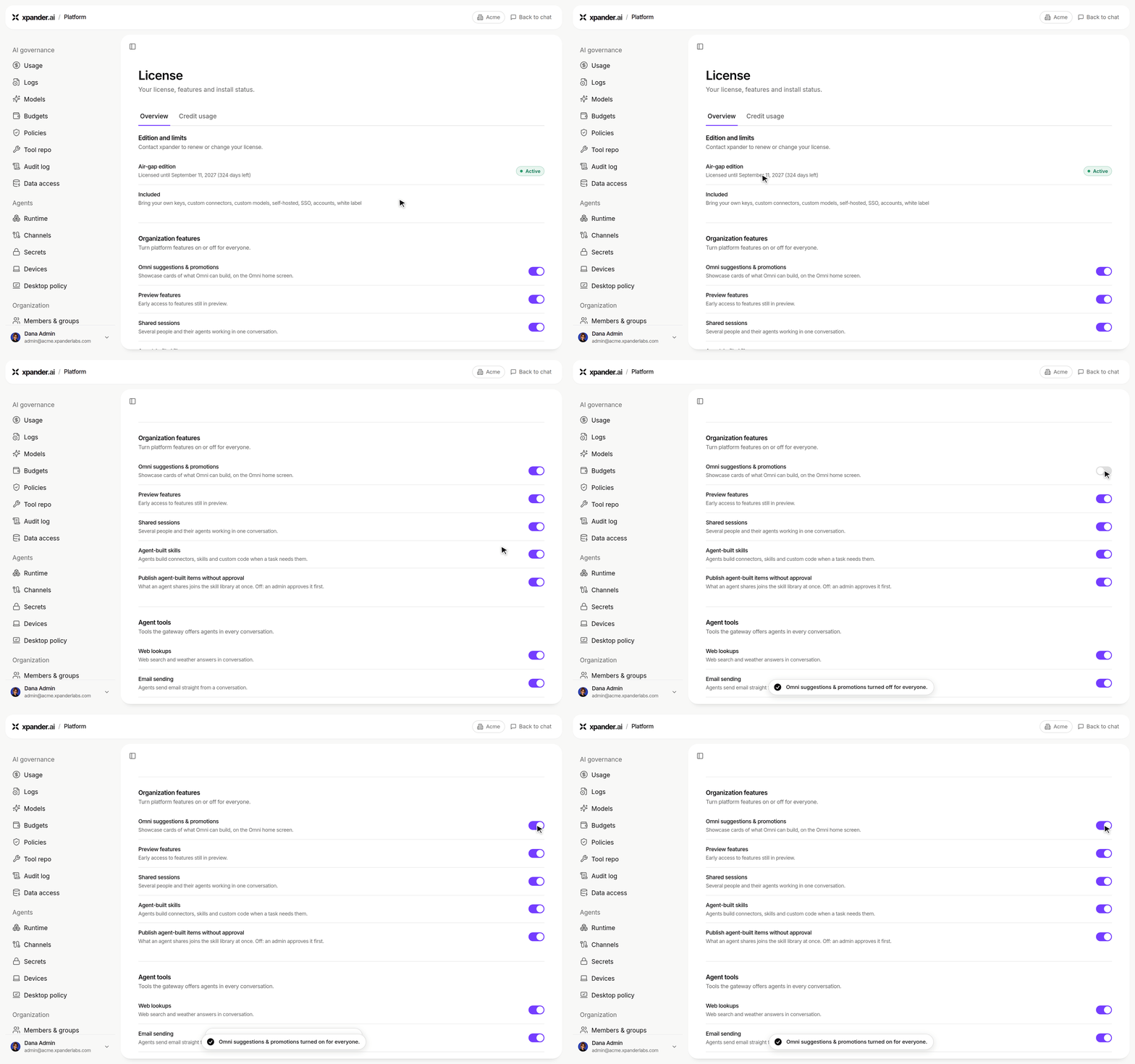
Platform > Organization > License: the edition and its expiry, then an organization feature turned off and back on for everyone.
- Resume a task over the API: A dispatched task can now be resumed programmatically, continuing the same piece of work instead of starting over.
Improvements:
- Invite-only cloud: Cloud signup is now invite-only, visitors without an account are pointed at booking a demo, and new customer organizations are provisioned by our team with an admin invitation (US or EU region) in one step.
- Sidebar and navigation: Conversations are grouped by agent and recent activity with server-persisted read/unread marks, opening an agent narrows the sidebar with an org-wide switcher in the breadcrumb, Slack conversations group by channel, and the sidebar’s background task-feed traffic was cut significantly.
- Task steps read better: Step rows now read as the model’s own note with flat details, delegation steps fold together, shell steps are labeled from the actual command, and file paths display relative to the agent’s real working directory.
- Workflow builder hardening: The new workflow builder reads test presets saved by the legacy builder, asks before deleting a router and cascades its branches, preserves notification fields it cannot display, seeds new nodes from the organization’s default LLM, exposes a copyable cURL for the invoke endpoints, and loads every workflow’s latest runs in a single request.
- Budgets and BYOK clarity: An organization-stored LLM key now counts as bring-your-own-key on every path, unpriced BYOK usage reads as “your own key: not charged” instead of a missing configuration, the per-agent budget editor points at the org-wide enforcement switch when it is off, and a budget block stops a running turn immediately.
- Slack and Teams engagement: Auto-engagement no longer drops messages arriving in the same second, bot-authored and attachment-only alerts are now read correctly on both Slack and Microsoft Teams, and Live Surface links render as Slack buttons.
- Smarter heartbeats: An agent’s autonomous heartbeat now names what it actually found, stops repeating itself, and paces itself on its owner’s failures rather than the whole organization’s.
- Secrets: Replace or rotate a workspace secret straight from chat, and saving a secret no longer restarts a harness agent’s workspace, it simply applies on the next turn.
- Computer view: Hidden files and folders are now visible in the agent’s Computer view.
Bug Fixes:
- Fixed conversation messages disappearing after a page refresh, and rapid realtime task updates being able to crash the app.
- Fixed Safari sign-in hanging on stale browser locks at startup.
- Fixed the provider models dialog closing itself when a price or access tooltip was hovered.
- Fixed agent lists failing to load when they contained legacy drafts, and pinned background credential identities being lost on save.
- Fixed basic-auth connections not sending their credentials on a self-hosted install.
- Fixed a sub-agent’s clarifying question not reaching the parent conversation’s live stream.
- Fixed links in a delivered task answer opening a new browser tab instead of the workspace pane.
- Fixed screenshot captures ignoring the requested viewport width and firing before a surface’s entrance animation had finished.
- As always, our agents and humans continuously fix various bugs, and sometimes create new ones (that will be fixed in the next update.)
New Features:
- Custom skill builder in the new UI: A new skill generator creates a custom skill from any OpenAPI spec, with AI enrichment when available and a spec-only path when it is not. Skill creation runs in the background so closing the dialog mid-run is safe, and custom skills now have a full lifecycle: upload a new spec version (preloading the current auth method), delete, and versioned generator updates with an ownership guard.
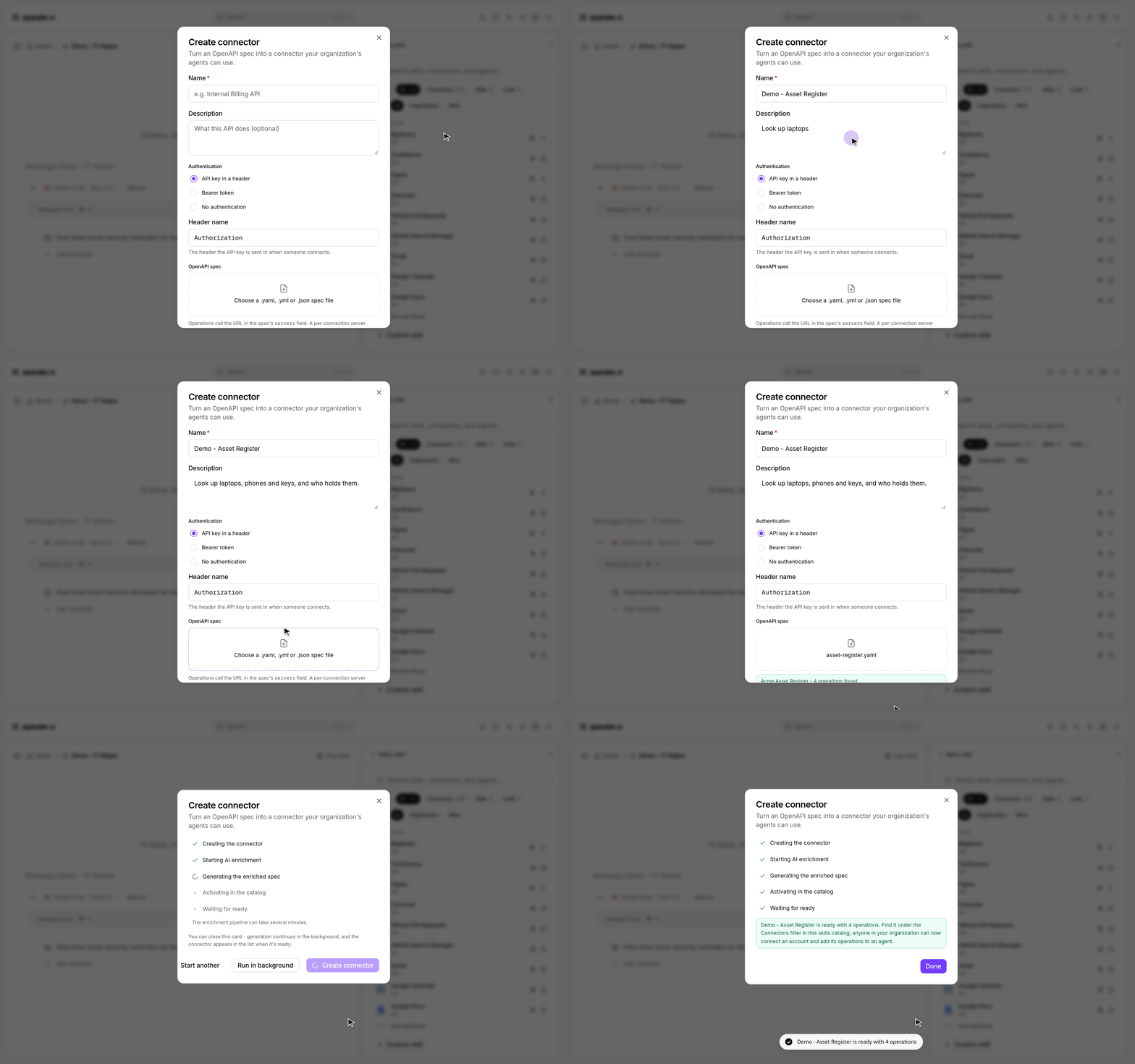
Creating a connector from an OpenAPI spec: name it, attach the spec, and it is ready with its operations.
- One Providers table for LLM settings: LLM settings now show a single Providers table with keys, models, and costs per provider. Built-in rows meter the default rate while BYOL rows own their model costs, platform-wired default providers show their real Ready state, and provider costs are editable on licensed installs. A new usage and charges card shows BYOK cost in dollars, and wallet usage reads expose per-bucket pricing sources.
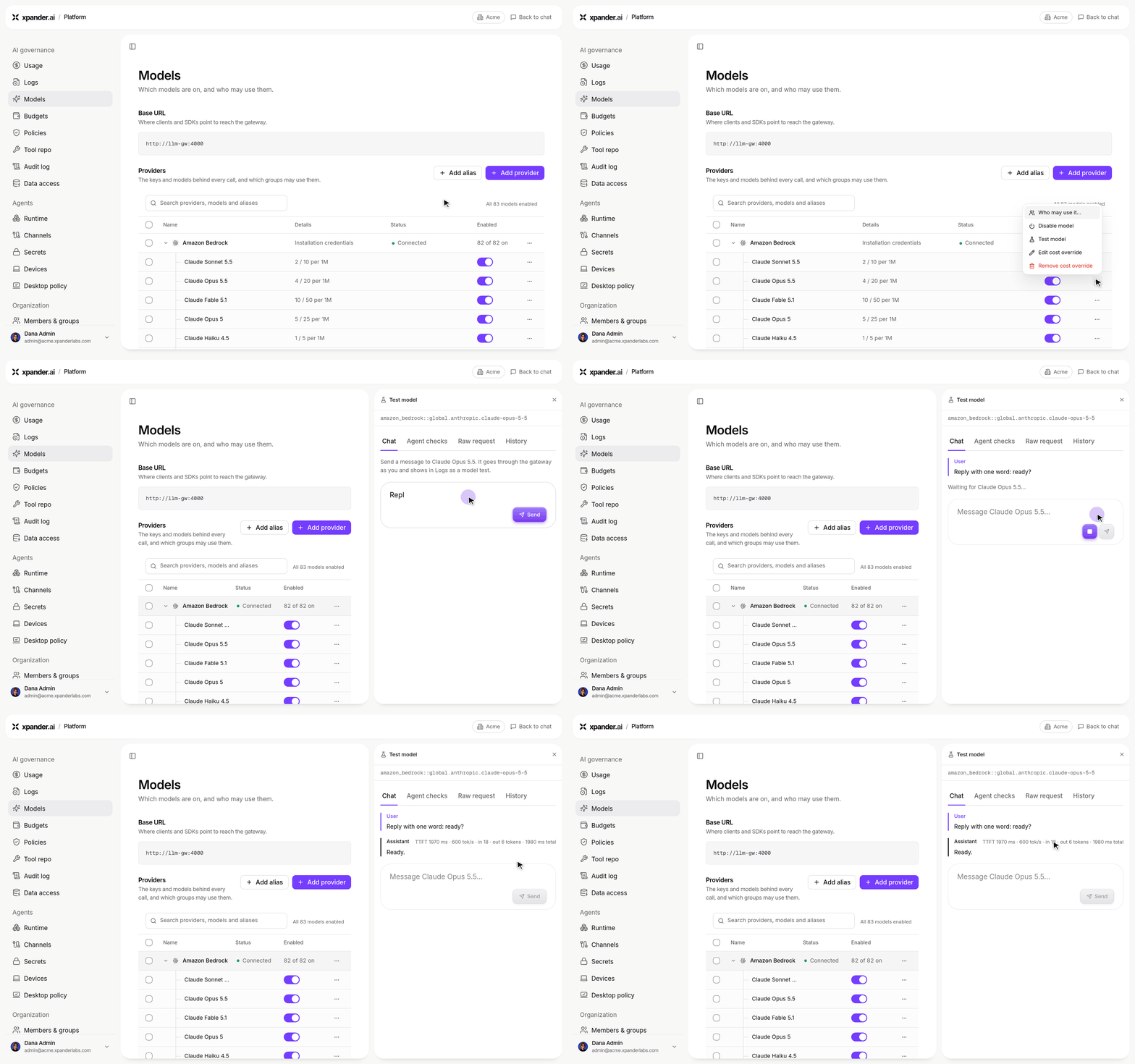
Platform > AI governance > Models: testing a provider's model from the Providers table.
- Workflow run history and replay: Workflows now record full run history with per-node runs, node history, and replay; a run test opens the task-run card, and the execution log gained an orchestration mode.
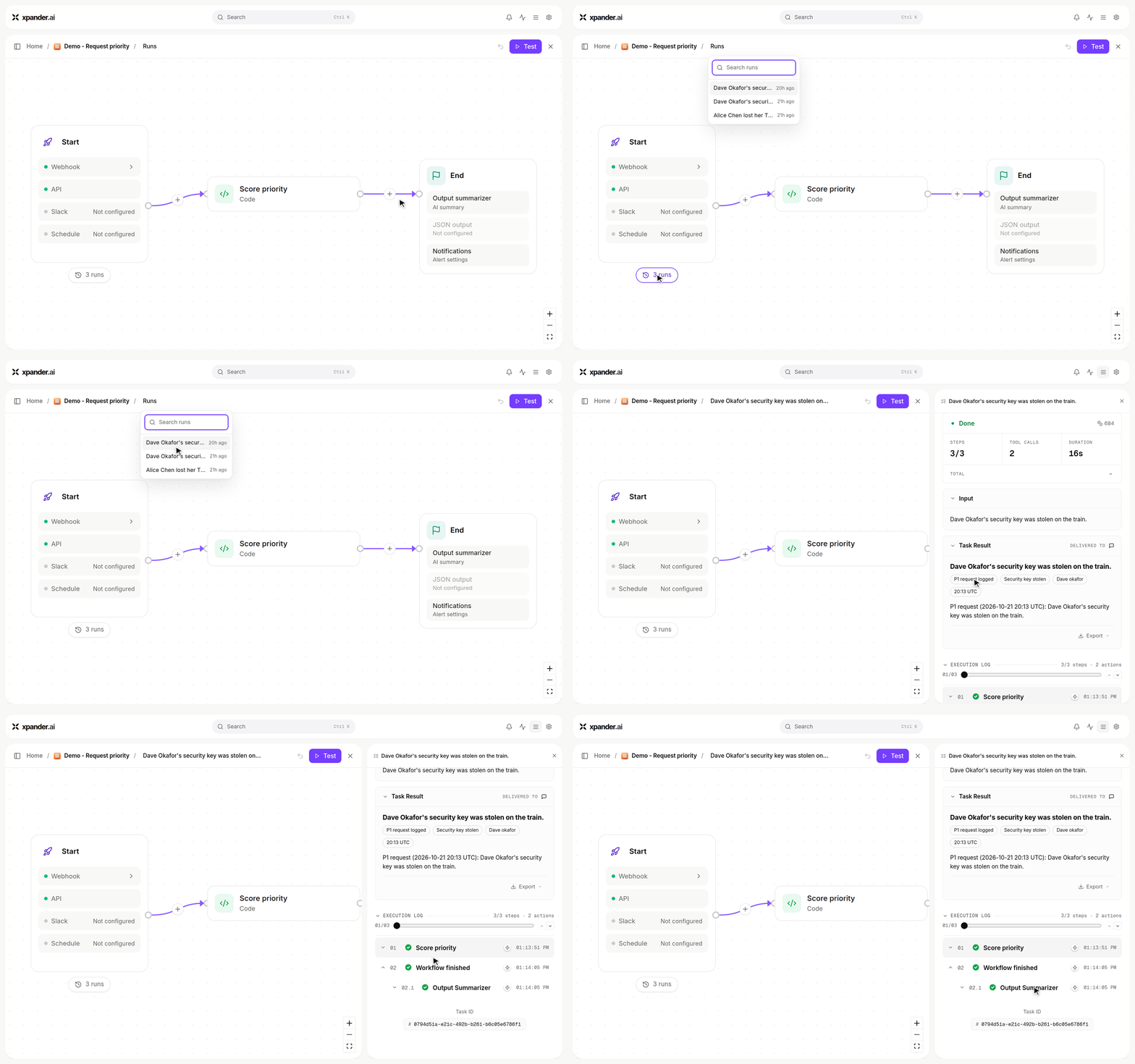
A workflow's run history: open an earlier run to see its input, result and every step of its execution log.
Improvements:
- Faster first token on long threads: First-token latency was cut significantly on long conversations.
- Sidebar polish: Building on the new Conversations list, rows gained an action strip with double-click rename, phone swipe gestures, visible channel threads, and a failed run’s red count now clears once you look at the agent.
- Slack: Auto-engagement now works for agents at any sharing level, and attempting to connect a Slack workspace already held by another organization returns an actionable explanation instead of a generic error.
- Scheduled runs pace themselves better: Daily managed schedules are spread across the whole day instead of clustering on the hour, and scheduled agent jobs are jittered to avoid thundering herds.
Bug Fixes:
- Fixed steered messages rendering twice in the chat thread, and a user message being duplicated after a delegated agent task completed.
- Fixed message text disappearing when a mention pill was rendered, and the MCP skill picker losing its options across a refresh.
- Fixed Google Drive/Gmail built-in skills returning 500 on certain calls, and a Google Analytics report call failing with a 404.
- Fixed Live Surfaces not being accessible in shared conversations on self-hosted installs, and crash-recovered turns now surface their real result over MCP.
- Fixed zero-progress task stalls when a local skill served over MCP was starting up, and workspace MCP skills now launch by resolved path and explain failures from both output streams.
- Fixed workflow run steps and workflow skill rows showing raw internal ids instead of readable names.
- Fixed attachment upload failures into the workspace passing silently, they now surface with a toast.
- Fixed a legacy reasoning card reappearing at the start of some runs.
- As always, our agents and humans continuously fix various bugs, and sometimes create new ones (that will be fixed in the next update.)
Improvements
- Find agent work from the sidebar: The Conversations list brings agent, person, source, date, and status filters together, with pinned conversations, upcoming scheduled runs, and a See all view. See Tasks.
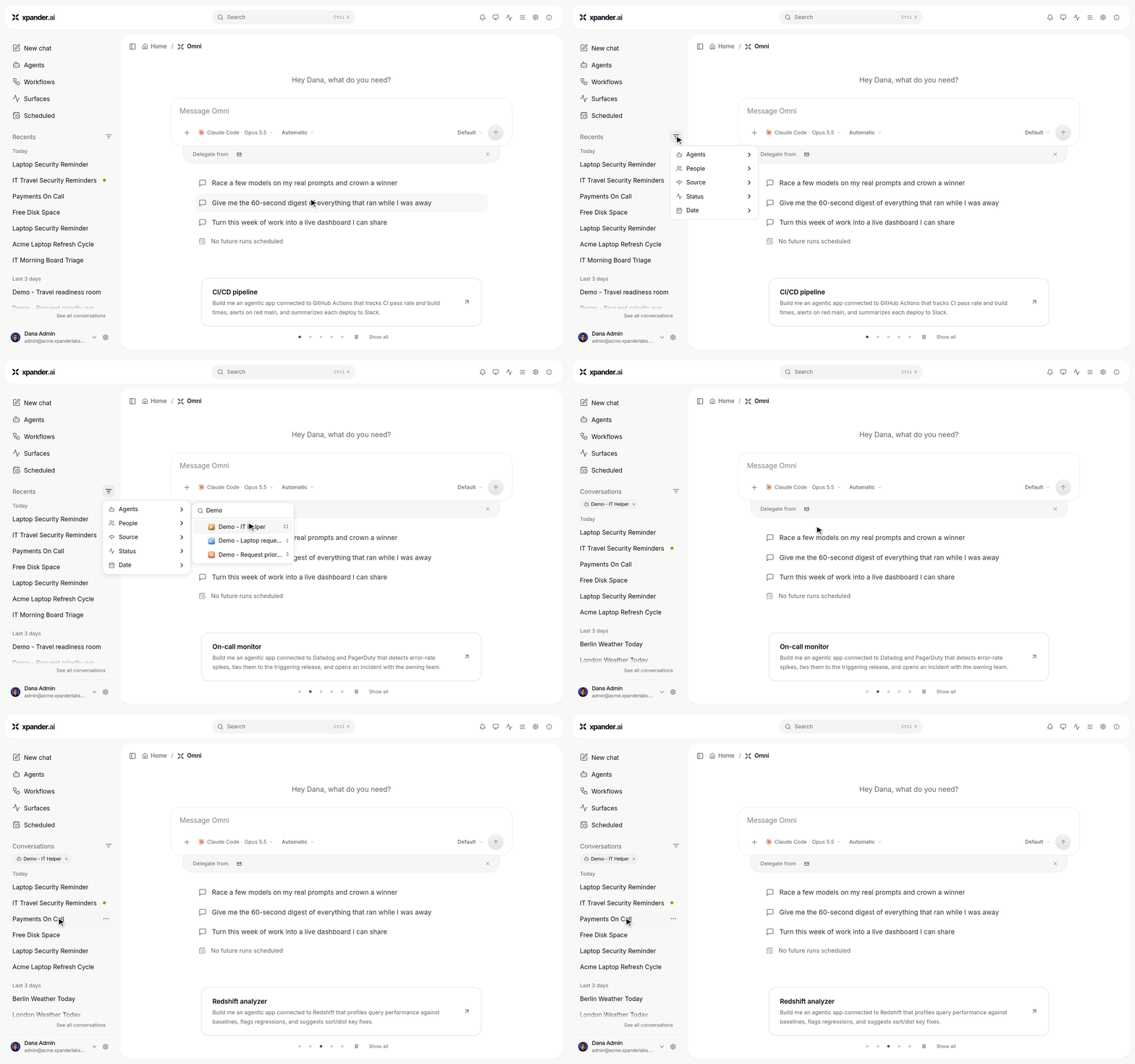
The sidebar's Filters: narrowing the conversation list to one agent's work.
- Builder chat: Intermediate builder narration is suppressed while a build is in progress; normal conversation responses remain available outside the build.
New Features:
- Shared Sessions: Put several people and several agents in one conversation. Turn an existing conversation into a shared session, choose who and which agents join, chain agents inside the room, and let an auto-engage judge decide when the agents should answer instead of staying silent. Sessions carry their own permissions, presence, run controls, notifications, and a sessions finder, plus a session file workspace with versions, signed downloads, composer attachments, and copy/listen actions on messages.
- Visual Workflow Builder in the new app: The workflow automation builder was migrated to the new User Interface. It allows you to build deterministic workflows for specific use-cases, while having an agentic base running the workflow. The meaning is workflows that are much easier to build, because you don’t have to map specific fields between nodes and steps. The Workflows are extremely robust and allow scheduling and Slack triggers, public webhook triggers, a condition wizard, parallel/pointer/group/end nodes, a wait node that pauses for human approval by email or webhook, per-node model and tool selection through the skill picker, a code node that can generate with AI, per-node diff review, and a pending-changes bar with an explicit publish step.
- MCP Registry refreshed: An organization-wide registry for MCP servers, with its own settings tab, one canonical server identity, name-aware deduplication and a conflict dialog, per-row health dot, DCR badge and connection check, token-holder and usage dialogs, and a management API covering write policy, usage, probes, tokens, and discovery. Inline MCP servers can be added to the org registry straight from the add form, and deleting an entry says exactly which agents lose the server.
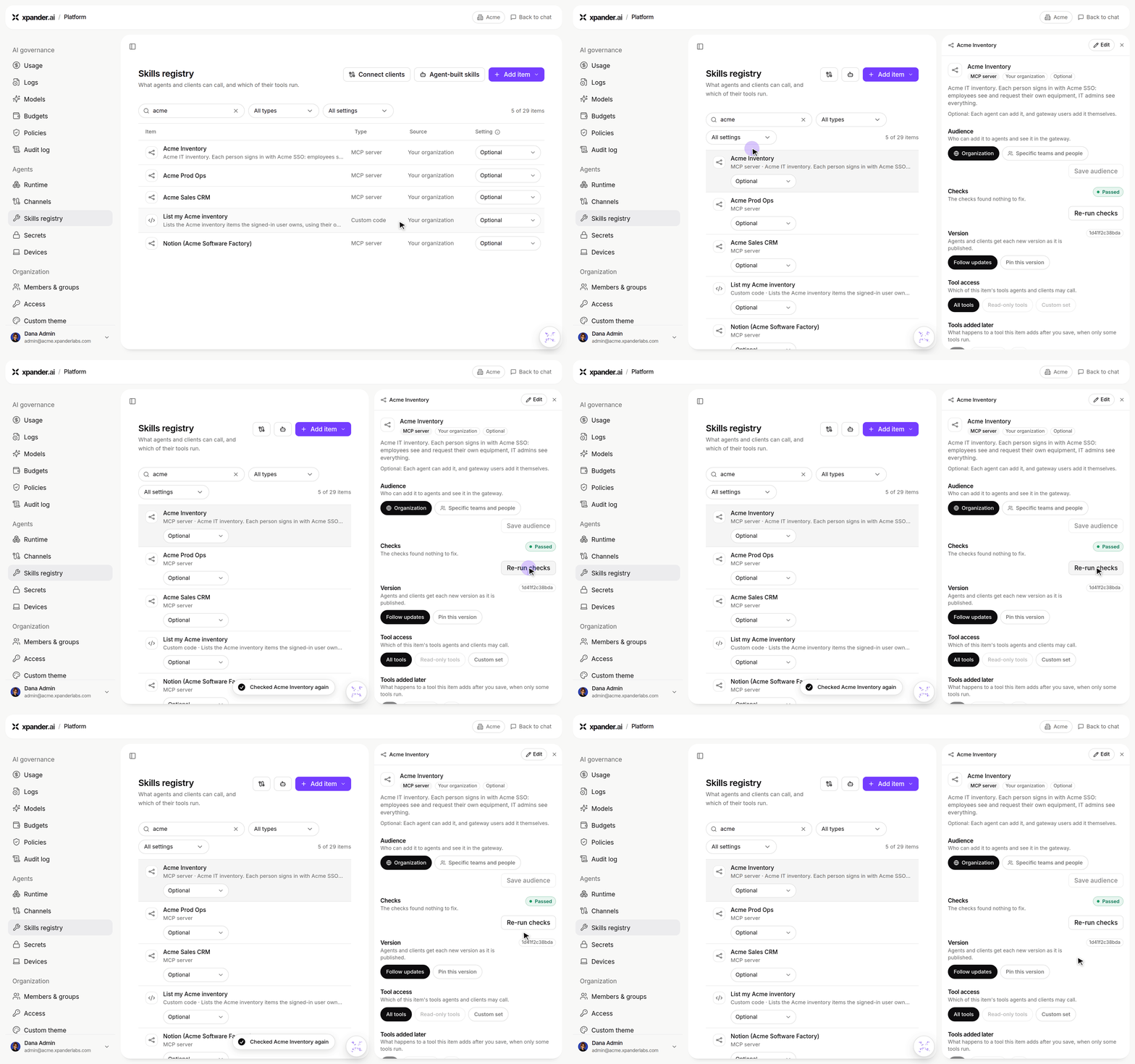
Platform > Skills registry: an MCP server's card with its audience and checks; Re-run checks tests it again.
- Gated commands: Mark specific commands as gated so an agent holds them and notifies a named human for approval instead of failing quietly, with an editor for per-gate approvers and notification channels bound to real organization members.
- Workspace database viewer and editor: Open a
.dbfile in an agent’s workspace as a real database — browse tables, click a cell to edit it, and save what you typed. This feature goes along with enabling the “Local database” skill that can be enabled for any agent under the “Core skills” section - effectively giving every agent a local database running in its worksapce, and now also available for visual browsing and queries right in the UI. - Pin the model a scheduled run uses: A scheduled task can now pin its own model instead of always inheriting the agent’s default.
- Skill bundles: Download a skill’s bundle, and rename a skill from its row menu.
Improvements:
- Connector setup is easier to get right: A new ApiKey auth type, a URL placeholder and example derived from the connector’s own spec, and a collapsed “Setup guide” that renders markdown with working links. Custom connector creation is now gated on the platform license rather than the retired billing check.
- MCP sign-in and callbacks: The MCP redirect URL is now a generic, organization-independent callback (previously registered URLs keep working), DCR verdicts are persisted with probe health, and a refused sign-in explains itself instead of showing a raw HTTP blob. This makes it easy to connect to Remote MCPs with whitelisted callback URLs.
- Local MCP servers: The form says which commands are supported and lints what you typed, the server is actually tested in the agent’s workspace at save time, a held test is polled instead of timing out, and a chatty server’s own words survive instead of being drowned in per-line tracebacks.
- Agent export and import fidelity: Exported agents carry their tools, custom functions become tools, archives upload (and say so when they cannot), imported skills attach and publish to the registry, MCP auth and connector authorization links are generated for the importer, and a strict parity contract with a failure report replaces silent gaps.
- Quieter, clearer chat: Mid-build builder prose and in-chat plan drawing were removed, toasts are centered, the agent’s send-email built-in prefers a connected mailbox, and small text PDFs are answered on the gateway without spinning up a sub-task.
Bug Fixes:
- Fixed a failed activity read being able to kill a live workspace, and an activity timestamp being read in the wrong shape.
- Fixed a batched heartbeat deadlocking during a rollout, and agent-derived caches surviving a change to the agent.
- Fixed duplicating an agent not copying its workspace, and catalog specs being restored from a stale cache by a racing write.
- Fixed a manifest mistake leaving a half-done task instead of something repairable, and a dynamic-prompt test not being able to call an operation just attached to the agent.
- Fixed a cold workspace probe being reported as “Did not start”, agent creation failing quietly, and an organization switch failing without saying why.
- Fixed a cluster of dead clicks on controls that could not act, missing thumbs up/down and Share on agent messages, a keynote overlay eating clicks while it faded out, and the sidebar reading “2M AGO” for two minutes ago.
- Fixed the Slack workspace staying connected after the app was removed on the Slack side.
- As always, our agents and humans continuously fix various bugs, and sometimes create new ones (that will be fixed in the next update.)
New Features:
- External Vaults (Azure Key Vault): Attach your own Azure Key Vault to xpander, browse and import its secret names, and let agents resolve the real values live at use time.
- Agent credential bindings: A new Credentials panel lets you bind vault secrets to a specific agent, choose how each credential is used, and require human approval on an individual binding.
- Human approval for individual tool calls: Hold a specific tool call for approval, with rules that can be scoped to named tools and set from an MCP server’s row, enforcement on MCP tools, a named approver who is actually notified, and a link the approver can act on.
- Agent import & export contract: Export an agent to an MCP client such as Claude Code and import a Claude agent back into xpander, with a manifest engine, MCP consent, approvals over MCP, a secure workspace-secrets handoff page, and a conformance suite behind it.
- Local MCP servers on any agent: Local (stdio) MCP servers now run inside the agent’s own workspace, so any agent can register one from the chat wizard or the skills form, edit its environment after attaching, and keep it claimed across restarts.
- Self-scheduling agents in the conversation: Omni can book its own follow-up runs, an agent’s own scheduled runs appear in the conversation, xpander-managed default schedules and an autonomous heartbeat pace themselves, and the schedule dialog has Simple/Advanced modes that generate a cron and prompt from free text.
- Model access control: Organization and group model allowlists are enforced on save and at run time, model pickers show only the allowed set, and BYOK-only providers are gated when no key is available.
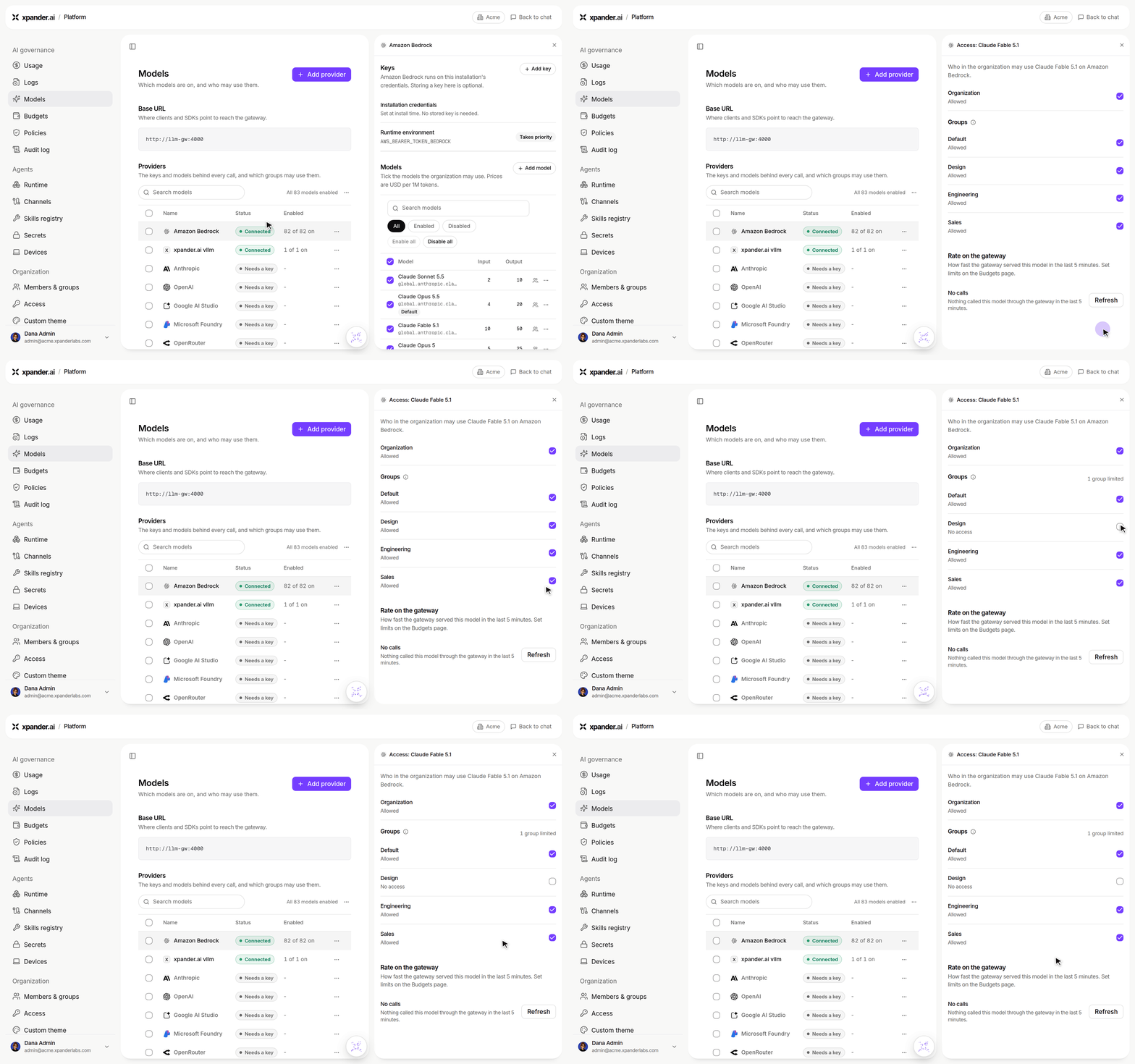
Platform > Models: take Claude Fable 5.1 away from the Design group.
- Workspace secrets over the API: A new API-key endpoint sets an agent’s workspace secrets programmatically — no browser and no model in the loop.
- Live Surface component capture: Live Surface blocks now have stable ids and an isolated render route, so a single block can be captured as an image and reused elsewhere.
Improvements:
- Agents know their own context: An agent is now aware of its email address, its organization id, and its channel presence (WhatsApp number, Slack/Teams channels, MCP endpoint, app names), and every message carries its own timestamp instead of requiring a clock tool.
- Slack polish: A tables toggle, link unfurls, single-call block screenshots, structured JSON replies rendered human-readable, thread replies that carry the agent’s identity, self-scheduled output routed back to the originating Slack thread, and DMs that honor the assistant’s New Conversation button.
- Approvals read like decisions: The approvals table and panel gained per-class tabs, a searchable multi-select people filter, one save across classes, honest phrasing instead of operation ids, and notifications that open exactly the request they are about.
- A stale tab tells you: When a new UI build ships, open tabs get a friendly reload prompt instead of silently running an old version.
Bug Fixes:
- Fixed a secret change bouncing the workspace and returning 503 for in-flight tool calls.
- Fixed a client disconnect being able to kill a running gateway turn, and failed tool calls not reaching the activity trace.
- Fixed the tool-call summary racing the tool result and caching “No data returned”.
- Fixed agent-sent messages duplicating the platform’s own channel reply.
- Fixed the theme defaulting to dark on a fresh device in the legacy app, a duplicated
#in the Slack channel picker, and the agent owner chip showing the viewer instead of the owner. - Fixed shared workspace media not rendering on async task results, and the builder asserting a review card that never rendered.
- As always, our agents and humans continuously fix various bugs, and sometimes create new ones (that will be fixed in the next update.)
New Features:
- Skills Registry: Create, edit, share, and import reusable skills from a shared org-wide library. Skills can be private, shared with a group, or org-wide, install in one click, and show provenance badges (platform, organization, or private). Skills can also be exported into the registry directly from MCP clients like Claude.
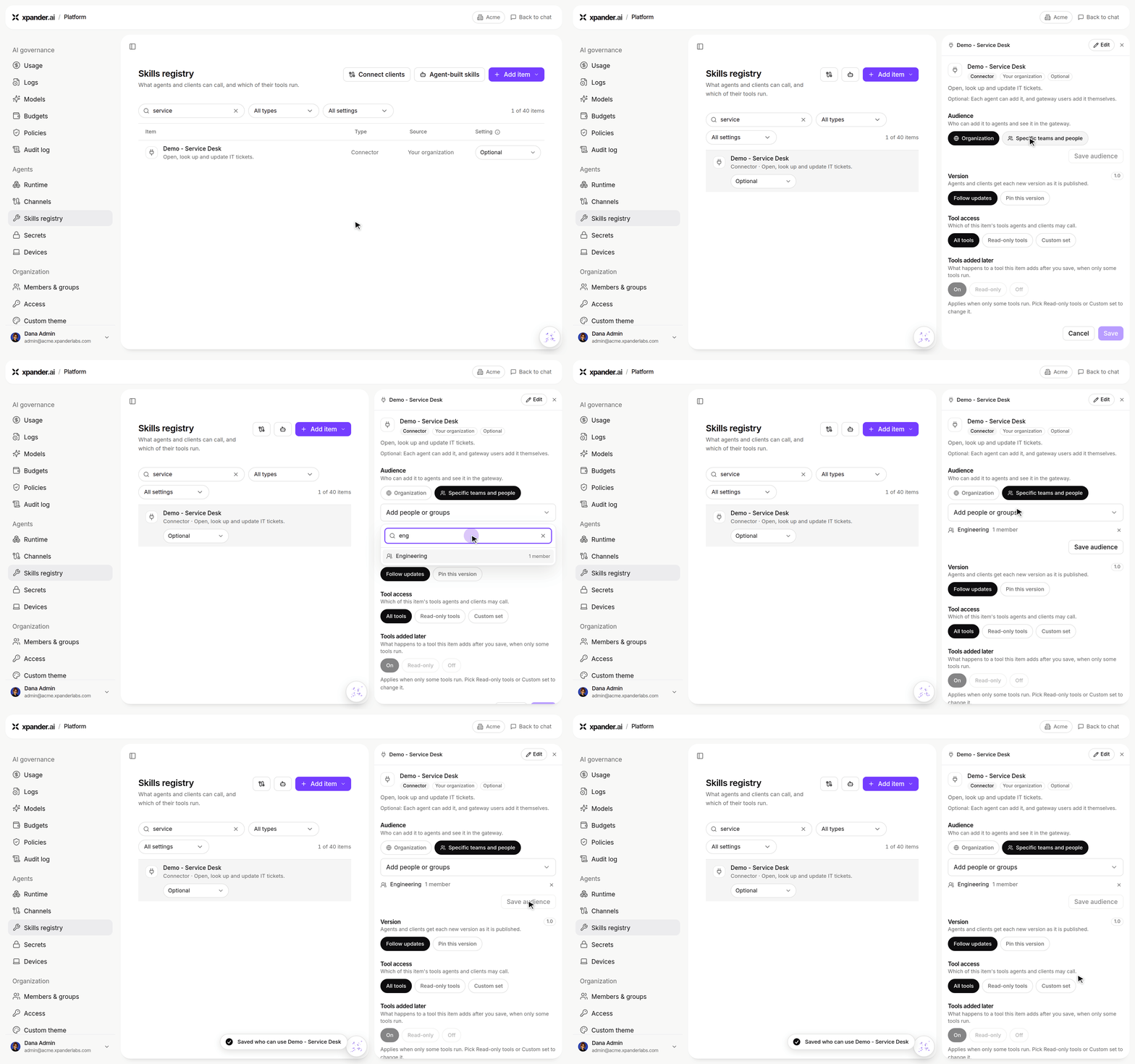
Platform > Skills registry: limit who can add a connector to the Engineering group and save the audience.
- Channels settings pane: Omni discovery, Email, Slack/Teams, and developer/API access for an agent now live in one consolidated Channels panel instead of scattered across Advanced settings and separate dialogs, including inline per-channel configuration and output-format instructions for Slack replies.
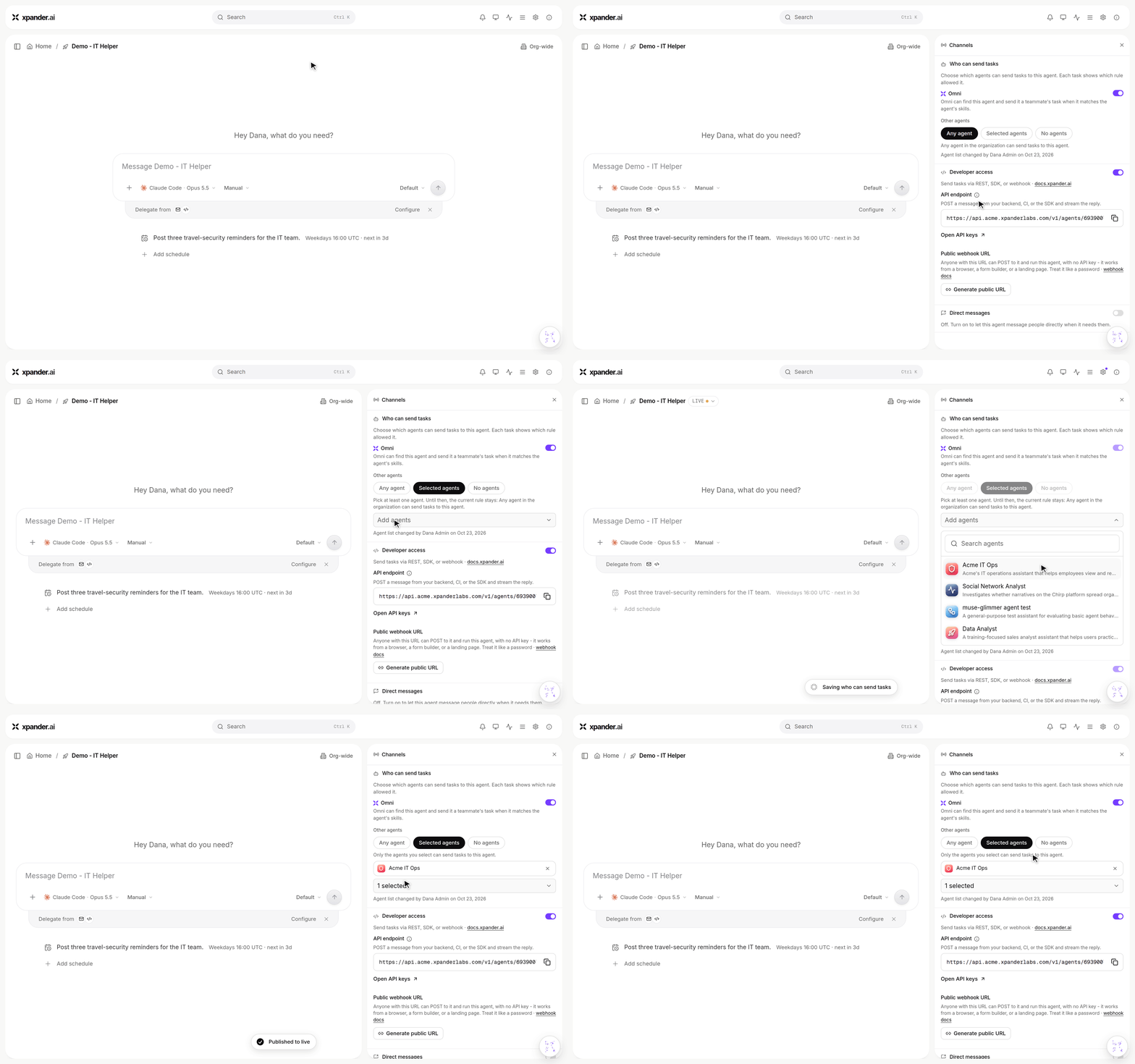
Agent Channels: only Acme IT Ops may send this agent tasks now.
- SSO group sync: Link xpander user groups to identity-provider groups (Okta, Entra) with a configurable group claim and extra scopes, so group membership can sync from your SSO provider.
- Cloud runtime toggle: Organizations with a self-hosted environment can turn off the xpander-cloud agent runtime entirely, hiding cloud agents from non-staff users.
- New Live Surface chart: A grouped-horizontal-bars block is now available for building comparison charts in Live Surfaces.
- Reveal-on-demand API keys: View or copy the full value of an API key on demand (for the key’s owner or org admins) instead of only at creation time; keys otherwise display as a masked prefix/suffix.
Improvements:
- Delegated task visibility: The Task Manager now shows the steps and final result of work an agent delegated to another agent, instead of just the dispatch acknowledgment.
- Buy-credits dialog: Now shows free bonus credits as a clear tag and the effective cost per credit for each pack.
- Slack/Omni engagement discipline: Omni now only answers in shared channels when explicitly mentioned, uses stricter judgment on ambiguous thread replies, and clearly attributes background images carried from earlier channel messages so it doesn’t confuse them with the current request.
- Model picker clarity: Models that share the same display name (e.g. two Claude Opus variants) now show a distinguishing qualifier so they’re no longer indistinguishable in the picker.
- App fonts switched to SF Pro and SF Mono on Apple devices for a more native look.
Bug Fixes:
- Fixed the Live Surface toggle sometimes closing an open surface instead of opening the surfaces list.
- Fixed Live Surface data-table rows inviting a click that did nothing when the row had no associated link.
- Fixed duplicating an agent showing a generic “could not duplicate” error instead of the actual reason.
- Fixed a harmless console error thrown when stopping a voice note recording.
- Fixed the onboarding keynote’s final screen not responding to a click the way earlier screens did.
- Fixed Slack and Microsoft Teams channel history and message-read reliability issues.
- As always, our agents and humans continuously fix various bugs, and sometimes create new ones (that will be fixed in the next update.)
New Features:
- Agents in Slack, Whatsapp and Telegram: Describe what you need and Omni can build a new agent there, connect required accounts through secure links, and communicate to agents through these new channels.
- Mid-run steering: Send corrections while an agent is working and apply them at the next step, or interrupt and re-run with a new message.
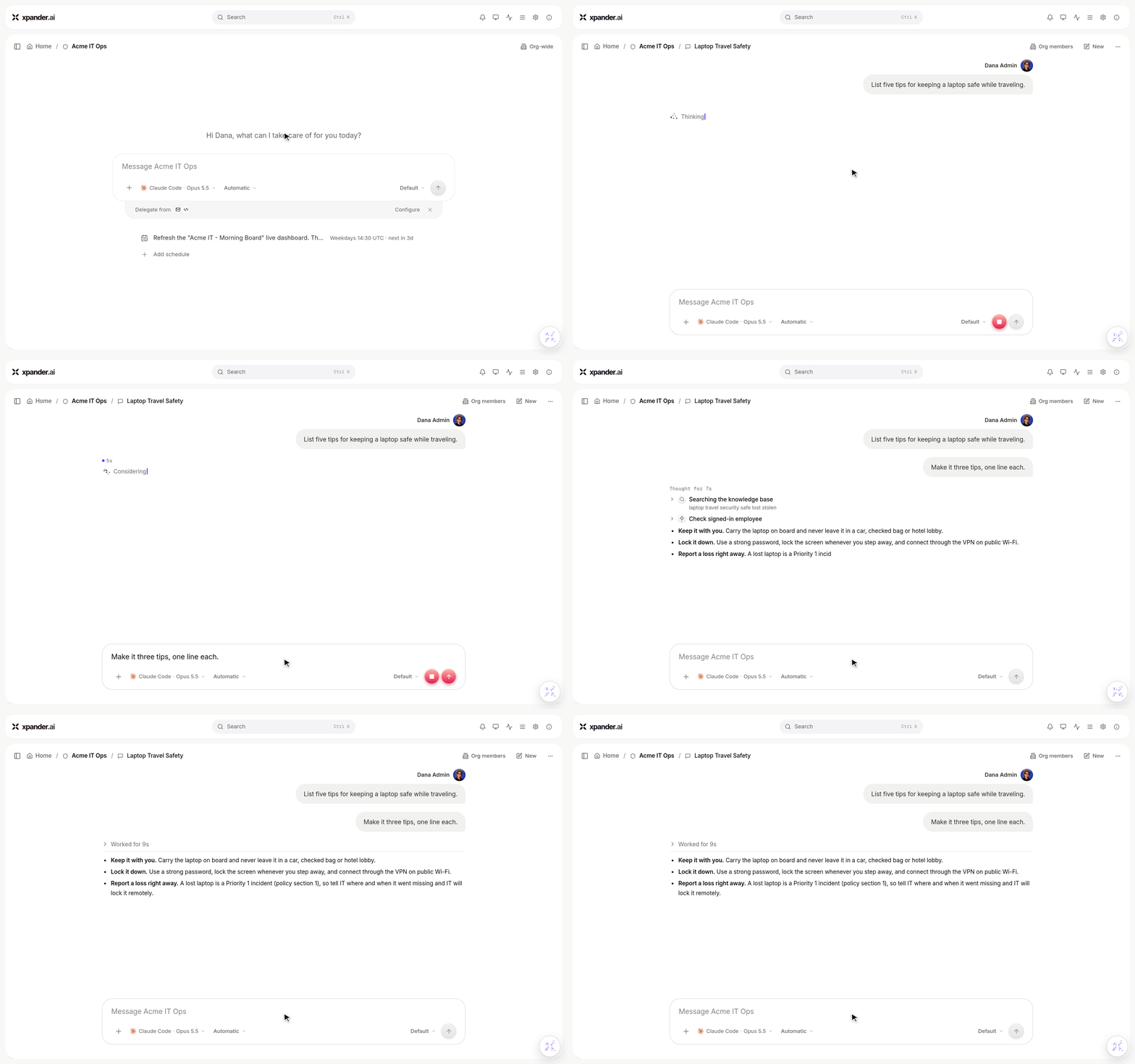
A correction sent while the agent works: the reply follows it with three tips instead of five.
- Notifications across tasks and conversations: Subscribe to individual tasks or entire conversations, manage alerts from the new Notification Center, and receive supported notifications through browser notifications, email, or WhatsApp.
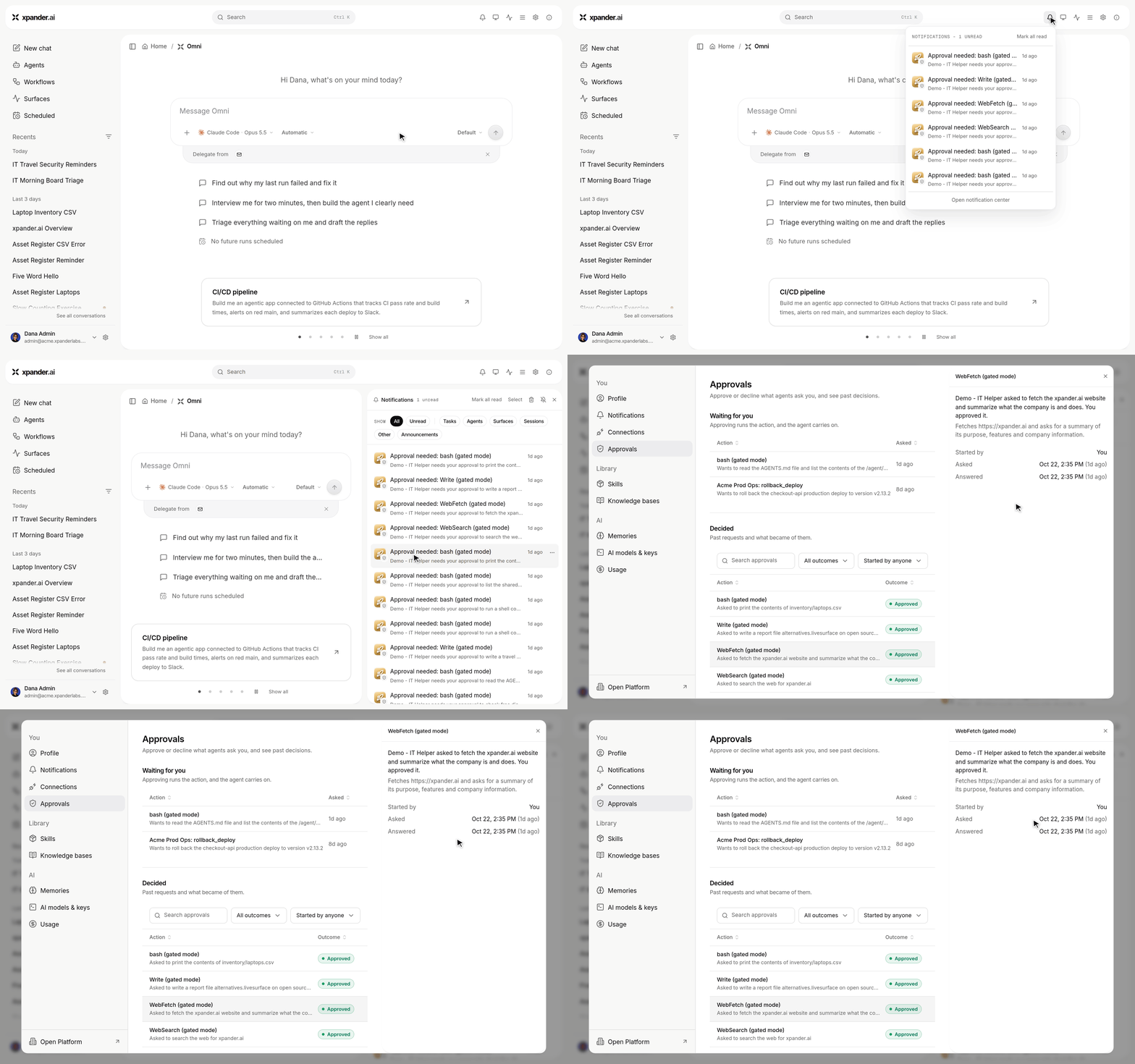
Bell > Open notification center: clicking a notification opens exactly the approval it is about.
- Custom actions and dynamic system prompts: Build and test custom code with presets, connector-generated examples, sandbox execution, AI-assisted generation, and workspace secrets. Agents can also run custom code at prompt time and append the result to their context.
- MCP setup and richer MCP apps: Register, test, and enable MCP servers from chat, connect MCP clients through an OAuth consent screen, and render agent cards inline in supported clients like Claude and ChatGPT.
- Review and publish agent changes from chat: Agent edits proposed in conversation can be staged, reviewed, published, discarded, or rolled back before they affect the live agent.
- Richer agent outputs: Completed background tasks can render directly in chat, while Live Surfaces now support interactive maps and filterable run traces.
- Public workflow webhooks: Workflow webhook triggers can expose a public invocation URL that does not require an API key.
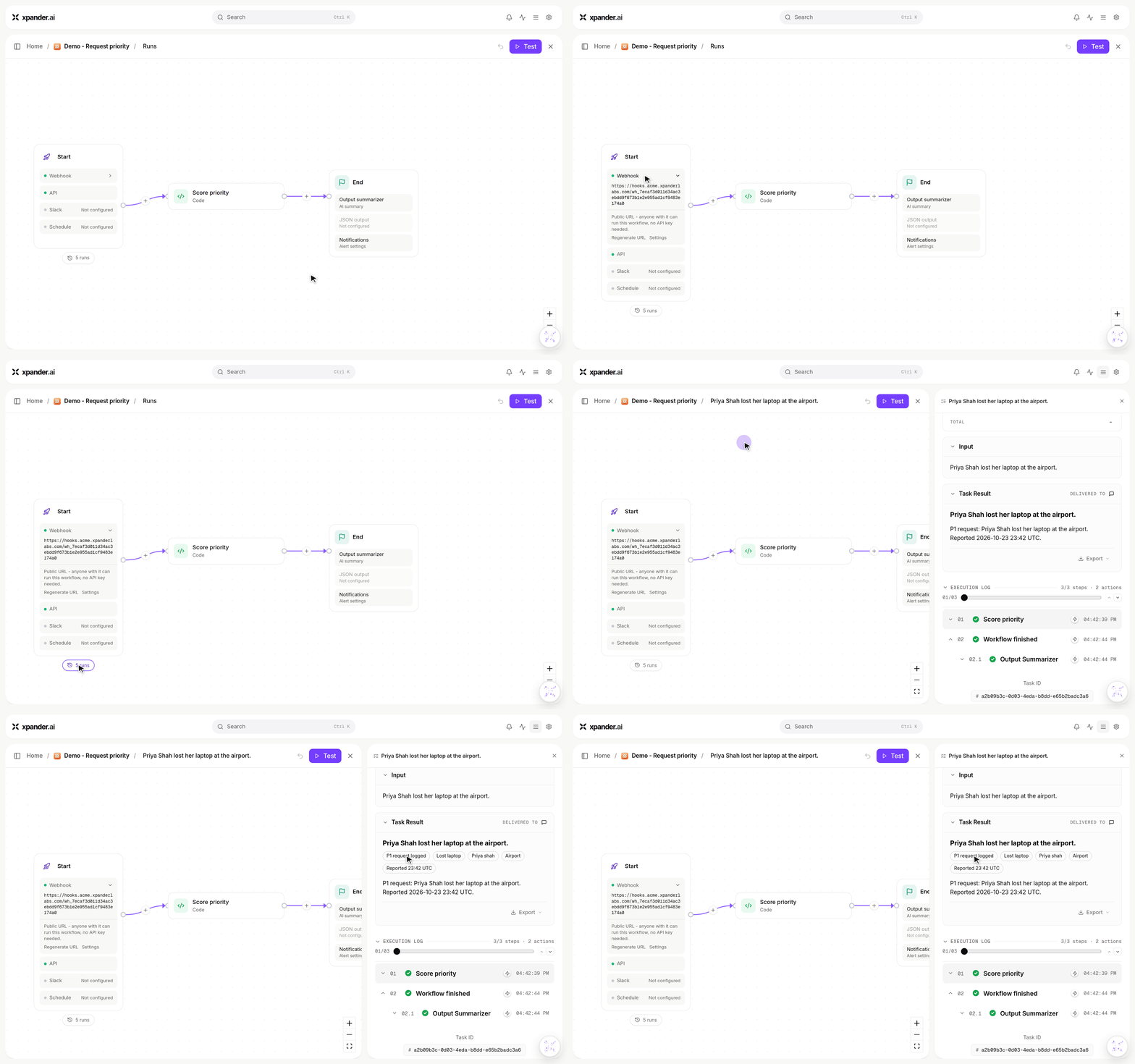
A workflow's public webhook URL, and the run it started when called with no API key: input and result.
Improvements:
- Better mobile chat: Reworked navigation, composer behavior, keyboard handling, touch interactions, and scrolling to make the web experience work better on mobile.
- Richer model picker: Model details now include description, context window, capabilities, and credit pricing, with models shown in the platform’s catalog order.
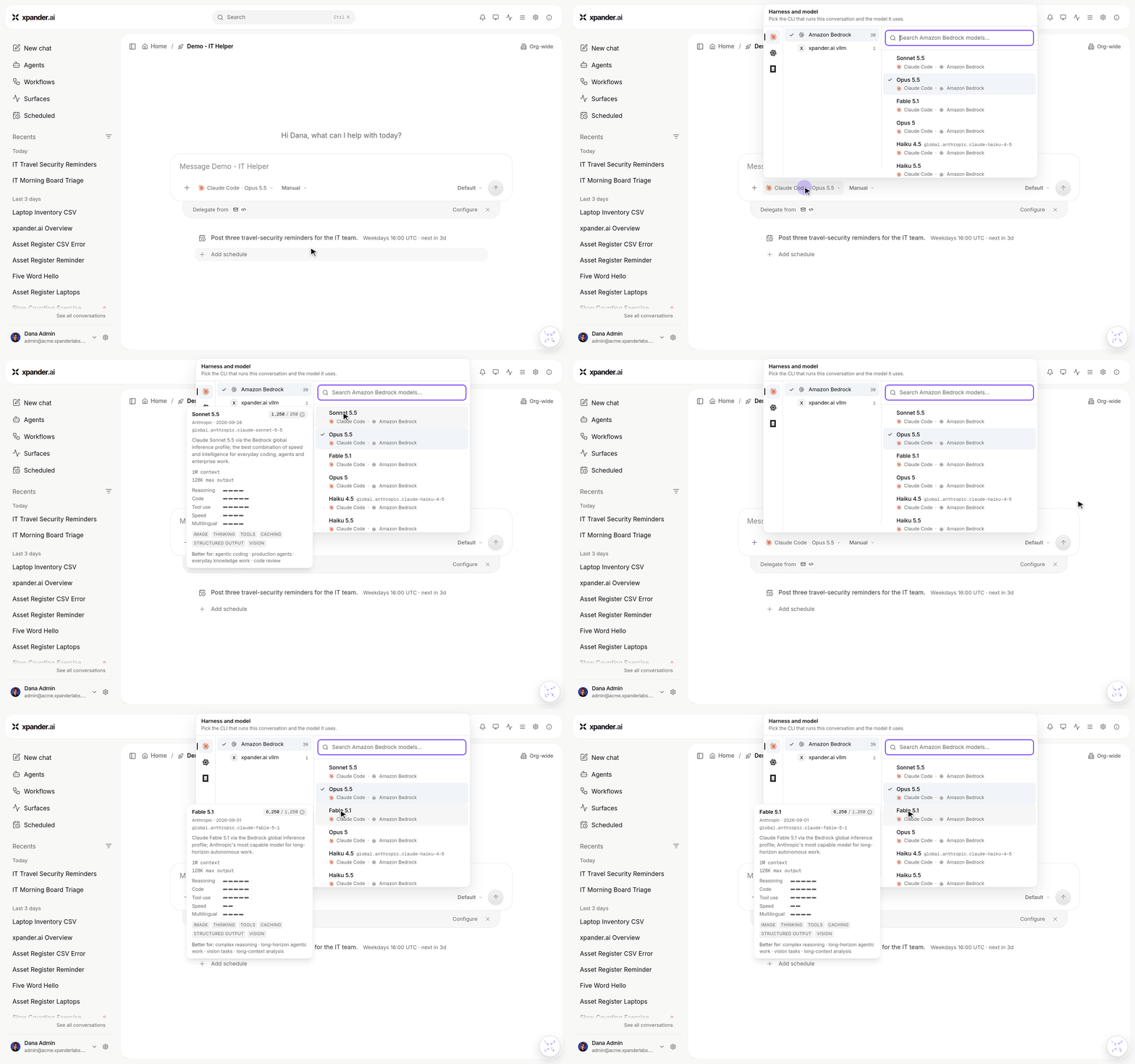
Hovering a model in the picker shows its details: context window, strengths, capabilities and credit price.
- Better sharing and invites: Shared links are copied automatically, recipients are notified, and invite flows now provide clearer member status, resend controls, and per-recipient results.
- Improved web search results: Search results now render as ranked sources with favicons and snippets instead of a generic data table.
- Refreshed platform emails: Transactional emails now use the updated xpander design.
Bug Fixes:
- Fixed connector authorization links sent during chat-based agent builds sometimes failing after an authentication redirect.
- Fixed task rows briefly showing incorrect running or completed states and delays when opening task details.
- Fixed duplicate notifications being sent for repeated runs of the same scheduled task.
- Fixed stale sign-in prompts and related sign-in redirect loops in embedded chat.
- Fixed the model picker not scrolling to the currently selected model.
- As always, our agents and humans continuously fix various bugs, and sometimes create new ones (that will be fixed in the next update.)
New Features:
- Agent glyph identities: Every agent now gets a generated glyph identity (gradient tile + icon) instead of a generic robot avatar or emoji, with a hue slider and searchable icon picker to customize it.
- Custom action editor: The custom-code editor gained a full authoring experience: ready-made presets (HTTP calls, CSV parsing, S3, PostgreSQL, current-user lookups), a connector browser that generates working code for any attached operation, a “Run test” button that executes code in a real sandbox against a seeded test event, and an AI “Generate” button that writes code using your workspace’s secret names.
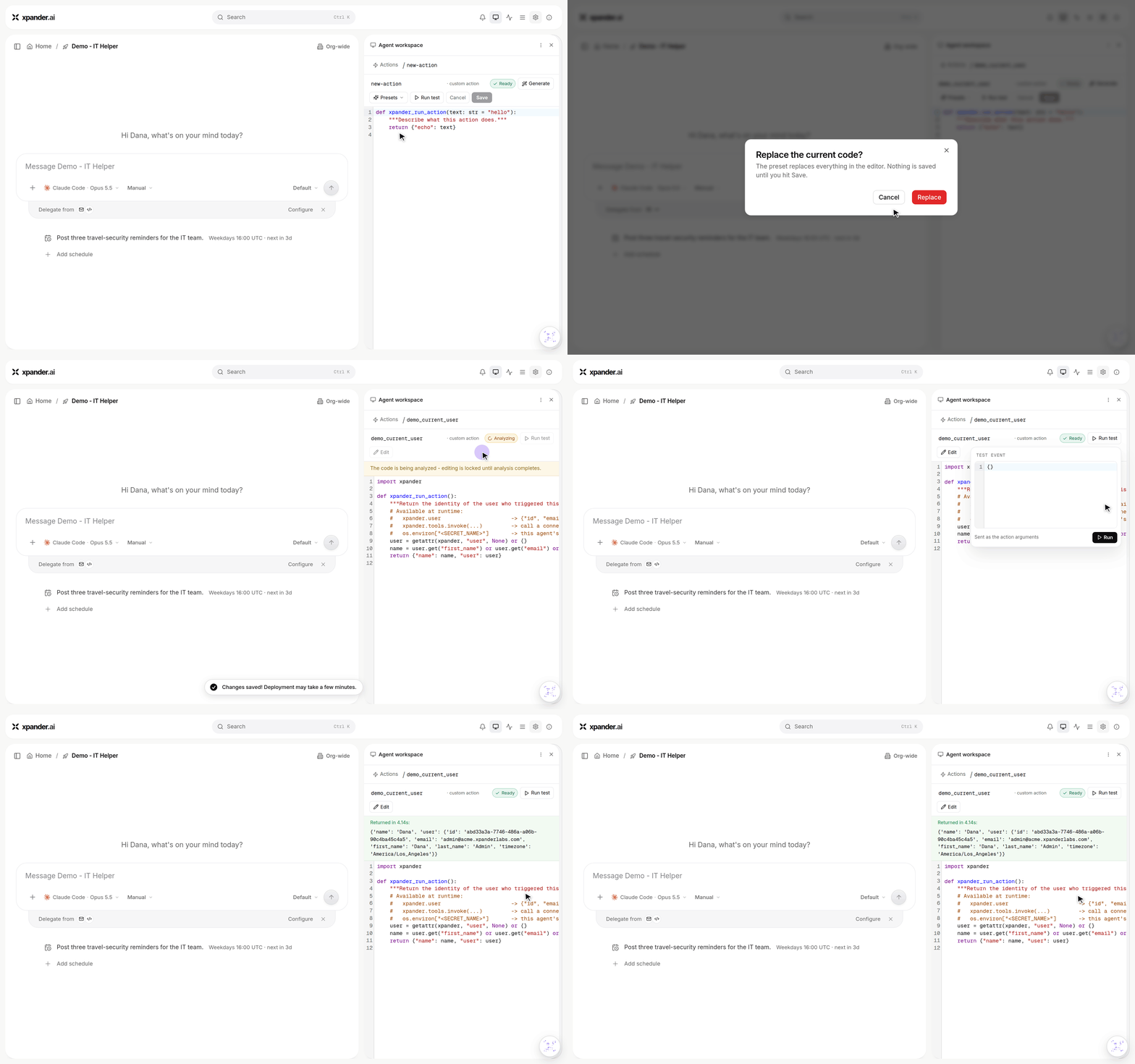
A new code action: pick the Current user preset, Save, then Run test runs it in the sandbox and returns the signed-in user.
- Live Surfaces map block: Agents can now publish interactive maps in Live Surfaces, with street-level tiles, zoom/pan, markers, notes, and routes, tuned for both desktop and mobile.
- Live Surfaces run-trace block: Agents can publish a step-by-step trace of a debugging run as a Live Surface block, with filterable steps instead of a raw tool-call log.
- One widget per turn: Builder tool cards (debug, eval, build, comparison, skills) now fold into a single turn-scoped task card instead of stacking multiple separate widgets in the same reply.
- MCP registration wizard in chat: Register, test, and enable a new MCP server without leaving the conversation, with honest connection health and error reporting.
- Draft, review, publish, and roll back agent changes from chat: Agent edits proposed in conversation go through an explicit publish/discard step with a pre-publish readiness check, so changes are staged and reviewable before they go live.
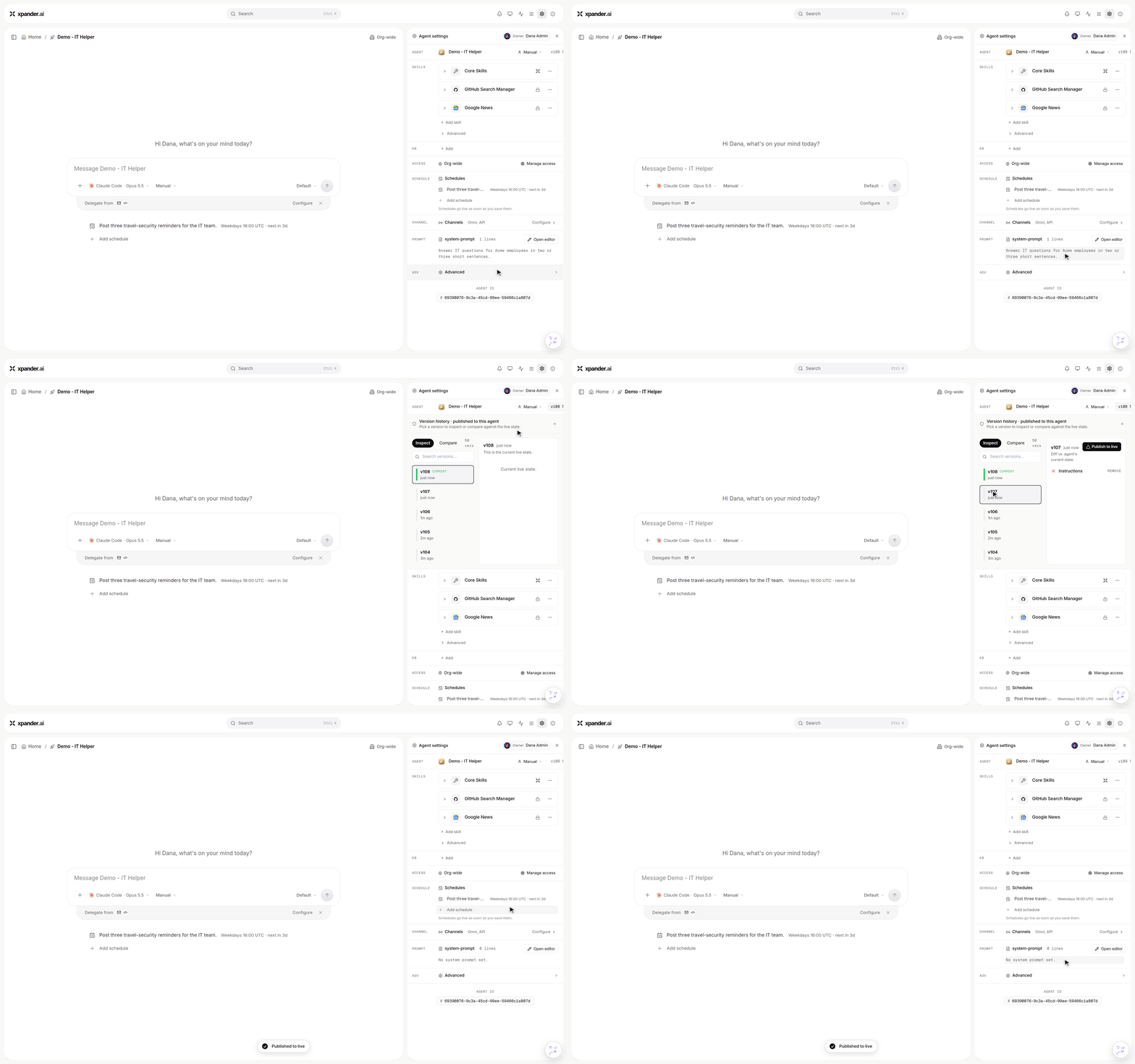
Agent settings > version history: pick the version before the last change, see what differs, and Publish to live to roll back.
- Dynamic system prompts: Agents can run custom code at prompt time and append its output to their context, with a dedicated editor, presets, and pre-save validation of secret references.
- Mobile web support: The chat composer, keyboard handling, and touch interactions were reworked to make mobile web a fully supported surface.
- Cmd+K command palette: Jump to any agent with fuzzy search, or paste a thread/task id to jump straight to its conversation.
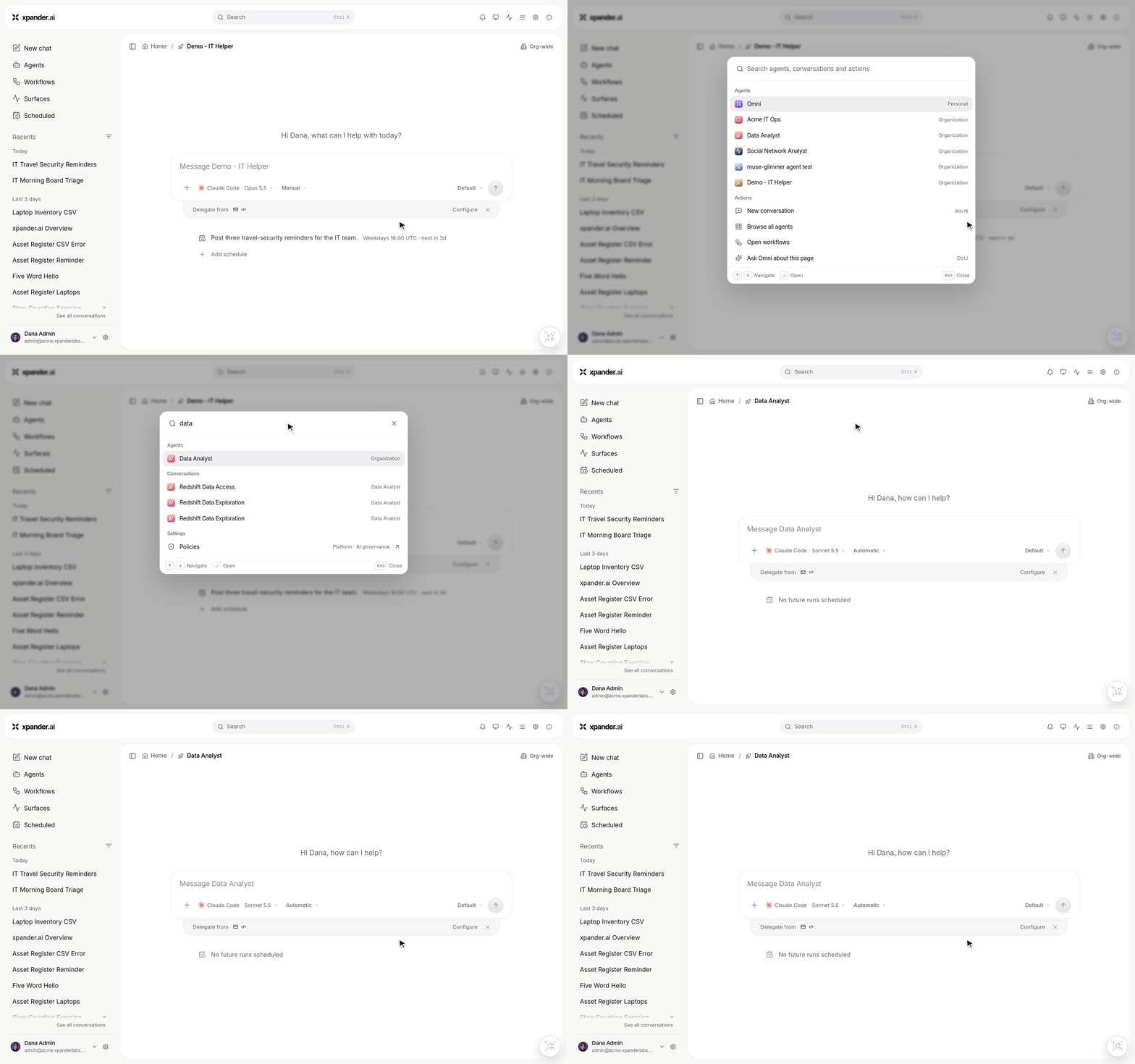
Ctrl+K opens the palette: type part of a name and Enter jumps to that agent.
- New platform email templates: Every transactional email sent by the platform now uses the refreshed xpander design.
Improvements:
- Chat scrolling and rendering: The chat pane now pins to the bottom based on user intent rather than fighting the stream, eliminating render/scroll loops and duplicate answer rendering for sub-agent tasks.
- Mention picker: @mentions can now be typed anywhere in a message (not just at the end) and correctly match agent names containing spaces.
- Sidebar navigation: Each conversation row now shows a type glyph, with a filter to switch between conversations and tasks; the running-status indicator is a clearer solid dot with a halo.
- Model catalog: Claude Opus 5 support was extended with correct Bedrock temperature handling and a larger context window with caching.
Bug Fixes:
- Favorites cards: Fixed agent names collapsing to zero width and content spilling outside the card border on the Favorites strip.
- Gateway responses: Fixed cases where a gateway sub-task’s raw JSON envelope leaked into the chat UI instead of being rendered as its final result.
- As always, our agents and humans continuously fix various bugs, and sometimes create new ones (that will be fixed in the next update.)
New Product launch!
Introducing Omni: Omni is your AI forward-deployed engineer: the place where you describe a business outcome and get back a working, agent-powered application. Instead of assembling an agent piece by piece, you tell Omni what you want your team to be able to do. Omni asks the clarifying questions it needs, designs the frontend experience, creates and configures the backend agent, connects the models, skills, tools, and data it needs, and reports back when the application is ready. Ask it “can you build me a Redshift Analyzer?” and it builds the whole thing.Two things make Omni different from a chat window. It brings its own computer: every agent gets a real cloud workspace with files, a browser, and a terminal, so it does the work rather than describing it. And it answers visually: instead of a wall of text, you get a Live Surface your team can open, share, and act on.Agentic Applications: The thing Omni builds. An Agentic Application pairs a backend agent (model, skills, tools, system prompt, data access) with a live frontend your team actually uses: chat to ask and iterate, Live Surfaces showing current state, reports, dashboards, and approval flows. Chat is useful for asking. Agentic Applications are useful for working.A new app: Omni lives in a ground-up rebuild of the xpander web experience at chat.xpander.ai. It is chat-first and canvas-based: conversations on the left, and a deck of cards on the right where tasks, Live Surfaces, agent settings, and workspace files open beside the conversation. The platform at platform.xpander.ai remains the control plane for governing everything you build.Try it now: https://chat.xpander.ai
What’s new:
- Omni, your AI forward-deployed engineer: Every user gets a personal Omni agent. It finds the right agent for a job, delegates work to it, or does the work itself. It remembers you across conversations, and it can invite a teammate or ask you for a credential without leaving the chat.
- Build an agent by describing it: Omni creates, configures, deploys, and schedules other agents from inside the conversation. A single evolving build card walks you through it, discovers your organization’s real connectors and models, collects every account it needs behind one approval step, and lets you refine with “not quite right?” before the agent goes live.
- Live Surfaces: Pin a file the agent generates and it becomes a living view your team can open at any time: a dashboard, a brief, an approval board, a status tracker. The agent keeps regenerating it on a schedule, on a webhook, or on demand. Surfaces render charts, tables, and interactive checkboxes, work in right-to-left languages, open full screen, and each one has a constant shareable link. You can ask the agent questions about a surface, or trigger it from one.
- Agent computer: Each agent gets its own cloud workspace with files, a browser, and a terminal. Drag and drop a folder in, search and sort it, preview JSONL, PDF, and Markdown, and edit code in place.
- Materially faster: A sustained push on time to first token, plus agent workspaces that prewarm on first interaction, cutting cold starts and creating a best-of-breed agentic experience.
- Share your work three ways: Publish a single Live Surface as a public link, share a read-only conversation that teammates can branch and reply in, or publish the whole agent as a branded application with view, use, or edit access. Grant access to individual people, to user groups, to your whole organization, or to anyone with the link, and restrict an organizational Live Surface to just the groups that should see it.
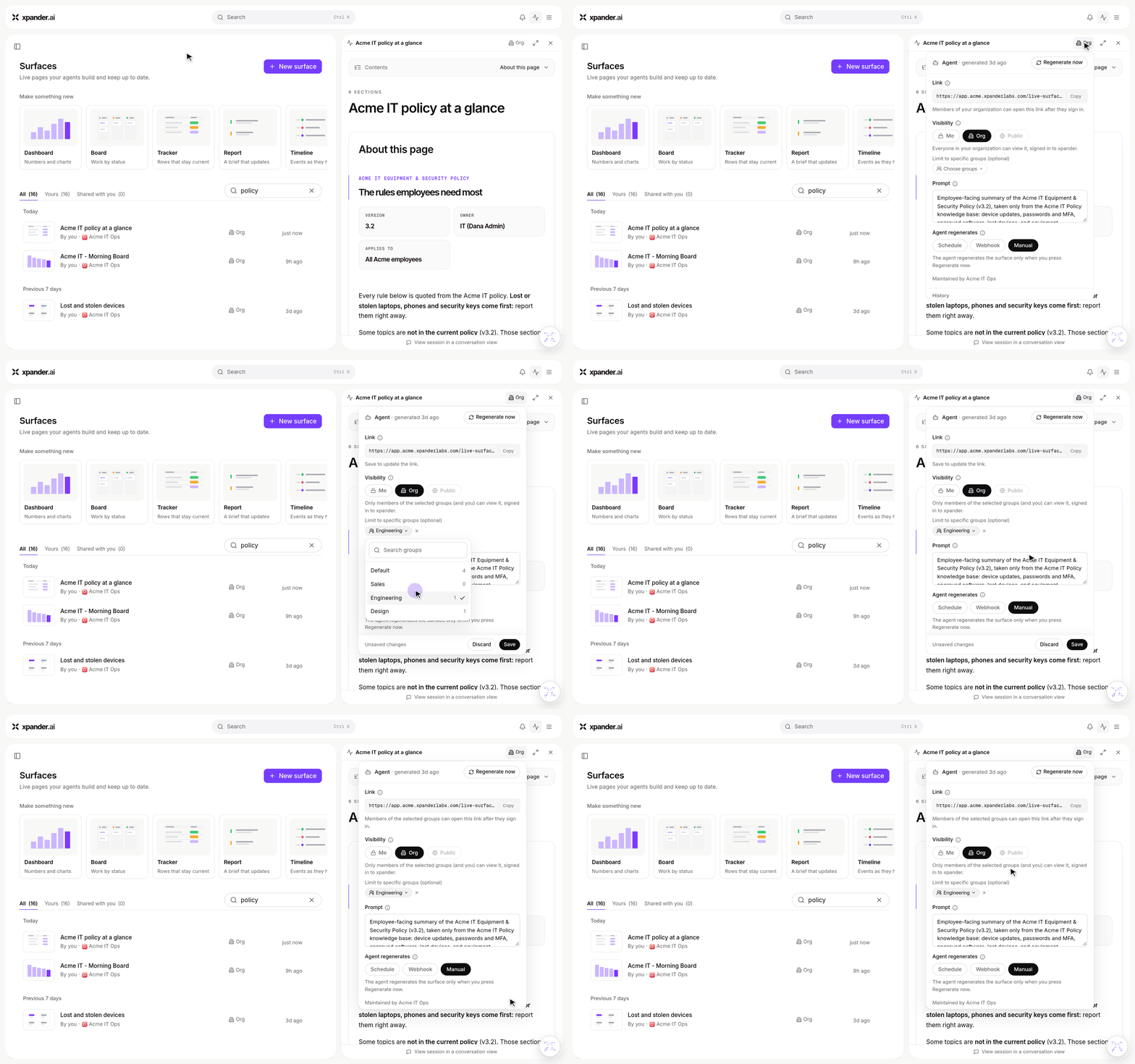
A Live Surface's sharing menu: limit an organization surface to the Engineering group and Save; the link now opens only for that group.
- Steer work while it runs: Queue messages while the agent is working, stop a run, or steer a task mid-flight with a free-text nudge instead of killing it and starting over.
- Interactive cards in the conversation: The agent asks clarifying questions, suggests tools and connectors, requests a secret through a secure card whose value never appears in the chat, or invites a teammate, and you answer inline.
- Task Manager: One place to see every run across every agent, follow live progress, drill into a task, and stop something that is still going. Filter by agent, by who started it, or by where it came from (chat, Slack, webhook, or a schedule), and walk back through a timeline grouped by today, yesterday, last week, and older.
- Choose how the agent works on each message: A mode picker in the composer sets the shape of the next reply. Instant for fast answers to direct questions, Auto to balance speed and depth, or Deep work to delegate long work and get a document back. The mode sticks to the conversation until you change it.
- Finished tasks become documents: A completed task is no longer a status strip. It renders as a card with a title, the connectors it touched, an excerpt you can expand, any Live Surface it produced, and a footer with status, time, steps, and cost.
- Jump between runs from the top bar: A Home / Agent / Thread breadcrumb sits in the navigation bar, and the last segment is a switcher across every run of that agent, including typed threads, inbound emails, scheduled work, and webhook triggers, with search and hover preview.
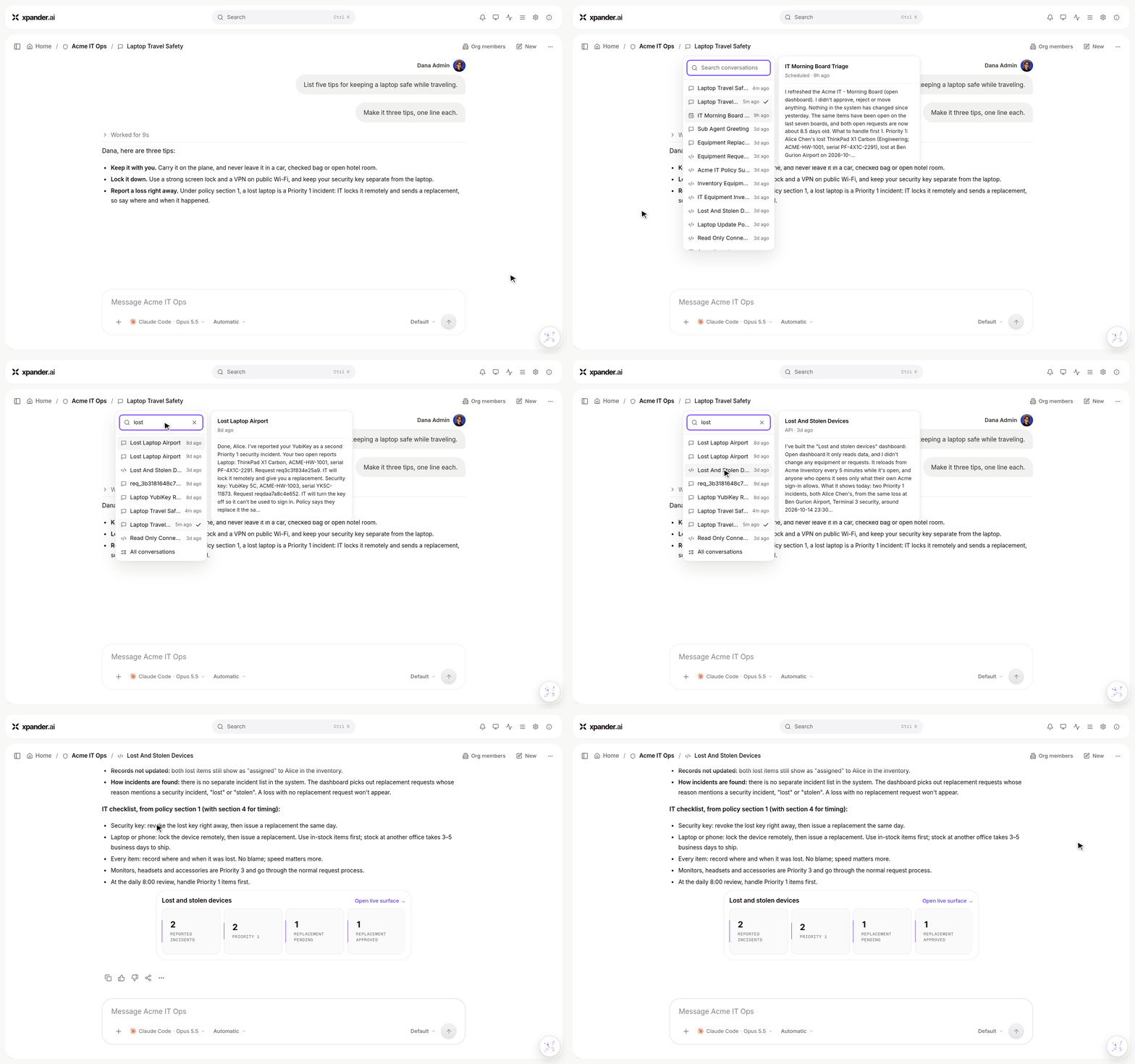
The breadcrumb's last segment lists the agent's runs: hover shows a preview, search finds a run, and a click opens it.
- Skills: Give an agent a capability by wrapping a tool, an API, a connector operation, an MCP server, a custom action, a knowledge base, or another agent. Generate a new skill from a plain-English description, test it, and attach it.
- Triggers and schedules: Give an agent its own email address, put it on a cron, or fire it from a webhook. Agents can also schedule their own follow-up work.
- A sidebar that keeps up: Conversations sorted by last activity and grouped by day, live status dots on running work, inline rename, and quick-switch shortcuts for your pinned agents.
- Talk to your agents from your own code: A public API drives the same multi-turn conversational loop the app uses, including message queueing, steering, and sub-task dispatch. Check the API reference at https://docs.xpander.ai/api-reference
- Rich answers: Mermaid diagrams, Vega-Lite charts, KaTeX math, syntax-highlighted code, and large CSVs render inline. Voice works in both directions, with dictation in and speech playback out.
- Enterprise controls: Budgets per task, agent, user, and sub-organization with threshold alerts to email, Slack, or webhook. Plus audit logging with export, user groups, OIDC single sign-on, custom logo and accent color, and self-hosted environments that fall back to the xpander.ai cloud relay when your private environment is unreachable.
- Expanded model catalog: As always, the xpander platform allows you to work with a huge model provider catalog.
New Features:
- Stop task API: A new public API endpoint (
POST /v1/tasks/{task_id}/stop) allows callers to signal a running agent task to stop cleanly across environments. The stop signal is propagated to the agent worker so in-flight tasks can terminate gracefully. - Per-execution LLM overrides: Agent runs can now specify
llm_model_provider,llm_model_name, andllm_reasoning_effortat invocation time, overriding the agent’s default model settings for that execution only. - Custom connector OAuth2 support: Custom connectors now support OAuth2 client credentials flows — credentials are stored securely in the vault and appended to token requests automatically.
- Expanded Amazon Bedrock model catalog: Added 47 new Amazon Bedrock models from 11 vendors (including Mistral, Writer, Luma, Stability AI, and others). Models are immediately available in the LLM provider selection across agents, workflows, and nodes.
- “Only running” filter for Agent Monitor: A new filter in the Agent Monitor’s thread list shows only actively running threads, making it faster to spot and inspect tasks that are currently executing.
- Redesigned Metrics page with cost tracking: The Agent Metrics page has been fully redesigned with per-model and per-agent LLM cost charts (USD), an execution count breakdown
Improvements:
- Remove agent from folder: Agents can now be removed from a folder via the Actions menu without deleting the agent itself.
- Improved agent defaults: New agents are created with
deep_planningenabled,num_history_runsset to 50, andreasoning_tools_enabledturned on by default, giving agents better out-of-the-box planning and context recall. - SSE keepalive pings: The server-sent events (SSE) stream now sends a keepalive comment every 15 seconds, preventing proxies and load balancers from closing idle connections during long-running tasks.
Bug Fixes:
- Chat spinner stuck after task completes: Fixed a regression where the hosted chat loading spinner remained visible after a
TaskFinishedevent was received, leaving the UI in a perpetual loading state. - As always, our agents and humans continuously fix various bugs, and sometimes create new ones (that will be fixed in the next update.)