

The Vault
Settings > Vault (admins) lists every credential in the workspace: environment secrets, environment files and credentials shared across the organization, each with its kind, a masked value, its access (Org-wide, Groups and people, Private) and its location. Agents receive values as environment variables at run time and never see the Vault itself. Workspace secrets scoped to one agent live under the agent’s Secrets view, and a person’s own connections live under My connections; the full model is on Credentials.
Create secret stores a name and a value: the name is uppercase letters and underscores (agents read it under that name), the value cannot be read back after saving, and a description is optional.
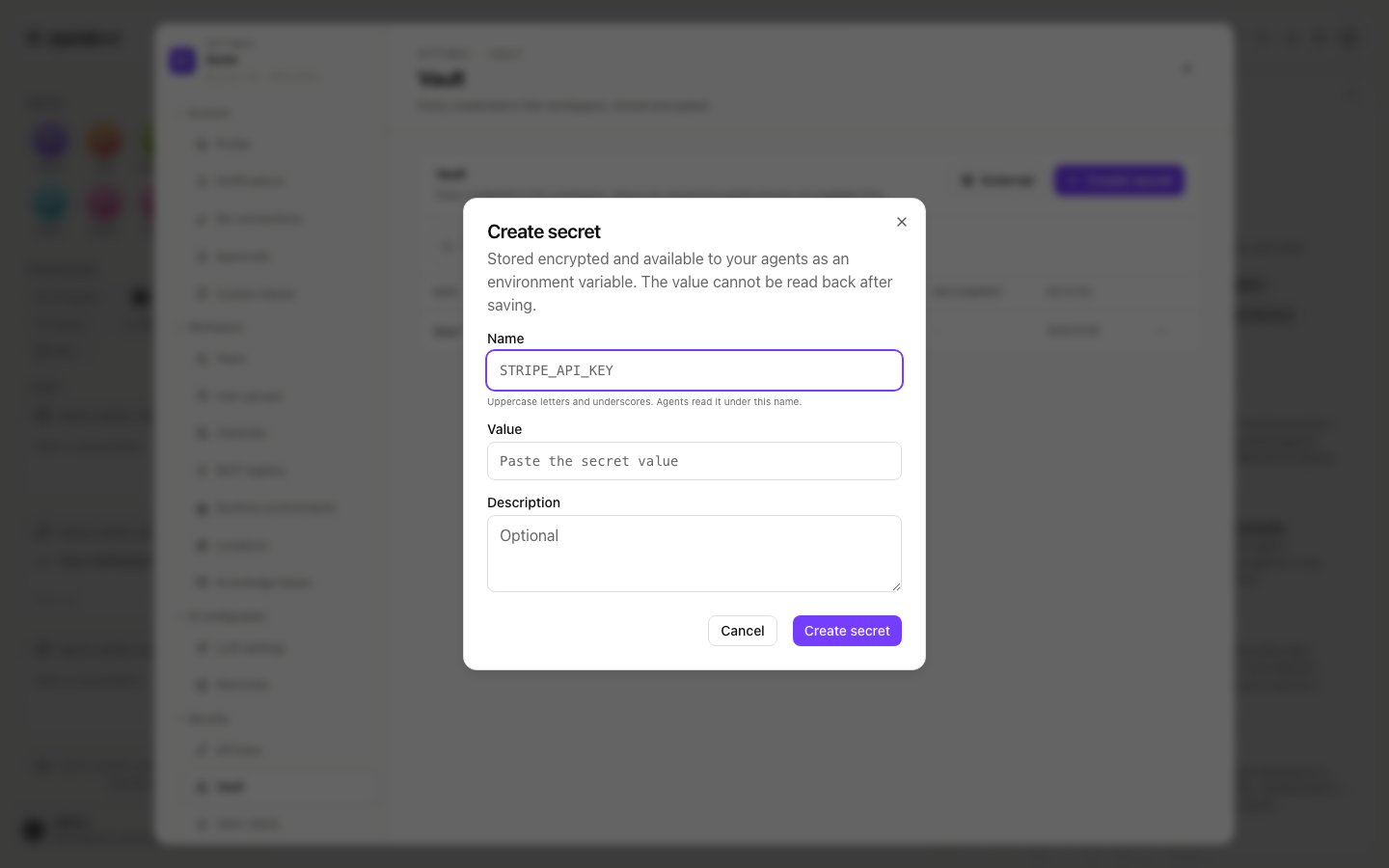
Create secret: name, value and an optional description. Shown with sample data.
An external vault
Click External in the Vault to attach a vault your organization already runs. xpander imports the secret names and leaves the values where they are; a reference written as${ext:NAME} pulls the value when the workspace starts.
The attached vault shows its status and last sync. Its menu offers Refresh secret names, Update credential after you rotate the service principal’s secret, and Detach vault, which removes the imported names without touching the values.
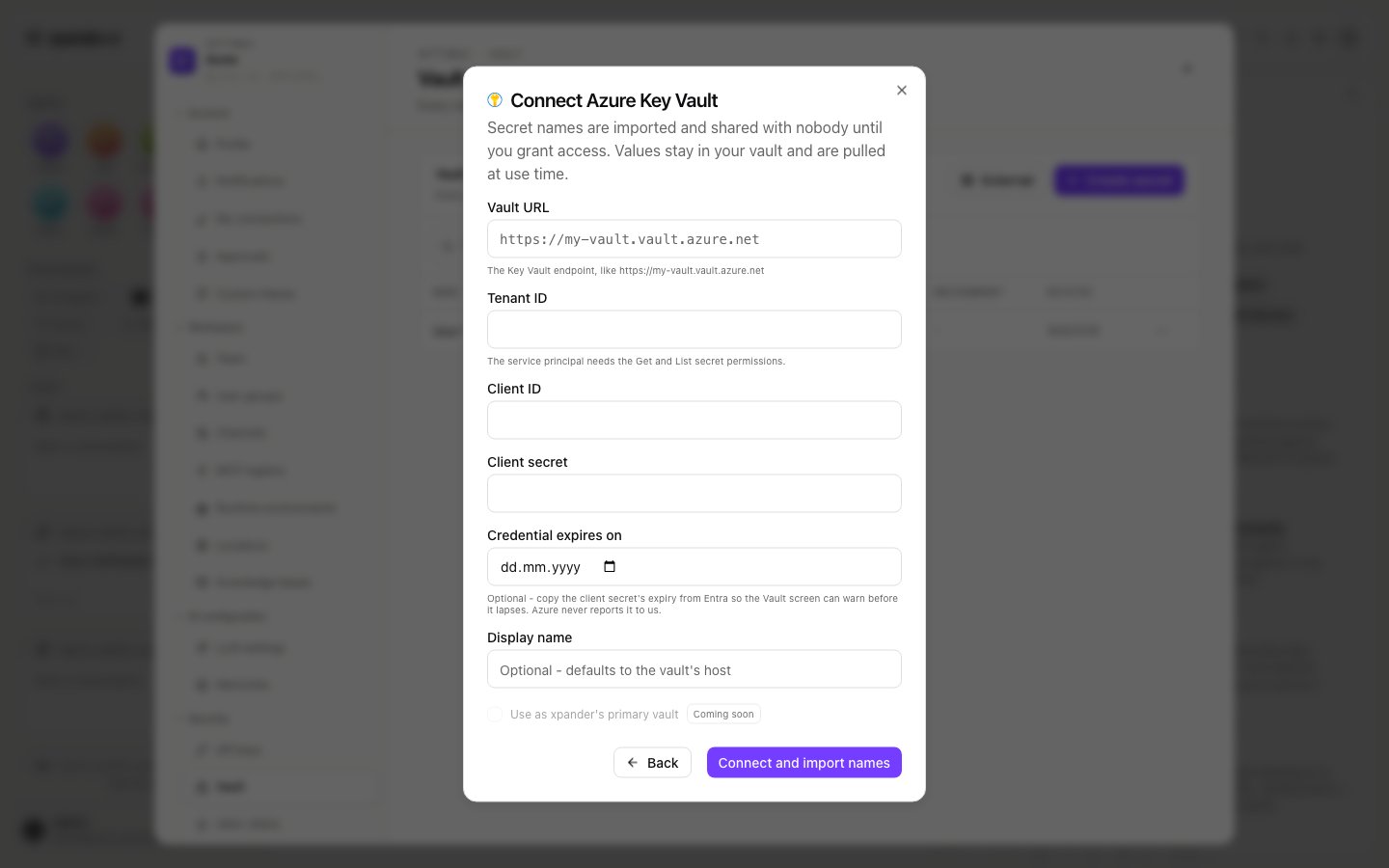
Connect Azure Key Vault: vault URL, tenant ID, client ID and secret, optional expiry and display name. Shown with sample data.
xpander’s keys on a self-hosted cluster
Provider keys and xpander’s own secrets are Kubernetes secrets in the release namespace:- Chart values
secrets.static.*render into thexpander-staticsecret; the mapping is on Hybrid: managing LLM API keys. - A secret you manage yourself is referenced with
envFromSecretKeyson the service that needs it. - The generated bootstrap values live in
xpander-generated-keys;keygen.overrides.<NAME>wins over any generated value, which is how xpander learns a password you set on an external database. - Skill credentials, OAuth tokens and IAM session credentials stay in Kubernetes secrets in your cluster and are injected by the skill relay at invocation time. Skills that reach AWS can use AWS Secrets Manager in your account; see AWS Operator: credential management.