

- the run: what an agent may do without a person
- the agent: who may use it
- the conversation: who may read and continue it
- the skill: which agents may hold it
- the credential: whose account a call uses
On a run: permission mode and approvals
Each conversation runs in one of two modes, chosen in the composer with its first message and fixed for that conversation:
A held action shows a card in the conversation with a sentence about the action (never its raw arguments), who started the run and who may decide. In Gated mode the card is headed bash (gated mode), says what the command does in one sentence, and offers Decline and Approve. It goes to the people or groups named on the rule, or to the agent’s owner when none are named; any one of them settles it. The approver can allow this exact call, the rest of this run, this kind of call for a few minutes, or until revoked. A decline covers only this call, and the run continues with that knowledge unless the rule says stop. A gated command waits until someone decides; a marked skill action waits for the agent’s approval hold window, 4 hours by default, then expires and the run resumes with “Not answered in time.” Decisions are made in Xpander Chat, from the email link, or in Slack, Telegram or WhatsApp; each is recorded in the task and in Settings > Audit logs. While a gated command waits,
GET /v1/tasks/{id} still reports status: executing and carries no approval request, so a gated command cannot be decided over the API. A question card is different: it is answered with POST /v1/agents/{id}/gateway/conversations/{id}/answers. See Approvals.
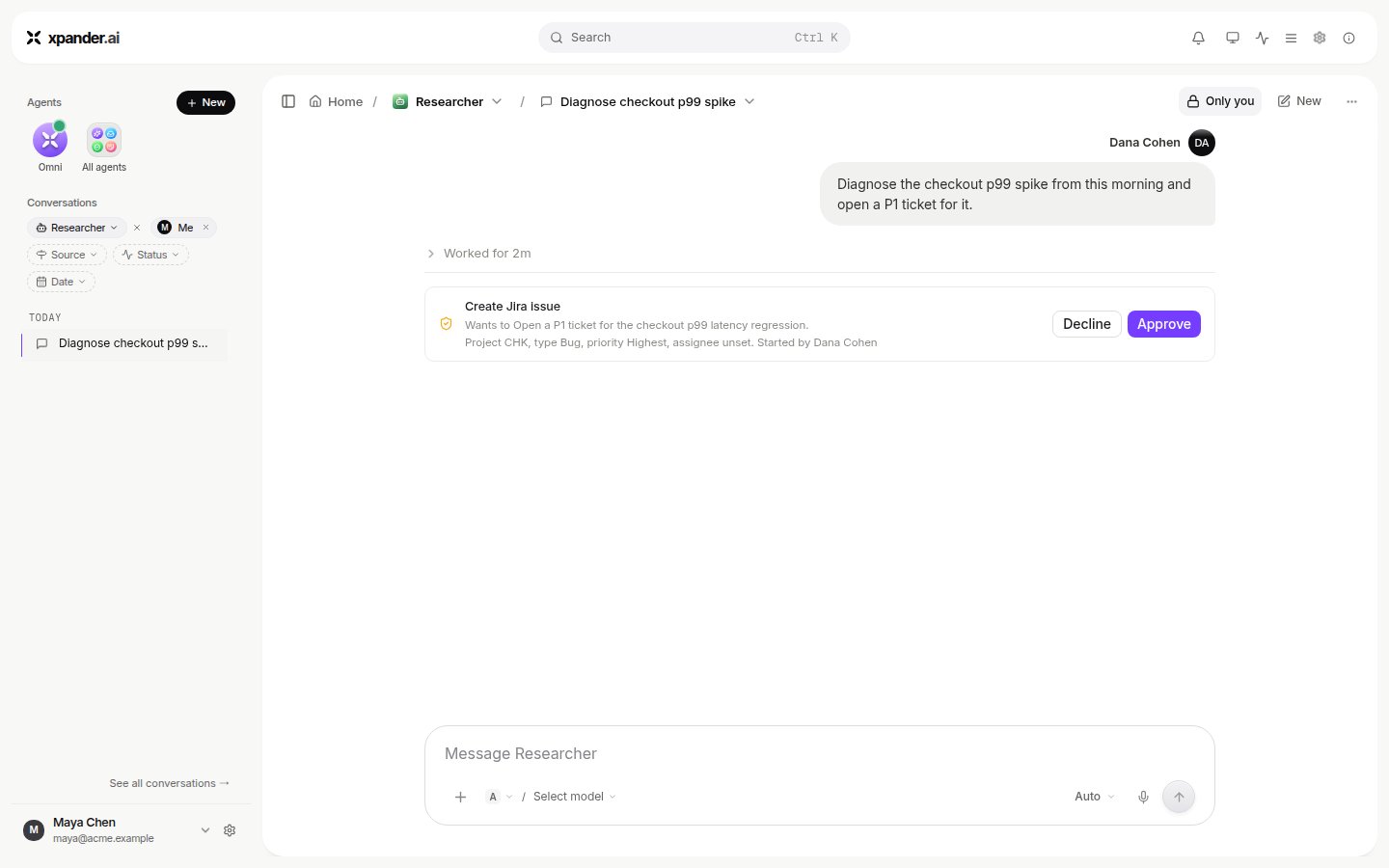
An approval card in the conversation.
On an agent: access and sharing
ACCESS on the agent is Org-wide, the default, where every member of your organization can use it, or restricted through Manage access to named people and groups. A restricted agent is invisible to everyone else; a link to it reads “not found” rather than revealing it. Share grants an audience one of three permissions:
Group grants follow the group’s membership. Whether a person may create, duplicate, delete or share agents at all is a user-group switch.
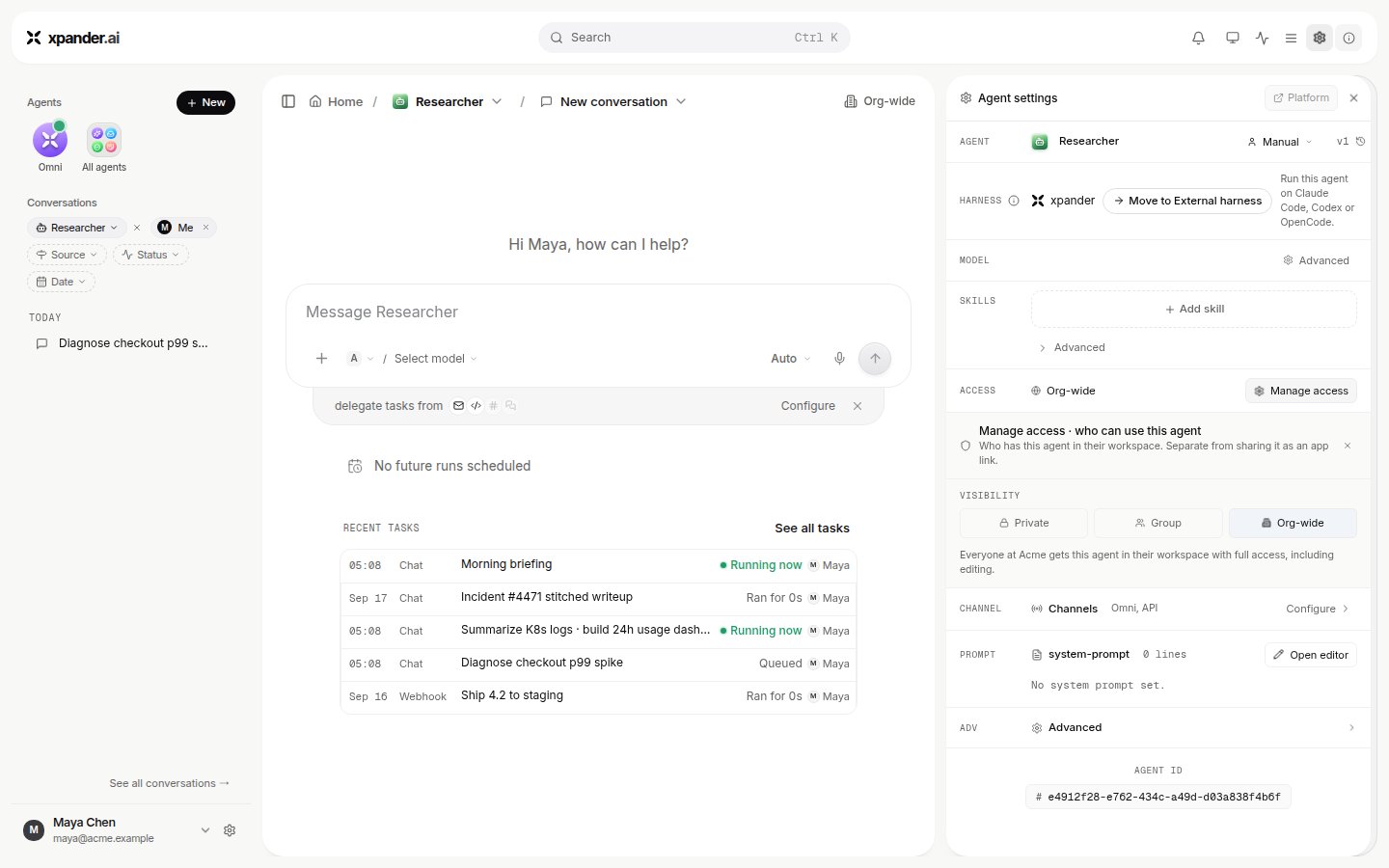
Manage access on an agent.
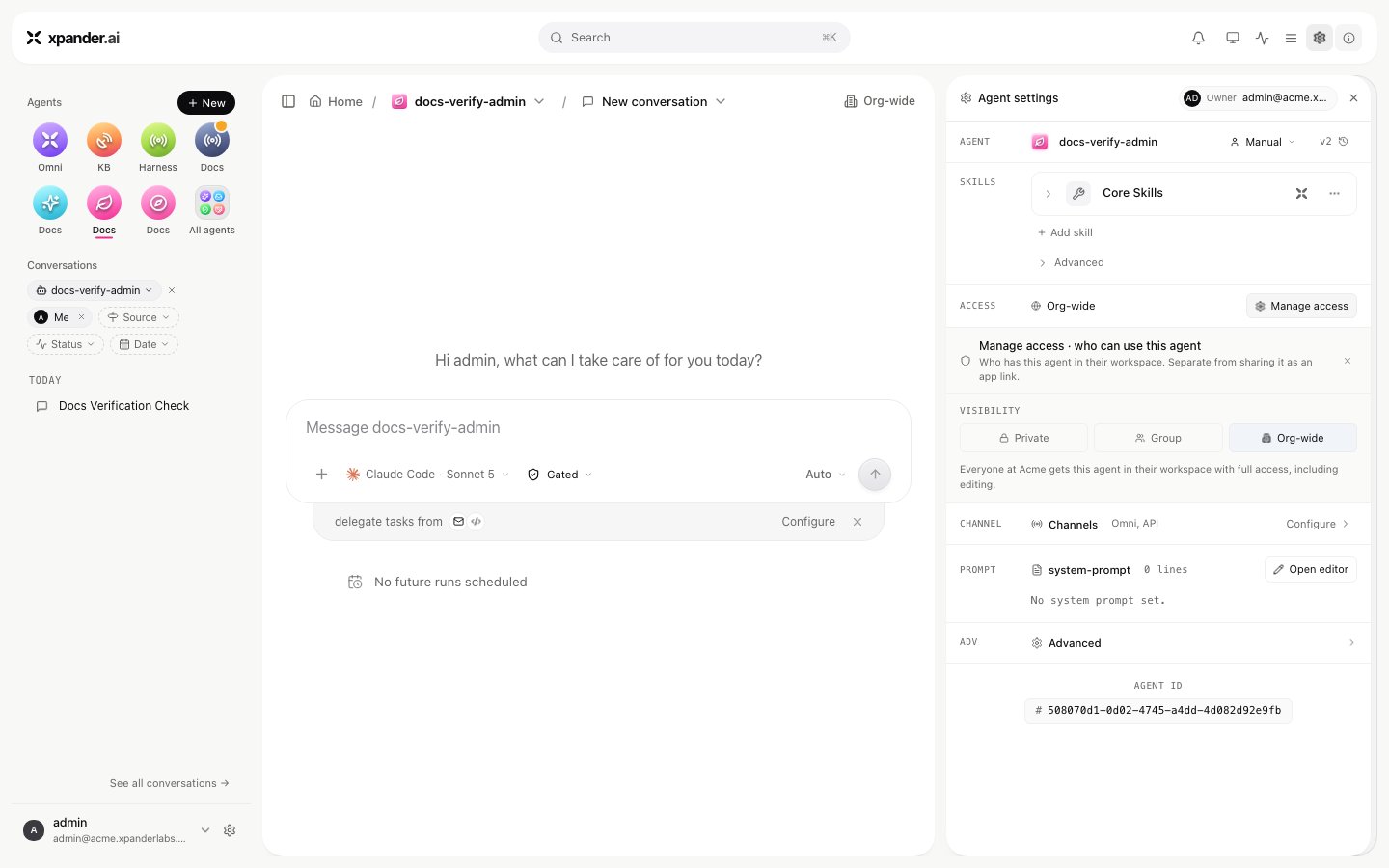
Manage access drawer: ACCESS, VISIBILITY (Private, Group, Org-wide) and the people-and-groups picker.
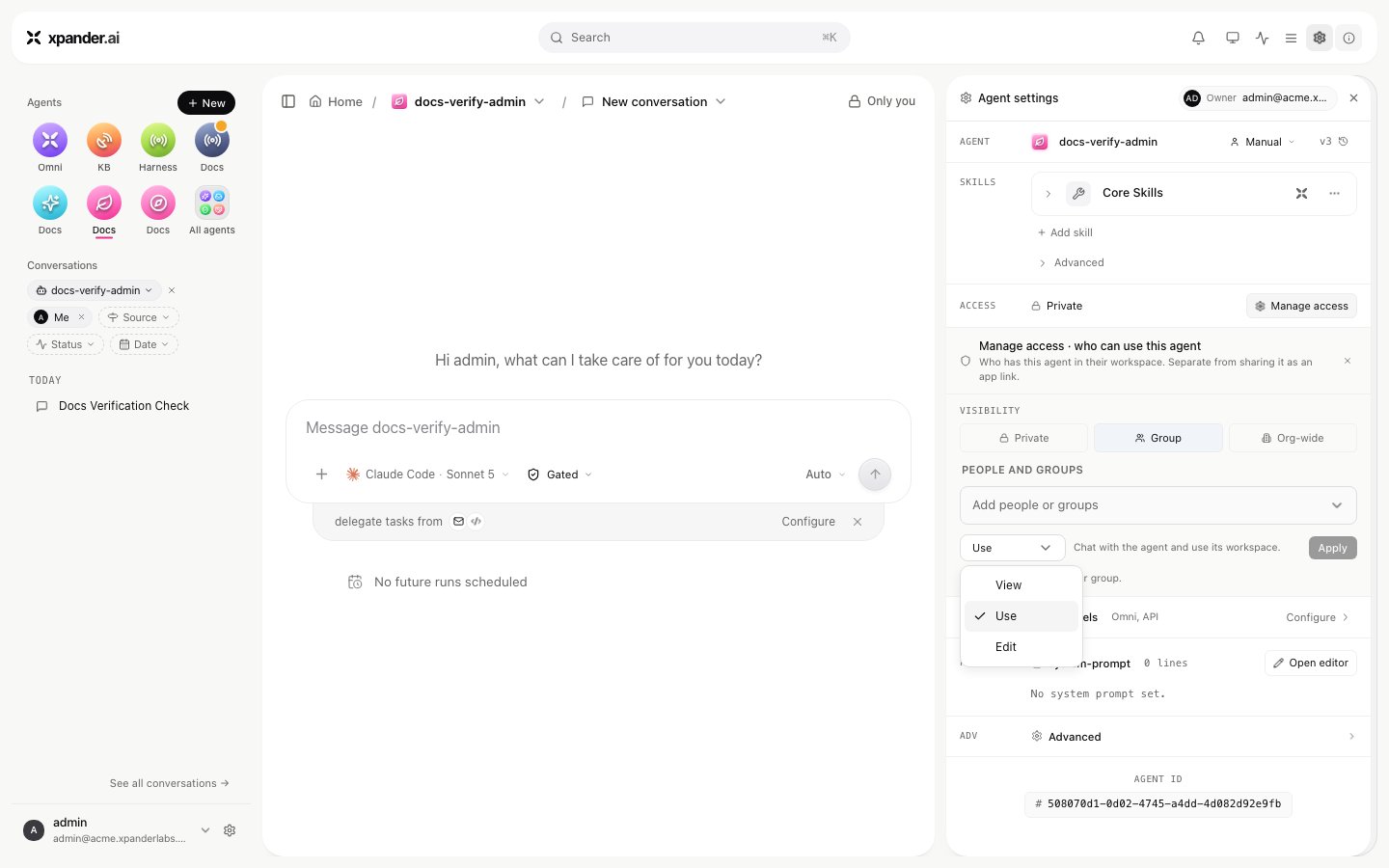
Choosing a permission for a person or group added under Manage access.
On a conversation
You can read a conversation when it is yours, when you own the agent, or when the agent is org-wide. Renaming, deleting or sharing it is the author’s alone. Share conversation adds an audience: only you, your organization, named people or groups, or anyone with the link where Settings > Sharing allows public links. Allow replies lets a viewer continue in a copy of their own; the original is untouched. Live surfaces in a shared conversation follow the share.On a skill
A skill’s VISIBILITY is Org-wide, the default, where everyone can see the skill and attach it to their agents; Private, where only you can; or restricted to named people and groups you add. Manage access on the skill sets the scope; someone outside it cannot see the skill or attach it to an agent. Who may add API connectors, MCP connectors, custom actions or generate skills at all is a user-group switch. See Skills.Whose credential a shared agent uses
Each skill on an agent is bound to a connection: an organization account that anyone may use, or a personal one. The binding also carries an auth mode:- Autonomous, the default. Every call uses the connection’s own credential, whoever asked. If you attached your personal Slack account to an org-wide agent, a teammate’s request runs as you. Attach organization connections to shared agents.
- Ask for approval. As above, and every call waits for a named person first.
- User authentication. Each person signs in to the system once; their token is stored per connection and person, and a call runs as the person who asked, where the system allows. Nobody’s token is ever lent to someone else. An unattended run, from a schedule or a webhook with no signed-in person, is refused unless the credential’s policy allows it.
use_secret event in the audit log. MCP connectors have the same choice, plus two switches per binding: whether a person’s token is shared across the agents they use, and whether callers without a sign-in of their own may run on the connection.
Roles and user groups
Settings > User groups carries dozens of switches per group. These cover adding and managing skills; creating, duplicating, deleting and sharing agents; each section of the agent settings; each Settings tab; workspace file actions; and the channels an agent may be bound to. A feature is hidden when every group a person belongs to disables it. Groups can also follow your identity provider’s groups; see Identity providers.