

When a run waits
The agent stops at the action and posts a card in the conversation. The card names the action, what the agent wants to do with it, the parameters it will send, and who started the run. Two buttons: Decline and Approve.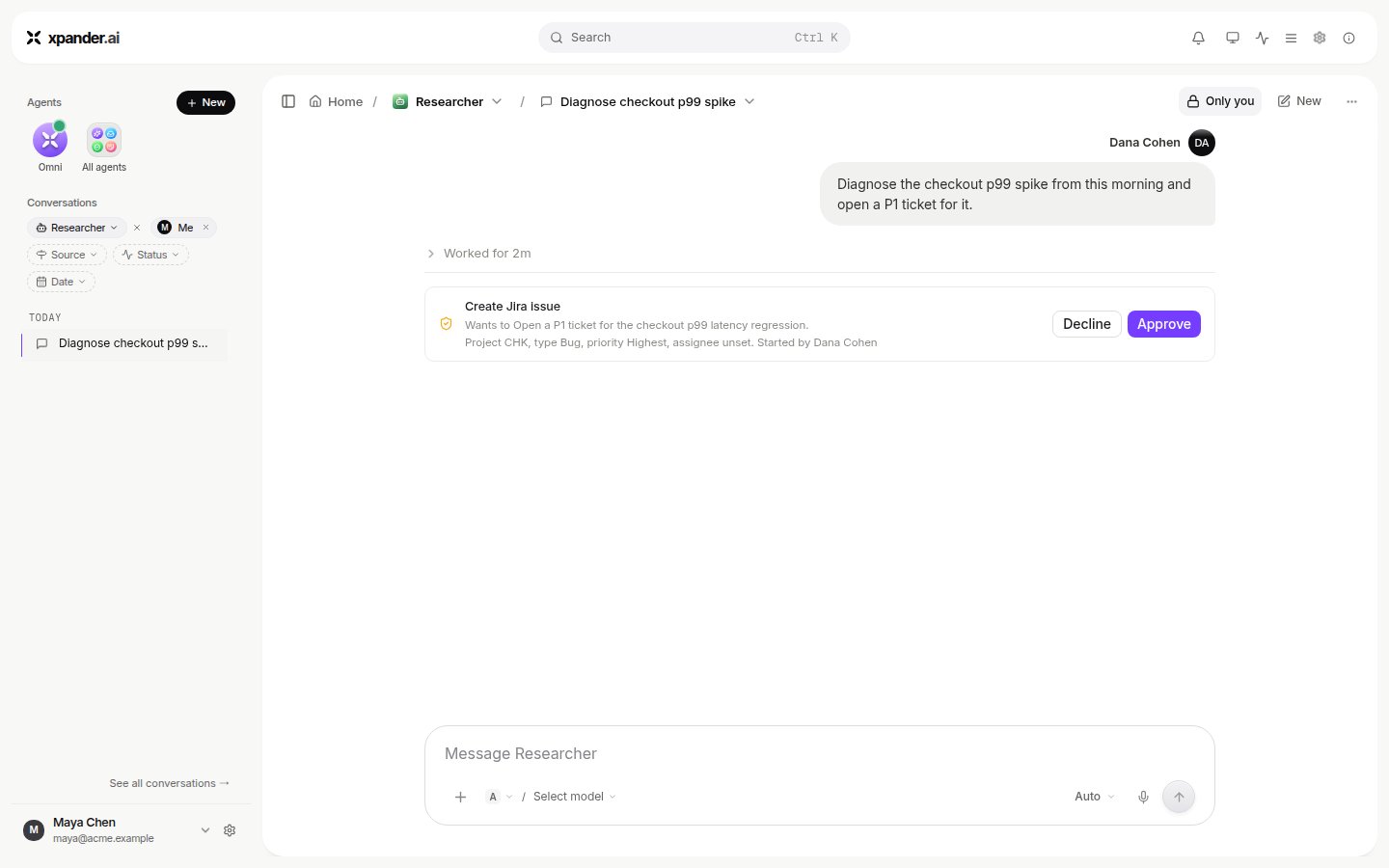
An approval card in a conversation. The agent wants to create a Jira issue; the run waits until a named approver clicks Approve. Shown with sample data.
Where to find everything that is waiting
Settings > Approvals lists every action waiting for you across all agents, with the same Approve and Decline buttons. Approvals also arrive as notifications, and a person who is not signed in can be sent a link that opens one approval and nothing else.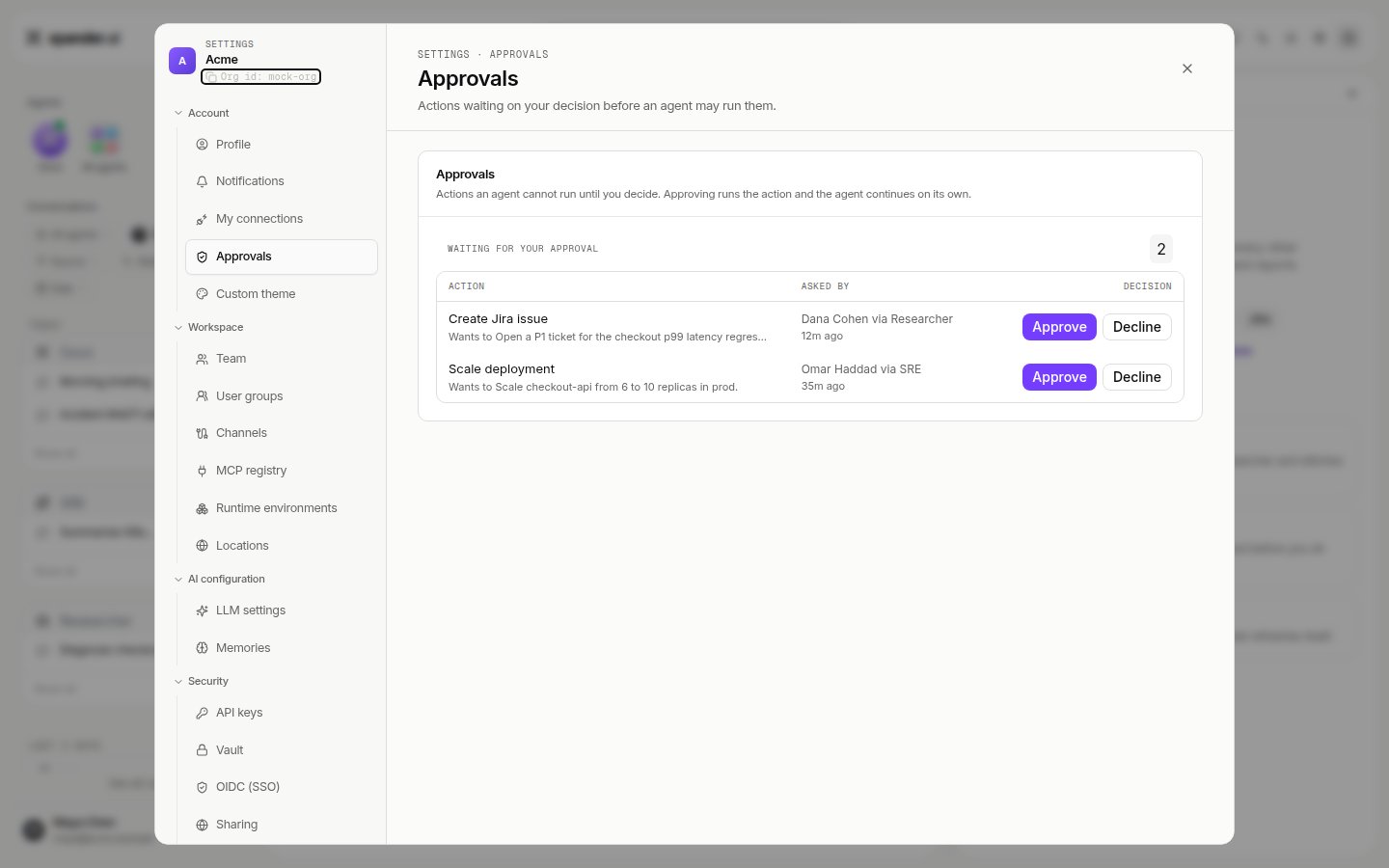
The Approvals tab in Settings. Shown with sample data.
How long a run waits
An agent running on Claude Code, Codex or OpenCode holds a waiting action for a set number of hours, four by default. If nobody decides in that time the run stops and reports that it did. The hold length is an agent setting,approval_hold_hours on the API, from one to seventy-two hours.
What gets held
Three things can put an action on hold:- A skill that needs approval. When someone adds a skill to an agent, the skill panel shows “These actions need approval” with the actions and who approves. Anyone with edit rights on the agent can change it there.
- Gated commands. For agents on Claude Code, Codex or OpenCode, a list of text patterns. A shell command that contains one of them waits for approval. Found under Advanced > Commands on the Agent settings card.
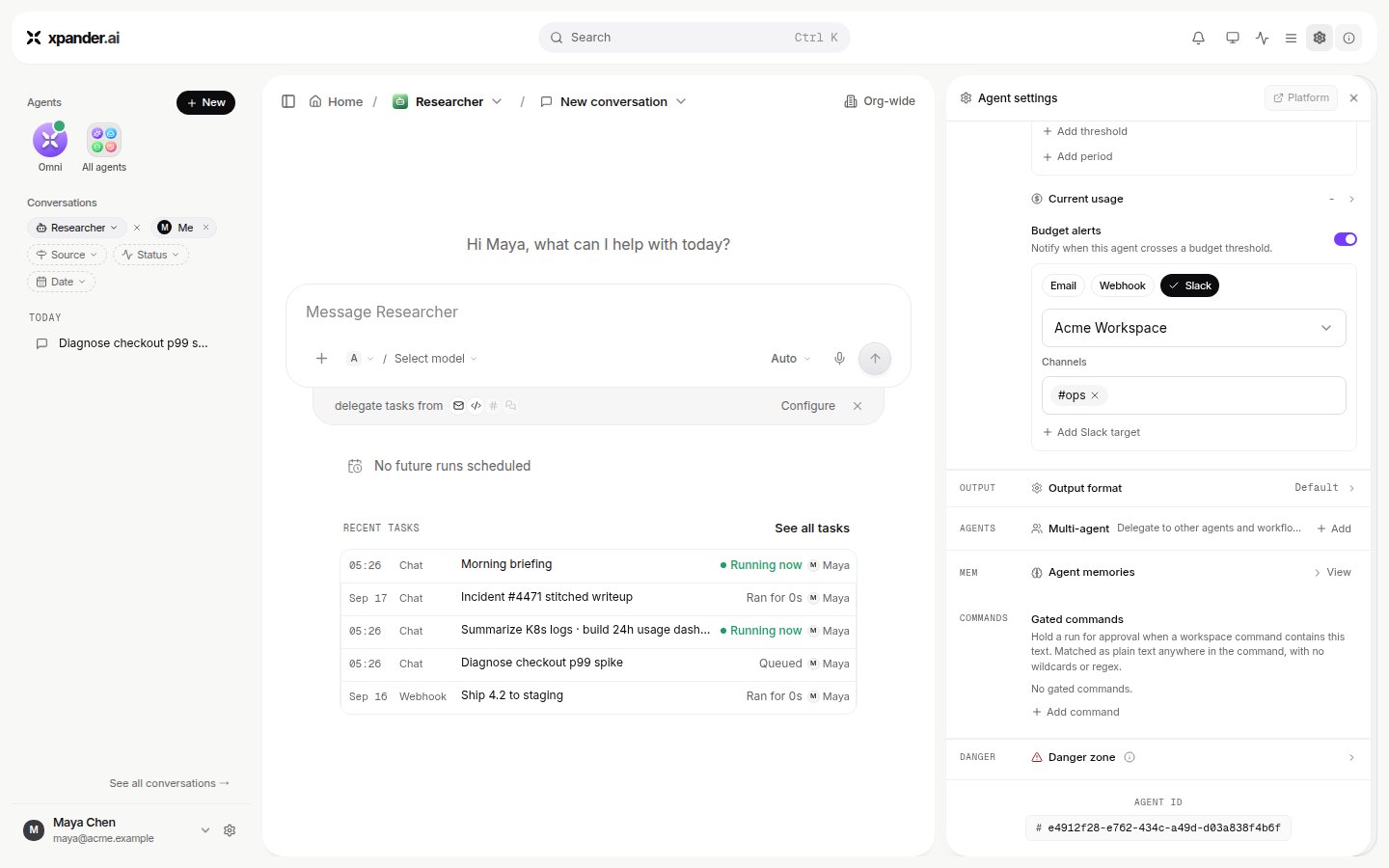
The Gated commands editor. A command that contains one of these strings waits for approval. Shown with sample data.
- The permission mode of a run. The composer offers Full and Gated for an agent on Claude Code, Codex or OpenCode. Gated holds every command that matches the list above; Full runs them.
Who may approve
The skill panel names the approvers for each held action. An agent can be set to approve its own runs for a given action (“SELF APPROVE”), which is how a fully unattended agent is allowed to proceed on actions your organization has decided are safe. Every decision, including a self-approval, is in the record with the name of who made it.Next
- Permissions and access: the full settings behind this page.
- Skills: marking a skill’s actions as needing approval.