

Recurring schedules
A schedule is a cron expression in UTC with a prompt. Schedules on the agent’s home lists them, and Add schedule opens a dialog with a Simple tab (describe the task in a sentence and generate a schedule) and an Advanced tab holding Interval, Daily and Weekly modes plus a read-only preview of the resulting cron expression. The shortest interval is five minutes, and the default is0 9 * * *, nine in the morning UTC. There is no per-schedule time zone: convert local times to UTC. Each row shows its human-readable cadence and the next run. Every edit publishes; a schedule fires only once it is live.
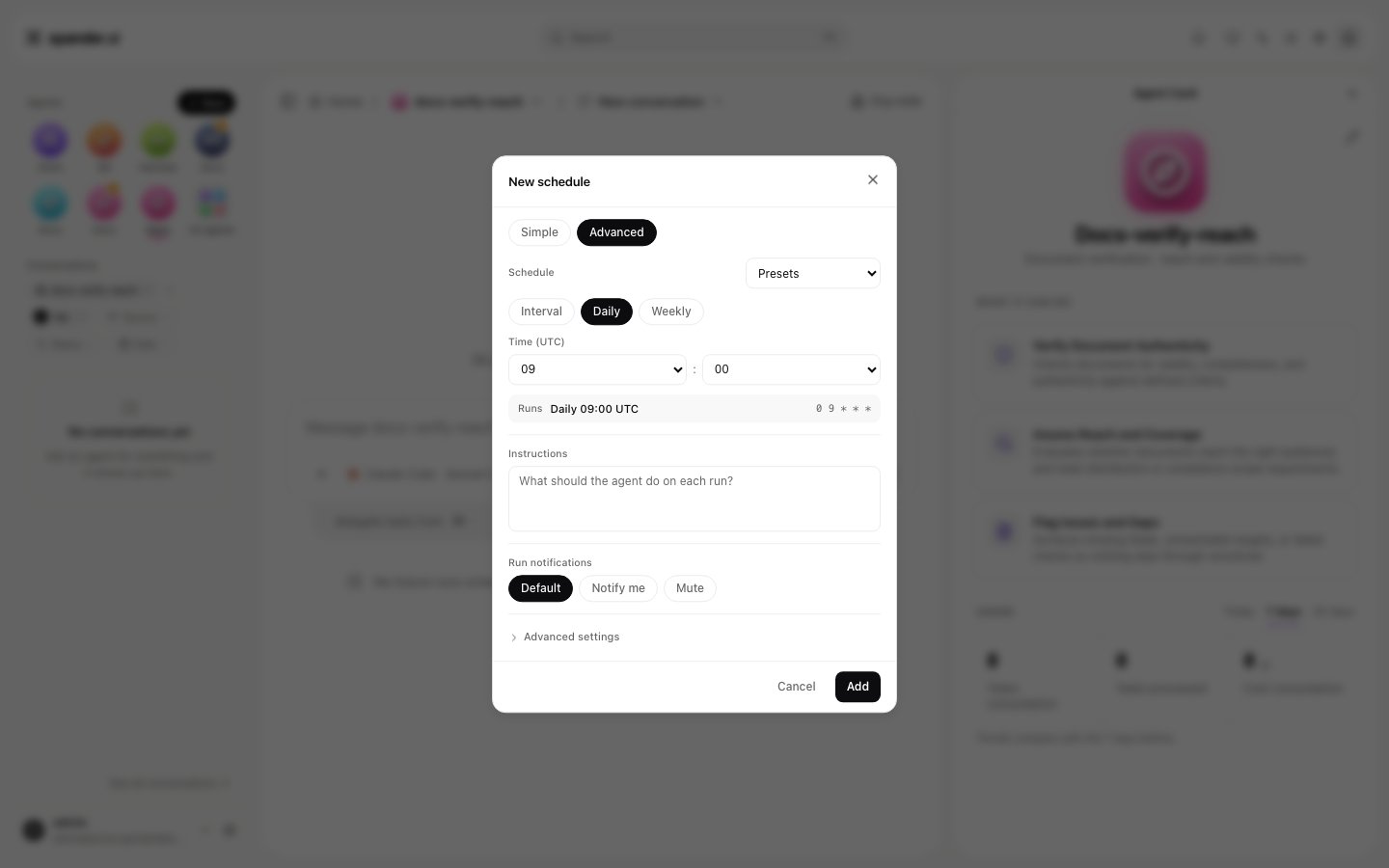
Add schedule, Advanced tab, on this licensed install.
GET, POST, PATCH and DELETE under /v1/agents/{agent_id}/scheduled-tasks, with POST /{task_id}/run to fire one immediately and enabled: false to pause it; a schedule has cron, prompt, title, enabled and, optionally, a model for that schedule.
Some agents carry managed schedules xpander owns, such as a heartbeat; you can pause them or run them now, but not edit or delete them.
Re-checks the agent books itself
When an agent should look again later (“check again in five minutes”, “follow up after the deploy”), it books a one-off run for itself. Booked runs are listed under Upcoming runs in the agent’s Schedules section, and under Scheduled in Xpander Chat’s conversation filters. Each also shows in the conversation as a scheduled-run line with the time. A booked run can be cancelled there, or overDELETE /v1/agents/{agent_id}/self-schedules/{schedule_id}. The capability is a per-agent switch with a cap on how many pending runs one task may hold, three by default. A recurring re-check is therefore a chain of one-off runs the agent renews, rather than a loop it cannot leave.
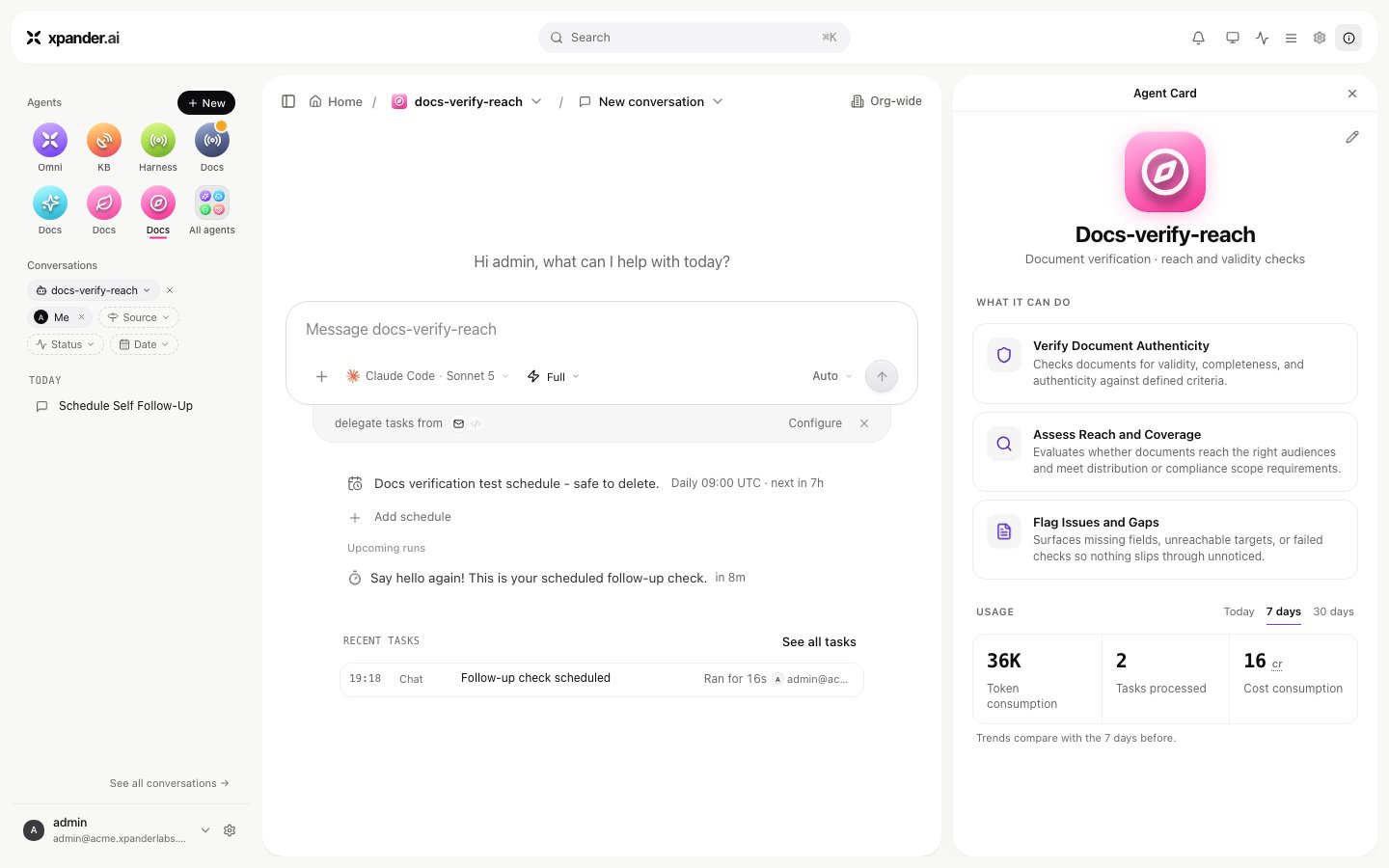
A recurring schedule and a booked re-check under Upcoming runs, on the agent's home.