

Preview. Workflows are available to organizations with preview features enabled and can be hidden per user group. Open All agents and filter by Workflows, or go to
/workflows; ask your admin if neither shows.Nodes
Edges are ordered lists of next nodes; the first regular node is the entry, and a special end summarizer produces the output. Branching conditions are regex, contains, equals, greater or less than, not empty, and else. Each node can carry a retry strategy (up to a set number of retries), an iterative strategy (repeat until a condition), a stop strategy (stop on failure or on a condition) and duplicate prevention (ignore the same input again within a window).
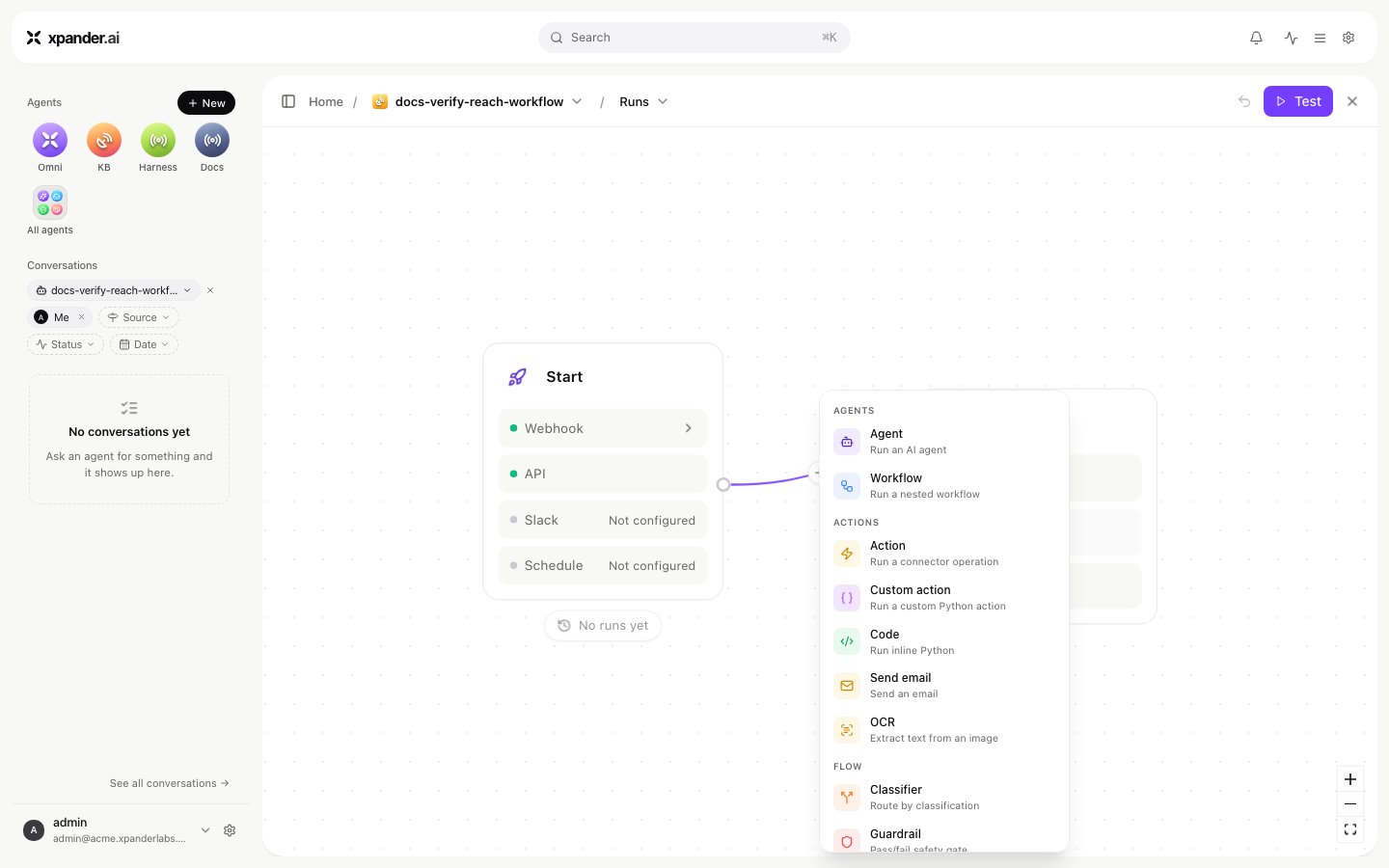
The node picker in the workflow editor, grouped as Agents, Actions and Flow.
Triggers
The Start node lists four triggers and whether each is live: API (always, at the workflow’s id), Webhook (a URL that is itself the credential), Slack (the channels routed to the workflow) and Schedule (a cron in UTC). Triggers publish the moment they are switched on.Staged and live
Edits to a workflow are staged: the API’sPATCH /v1/workflows/{workflow_id} changes the draft, PUT deploys it, and ?version=draft runs the draft on POST /v1/workflows/{workflow_id}/invoke. In Xpander Chat the editor is the draft and Publish makes it live. A workflow is not listed among agents; GET /v1/workflows lists workflows, and asking the workflow endpoint for an agent id says so.
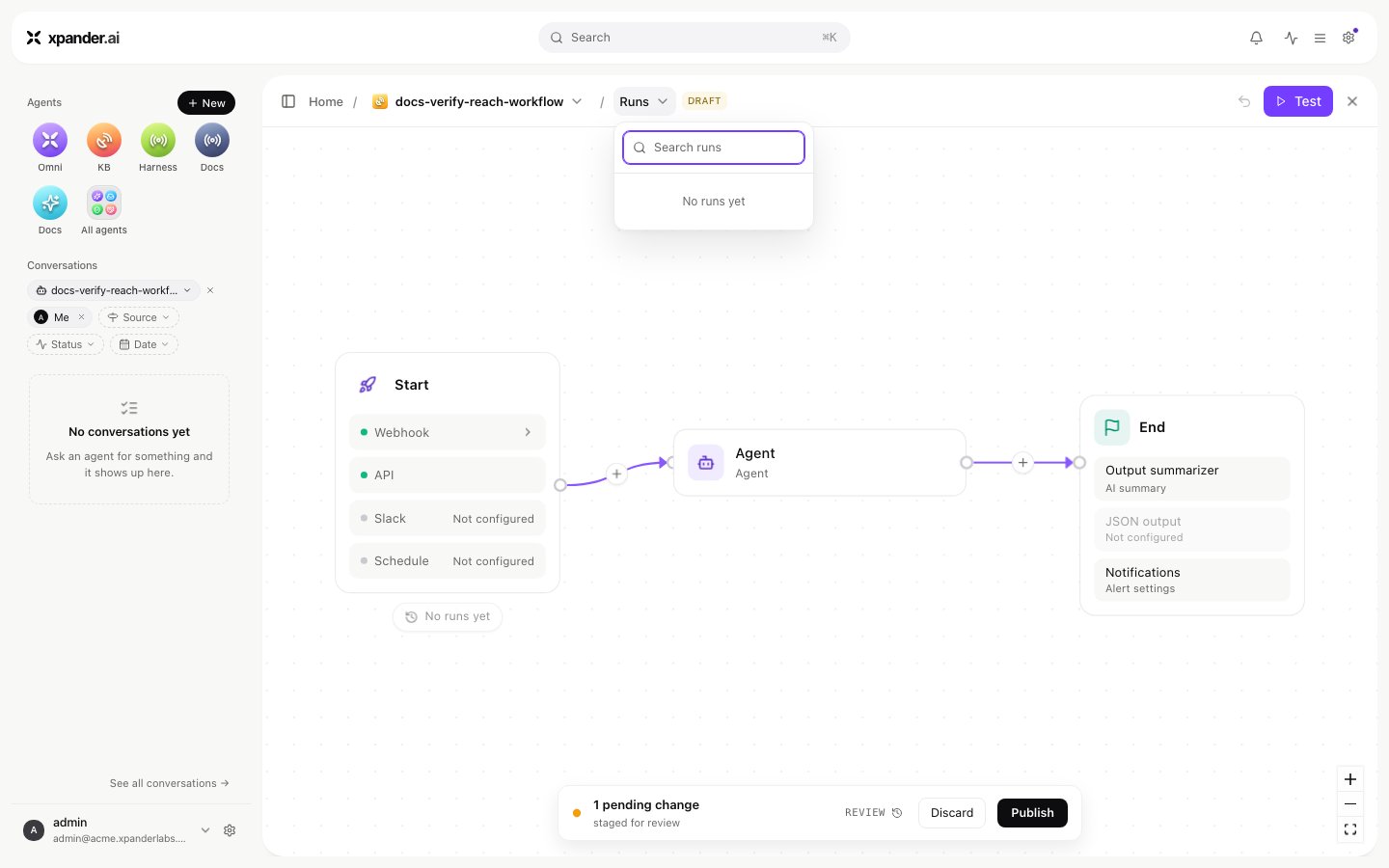
A staged workflow with a pending change, ready to publish.